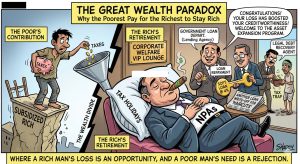
Banks are like people who offer you an umbrella only when the sun is shining. In a world where the rich get their loans written off and the poor get entrenched in disaster-induced poverty, we are building a society on a fault line deeper than any in the Himalayas.
Techno-legal regime
The Arithmetic of Agony: Why Our Disaster Loss Assessments are Failing Humanity
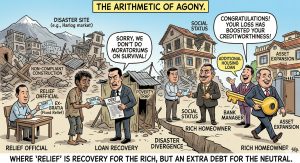
Disaster loss isn’t just about cracked walls; it’s about broken lives. When we equate recovery with reconstruction, we ignore the trauma of the displaced and the long-term poverty traps created by lost access. We need a compensation model that honors the human aspect of the Himalayas.
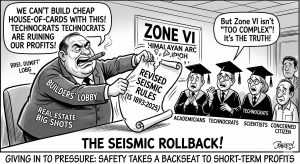
The Great Himalayan Retreat: Science Bows to Policy in the IS 1893 Rollback

The earth does not recognise a “rollback.” While policymakers revert the Himalayas to lower seismic zones to favour the builder lobby, the tectonic strain continues to build. The recent withdrawal of the IS 1893:2025 amendments is a retrogressive step that trades future lives for current profits. It is time for the Himalayan states and the scientific community to break their silence and demand codes that reflect reality, not “convenience.
The Economics of Resilience vs. The Cost of Inaction
Resilience isn’t an expense; it’s an insurance policy for a nation on a tectonic edge. While the short-term ‘cost escalation’ of the IS 1893:2025 code is cited at 5%, the cost of ignoring it will be measured in trillions of rupees and thousands of lives
The Great Seismic Betrayal: Are We Building Cities or House of Cards?
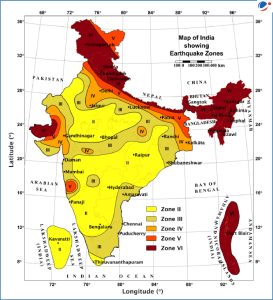
In a staggering regulatory reversal, India has traded scientific progress for builder profits. By rolling back the IS 1893:2025 seismic code, we’ve ignored the ‘Zone VI’ reality of the Himalayas—leaving millions to live in structures built for a world that science no longer recognizes.
Himachal Pradesh: The 16th Finance Commission Balance Sheet

With 16th Finance Commission scrapping the Post-Devolution Revenue Deficit Grant (PDRDG), Himachal Pradesh has to brace for a “fiscal winter” and find innovative revenue generation sources.
Uttarakhand: The 16th Finance Commission Balance Sheet

With 16th Finance Commission scrapping the Post-Devolution Revenue Deficit Grant (PDRDG), Uttarakhand has to brace for a “fiscal winter” and find innovative revenue generation sources.
16th Finance Commission and DRR
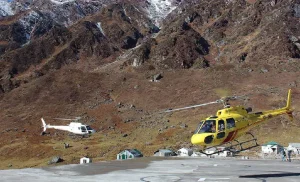
16th Finance Commission has recommended an outlay of Rs. 2,83,807 crore for disaster management related affairs. Get to know the details of the FC recommendations.
The Invisible Noose: Dissecting the Global Climate-Debt Trap

In 2025, a silent, structural strangulation is unfolding across the Global South. For nations like Sri Lanka, surviving the present now requires mortgaging the future. This in-depth analysis explores the ‘Climate-Debt Trap’—a vicious cycle where extreme vulnerability meets predatory interest rates—and outlines the radical financial reforms necessary to break the invisible noose of fiscal crisis.
The Seismic-Frost Paradox: North India’s New Geological Frontier

Winter in the Himalayas has a new, invisible threat: the Seismic-Frost Paradox. As India reclassifies its mountains into the high-risk Zone VI, we dive deep into why freezing soil and tectonic stress are a lethal combination for our hill towns—and how we must re-engineer our future to survive.