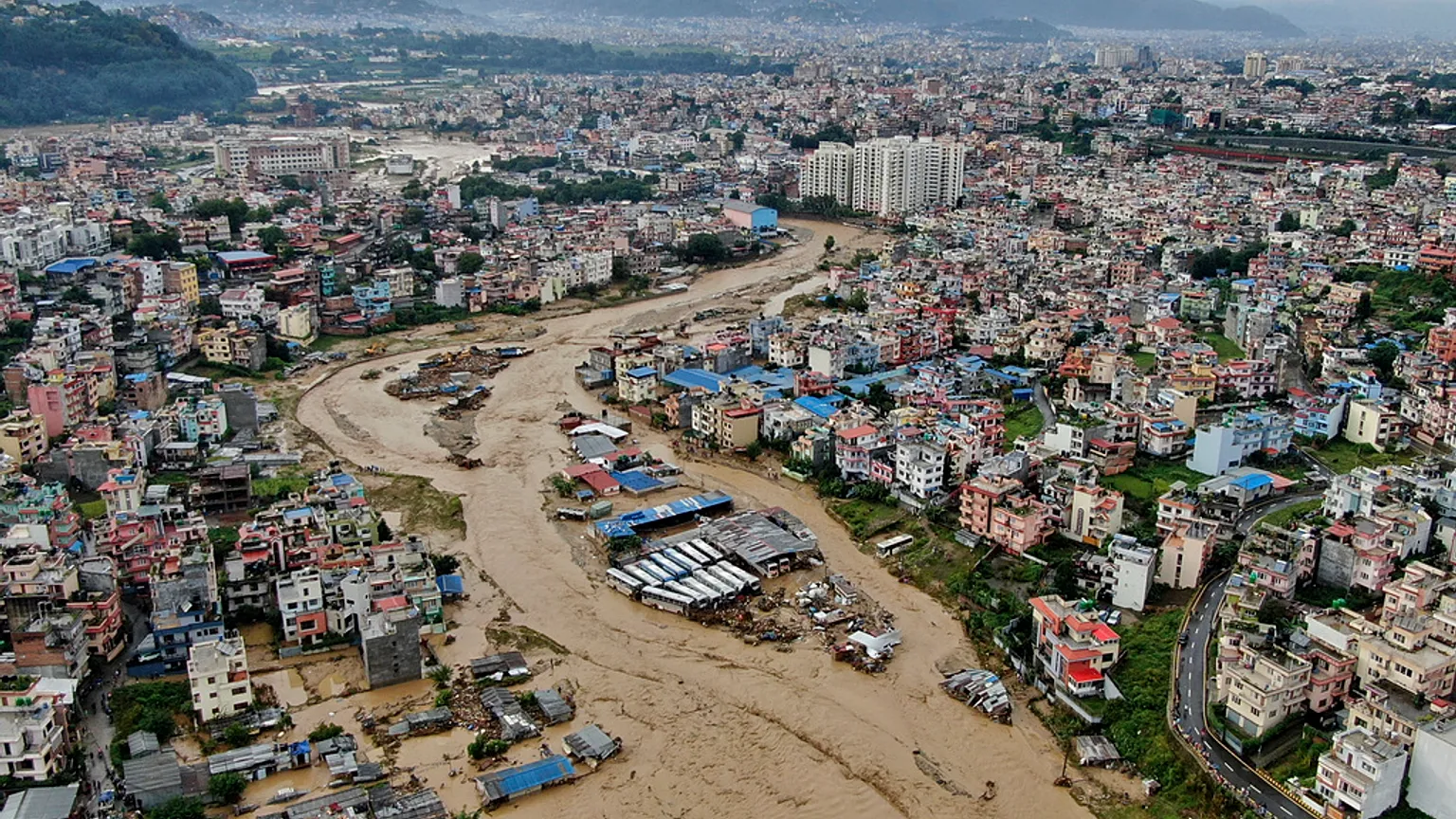
 A slight tremor was felt the previous night, causing some alarm but no damage. In the morning, villagers are gathered, discussing it.
Santa, trying to reassure everyone, says confidently, “Don’t you worry!”
“Our village is blessed.”
“This ancient Peepal tree has stood here for centuries, planted by my great-great-grandfather.”
“He never spoke of any big earthquake, nor did his father.”
“If there had been any great calamity, wouldn’t our elders have passed down stories?”
“Or wouldn’t it be written in some old temple record?”
“We have no such history before that one known Garhwal earthquake of 1803.”
“This place is inherently safe!”
Banta, who has been listening intently, speaks up.
“Santa, your faith in the resilience of our village is heartening.”
“And it’s true, our oral traditions are strong in many ways.”
“We created epics like the Mahabharata, with countless characters and intricate plotlines remembered and retold for generations – a testament to our storytelling genius.”
“We imagined Karna’s Kavaach, a divine armour growing with him, a marvel of protection!”
“But, curiously, when it came to meticulously recording the earth’s tremors or the river’s fury year after year, our ancestors across the land were not always so systematic, or perhaps those records were lost or not widely shared.”
“What do you mean, Banta?” asks a villager.
“Are you saying bad things might have happened that we don’t know about?”
“It’s possible,” Banta replies.
“Sometimes, the only hints we have of very old events come from the writings of foreign travellers like Fa Hien or Hiuen Tsang who visited our land centuries ago.”
“For our own region, detailed, continuous records of disasters before the British era are indeed scarce.”
“So, when we say ‘nothing happened here before 1803, it might simply mean nothing was written down and preserved that we can easily find today.”
“This absence of records can unfortunately create a false sense of complete safety for a specific place.”
Santa looks a bit unsettled. “So, our ‘safe’ history might just be a ‘silent’ history?”
“Precisely, Santa,” Banta affirms.
“And this is why it’s so crucial that we, today, become better record-keepers.”
“Every time we feel a tremor, however small, every time a stream swells unusually, every time a small landslip occurs – these observations, if carefully noted, dated, and compiled, start building that missing historical record for future generations.”
“Geologists and scientists try to read the earth’s history from rocks and soil, but imagine how much richer their understanding would be if we had centuries of human observations to guide them!”
“This detailed local knowledge would help us understand our true, long-term risks much better than just relying on a few known big events.”
He adds, “If we could meticulously imagine and pass down the details of every divine weapon and every intricate strategy in the Kurukshetra war, surely we can develop the discipline to record the earth’s behaviour in our own backyards.”
“This new Itihas of local hazards, written by us, will be our true Kavaach for the future – a shield built of knowledge.”
संता – बंता की इस जुगलबन्दी से आज हमने क्या सीखा:-
- क्षेत्रविशेष के लिये आपदा के ऐतिहासिक अभिलेखों की अनुपस्थिति का कतई यह तात्पर्य नहीं है कि वह क्षेत्र आपदाओं से सुरक्षित है; यह प्रायः अभिलेखीकरण की कमी का नतीजा होता है / The absence of historical disaster records for a specific area does not necessarily mean the area is inherently safe; it may reflect a gap in documentation.
- अपूर्ण ऐतिहासिक आंकड़ों पर भरोसा करने का तात्पर्य जोखिम को कमतर आंकना है / Relying on incomplete historical data can lead to underestimation of risks.
- पुष्ट स्थानीय आपदा परिदृश्य की परिकल्पना के लिये वर्तनाम व विगत में घटित आपदाओं का वृहद् अभिलेखीकरण अत्यन्त आवश्यक है / There’s a critical need to meticulously document current and recent past hazard events, however minor, to build a robust local disaster history.
- आपदाओं का वृहद् व उन्नत अभिलेखीकरण सटीक जोखिम आंकलन के साथ ही वैज्ञानिक शोध व आपदा जागरूकता की संस्कृति के विकास के लिये भी परम आवश्यक है / This improved record-keeping is vital for accurate risk assessment, scientific research, and creating a true culture of disaster awareness.
- हमें अपनी वृस्तृत कथावाचन तथा जटिल सूचना प्रबंधन की परंपरा से प्रेरित हो कर आपदा प्रबन्धन सम्बन्धित अभिलेखीकरण में सुधार करना चाहिये / Our traditional strengths in detailed narration and complex information management (seen in epics) should inspire us to improve our disaster record-keeping.
संता – बंता की यह जुगलबन्दी आपको कैसी लगी, कृपया हमें जरुर बताये
व
इस जुगलबन्दी को बेहतर बनाने के लिये अपने सुझाव अवश्य दें।
हमें हमेशा की तरह आपके सुझावों, प्रतिक्रियाओं व कटाक्षो का बेसब्री से इंतजार रहता हैं और सच मानिये इसी के आधार पर हम अपने आप में, अपनी सोच व रचनात्मकता में सुधार करने को प्रेरित होते हैं।
सो अच्छा – बुरा जैसा आपको महसूस हुवा हो, कमेंट जरुर करते रहें।
Leave a Reply