 Mathura-Yamuna Expressway Tragedy
The most devastating event this morning was a horrific multi-vehicle pile-up on the Yamuna Expressway in Mathura, Uttar Pradesh.
Incidence Details
At approximately 4:30 AM, amid “blind” visibility caused by dense winter fog, eight buses and three cars collided near Milestone 127 in the Baldev police station area.
The Inferno
Moments after the initial impact, several vehicles—including three buses—erupted into flames, trapping passengers inside. Survivors described hearing explosions as the buses turned into “balls of fire.”
Human Toll
At least 13 people were killed (all due to severe burns) and over 60 were injured. The death toll across Uttar Pradesh due to fog-linked accidents today reached 25, with other fatalities reported in Basti, Unnao, and Meerut.
Response
A magisterial inquiry has been ordered. The UP Government announced an ex-gratia of ₹2 lakh for the families of the deceased.
Delhi-NCR Public Health Emergency
Delhi’s Air Quality Index (AQI) has surged past the “Severe+” mark (reaching 450-480) in several stations today. A toxic grey-brown shroud has settled over the northern subcontinent, with international monitoring suggesting local pockets may even exceed an AQI of 700.
The disaster is a combination of local emissions (vehicles, factories, and wood burning) trapped by Temperature Inversion. The Himalayas to the North and Aravallis to the Southwest act as natural barriers, preventing the dispersal of pollutants.
This has transitioned from a seasonal nuisance to a full-blown public health emergency, with hospitals reporting a 30% surge in respiratory admissions. The CAQM has enforced Stage 4 of the Graded Response Action Plan (GRAP), including a ban on non-essential construction and entry of heavy trucks.
Himalayan Winter Hazards
A fresh, feeble Western Disturbance is affecting the region. The IMD has issued alerts for dense to very dense fogacross Uttar Pradesh, Punjab, and Haryana, and isolated light rain/snow in the higher reaches of Jammu & Kashmir and Ladakh over the next 48 hours.
Legislative Initiatives: The “NAP 2025” Breakthrough
In a significant move to shift from reactive to proactive disaster management, the Climate Change (Mitigation and Adaptation) Bill, 2025 was formally introduced in the Lok Sabha today.
The National Climate Change Authority (NCCA)
This new statutory body, chaired by the Prime Minister, will serve as the apex agency to plan, monitor, and achieve net-zero targets by 2070.
Climate Change Duties
The Bill introduces “Climate Change Duties,” making it a statutory obligation for both public and private entities to implement resilience actions.
Research Institute
Chapter VI mandates the establishment of a Research Institute on Climate Change to ensure that Himalayan development (dams/roads) is backed by real-time climate modeling.
National Fund
A National Climate Change Mitigation Fund is being created to provide the fiscal capacity required for adaptation, addressing the massive $310 billion annual gap identified by the UNEP.
DRR & CCA Conferences, Workshops, and Reports
National Adaptation Plan (NAP)
India today announced a unified Climate Finance Mechanism to implement its National Adaptation Plan. This initiative, supported by the Green Climate Fund, will act as a country platform to align domestic finance with international funds for priorities like Himalayan risk reduction and heat-resilient cities.
Ongoing Climate Change Concerns and Incidences
The Fog-Pollution Nexus
The tragedy in Mathura is a direct consequence of “winter smog”—a mixture of natural fog and anthropogenic pollutants. This highlights the compounded risk where air pollution doesn’t just impact lungs but actively causes mass-casualty transport disasters.
Adaptation Finance Gap
The UNEP Adaptation Gap Report 2025 warns that India needs adaptation finance averaging 2.4% of its GDP to protect against the intensifying heat waves and floods seen this year.
Supercharged Cyclones
Scientific attribution studies continue to confirm that the 2025 North Indian Ocean cyclone season(the costliest on record at $22.3 billion) was “supercharged” by human-caused global heating, increasing rainfall intensity by up to 160%.
Cryosphere Instability
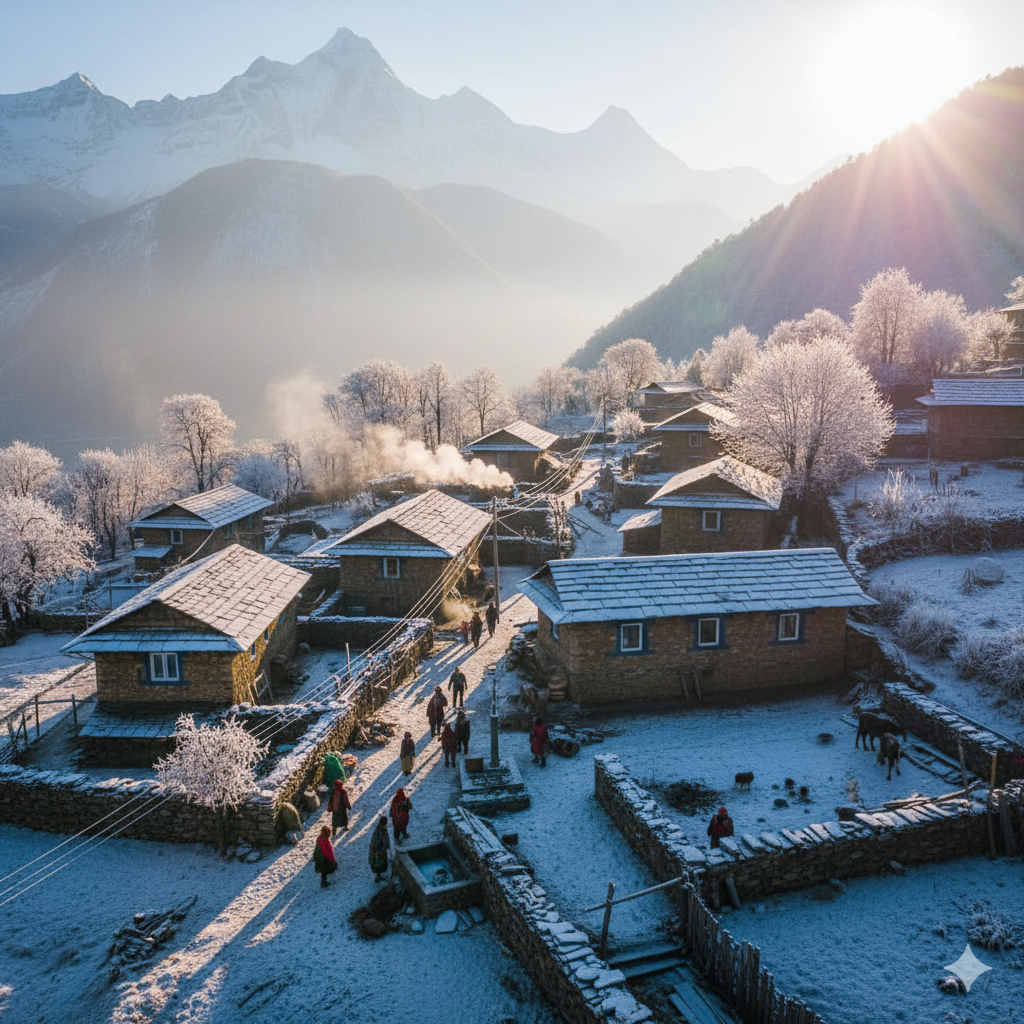
Reports from trekking communities in Nepal indicate that customary stable autumn windows have vanished, replaced by unpredictable snowstorms (like the November Mustang storm), signaling a permanent shift in Himalayan weather predictability.
Historical Disasters, Wars, and Other Incidences on 17 December
1835 – The Second Great Fire of New York
A massive fire destroyed much of New York’s Financial District today, leading to the creation of modern fire insurance and safety regulations.
1903 – Wright Brothers’ First Flight
While not a disaster, the first powered flight in North Carolina revolutionized human mobility, which subsequently transformed war and global disaster response.
1927 – S-4 Submarine Disaster
A collision between the US submarine S-4 and a Coast Guard destroyer off Cape Cod killed 40 crew members, leading to the invention of modern submarine rescue chambers.
1961 – Operation Vijay
Today marks the anniversary of the Indian military’s move to liberate Goa, Daman, and Diufrom Portuguese rule, ending 450 years of colonial presence.
2005 – Abdication in Bhutan
King Jigme Singye Wangchuck announced his abdication today in 2005, beginning Bhutan’s transition to a constitutional monarchy and its unique focus on environmental resilience over GDP.
2010 – Self-immolation of Mohamed Bouazizi
A Tunisian street vendor set himself on fire today in 2010, acting as the catalyst for the Arab Spring, a series of anti-government protests and armed rebellions that reshaped the Middle East.
As to what past events, disasters of the day and our ongoing initiatives tell us, warn us: the horrific inferno on the Yamuna Expressway tells us that our infrastructure remains at the mercy of the “white disaster” of winter fog, warning us that speed without visibility is a lethal gamble. Our ongoing legislative initiatives tell us we are finally building the legal armor needed for a warming world, but the 13 lives lost in Mathura warn us that until policy translates into safer roads and cleaner air, we remain tragically vulnerable to the very environment we are struggling to protect.
Stay vigilant; history whispers warnings.
यह हमारा एक छोटा सा प्रयास हैं, आपको हर दिन आपदा से जुड़ी नवीनतम जानकारियाँ प्रदान करने का –
विशेष रूप से वह आपदायें जो हिमालय व अन्य पहाड़ी क्षेत्रों में घटित हों.
हमारा यह प्रयास आपको कैसा लगा और कैसे हम इसे बेहतर व उपयोगी बना सकते हैं ?
हमेशा की तरह आपके सुझावों का हमें इंतजार रहेगा.
Leave a Reply