
As a sharp M 4.0 earthquake jars eastern Nepal’s high-altitude valleys and rescuers battle persistent rains in the Philippines to retrieve victims of the Mindanao megathrust, the Himalayas are navigating an intense pre-monsoon thermal transition. Driven by a 24-year low in seasonal snow persistence, the mountain’s structural foundations are directly exposed to unseasonal heavy rains and crustal stress. From innovative laboratory work mapping how deep blind thrust faults deform our valley floors, we examine the changing physics of mountain survival. Discover why a simple staircase-shaped crack in your external masonry is your most vital early warning of a moving foundation.
Disaster updates
The 2026 Disaster Sentinel: The Planetary Harmonic Oscillation

As the planet ‘rings like a bell’ following the devastating M 7.8 megathrust earthquake in the Philippines and an unprecedented M 6.1 shock shatters historical patterns in the Gulf of Mexico, the Himalayas are silently processing these global energy waves. Stripped of their protective snow blankets by a 24-year climate deficit, high-altitude rock faces are facing a dangerous mix of deep meltwater saturation and distant seismic vibrations. Discover why a simple hanging plumb line in your living room can reveal how your home is responding to the deep earth’s latest planetary chords.
The 2026 Disaster Sentinel: The Tectonic-Cryospheric Pulse

As a historic M 7.8 megathrust earthquake shatters coastal infrastructure in the Philippines and deep oceanic rifts shake the Gulf of Mexico, the Himalayas are fighting a quiet battle against a 24-year low in seasonal snow persistence. Driven by an intense thermal transition, our rivers are burning through ancient fossil ice capital while mountain slopes absorb dangerous solar energy. From innovative laboratory methods tracking how global earthquakes can trigger landslides half a world away, we analyze the shifting rules of mountain defense. Discover why a strange ‘hissing’ sound from your local hillside spring is the ultimate early alert for a moving mountain.
The 2026 Disaster Sentinel: The Tectonic-Cryospheric Pulse

As the government scales back the 2025 seismic map to reinstate the classic 2016 zonation framework, the underlying ground reality hasn’t changed. Deep-earth imaging reveals that the Indian plate is actively splitting and tearing apart beneath the Himalayas, creating an immense, hidden stress build-up. From global lessons on how unplanned hillside expansion turns rain into a deadly landslide catalyst in Brazil, we analyze why voluntary safety compliance is now our only true defense. Discover why checking your building’s structural expansion joints is your most critical home maintenance chore today.
The 2026 Disaster Sentinel: The Tectonic-Cryospheric Pulse
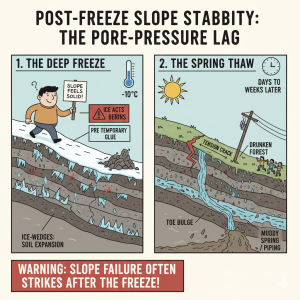
As a powerful M 5.0 earthquake jolts Xinjiang today and the US enforces rigid international biosecurity border holds, the Himalayas are entering a volatile era of high-altitude mechanics. Shifting away from outdated reactive tracking, laboratory insights from the Indian Institute of Science are demonstrating how the Swiss ‘Blatten’ template can protect our fragile valleys from catastrophic ice-rock avalanches. Discover why listening to the acoustic ‘popping’ of a dry mountain gorge is your ultimate early diagnostic for an impending rockfall.
The 2026 Disaster Sentinel: The High-Altitude Amplification

As southern Myanmar recovers from a sharp M 5.2 tectonic shock and global health agencies activate emergency protocols for Central Africa, the Himalayas are fighting an invisible battle against High-Altitude Amplification. From the accelerating thaw of permafrost that acts as the mountain’s internal cement to the 116-year-old warning of the Halley’s Comet panic, we analyze why 2026 is rewriting the physics of mountain safety. Discover why a trickle of dry gravel down an un-rained cliff face is the most critical diagnostic of a mountain un-anchoring itself.
The 2026 Disaster Sentinel: The Multi-Hazard Cascade
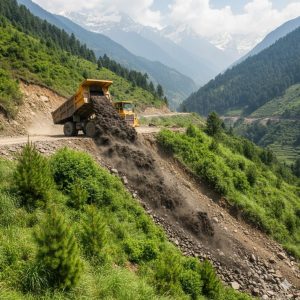
As a M 5.2 earthquake forces the evacuation of thousands in South China and the WHO steps up its global emergency response, ICIMOD’s latest report delivers a reality check: the Himalayas are entering a high-stakes multi-hazard zone. From the internal ‘pore-water’ mechanics that un-anchor our hillsides to the 46-year legacy of the Mount St. Helens collapse, we explore why 2026 demands that we stop treating natural hazards in isolation. Discover why a sudden shift in your local rock spring’s exit point is the ultimate underground diagnostic for a moving mountain.
The 2026 Disaster Sentinel: The Tectonic-Cryospheric Pulse

As the WHO faces calls to declare the climate crisis a global public health emergency and Japan rides out a powerful M 6.7 marine earthquake, the Himalayas are silently adjusting to a 24-year low in snow persistence. From the historic ‘Allah Bund’ template showing how earthquakes can instantly rewrite our river maps to the hidden warnings buried inside your local well water, we look at why 2026 demands a total overhaul of mountain safety. Discover why a sudden change in your groundwater’s clarity is the ultimate underground diagnostic for a moving hillside.
The 2026 Disaster Sentinel: The Tectonic-Cryospheric Pulse

As a deep M 4.0 tremor jars the Myanmar border and an avalanche claims lives on Mount Makalu, ICIMOD’s latest analysis delivers a reality check: multi-hazard disasters are altering our vulnerability baseline. From urban flood zones in Assam to the hidden survival network of Himalayan Dharas (springs), we look at why decentralizing our safety parameters is no longer an experiment—it is our primary anchor. Discover why checking your local natural spring’s exit point is the ultimate raw diagnostic for slope movement today.
The 2026 Disaster Sentinel: The Tectonic-Cryospheric Pulse
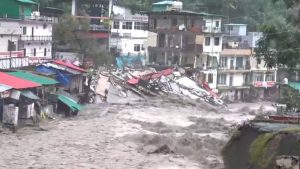
As a M 3.0 tremor shakes Nepal and new NDRF centres rise in the foothills, the ICIMOD Snow Update 2026 confirms a 24-year record low in snow persistence. From the ‘poisonous black rain’ in Tuapse to the ‘Digital Twin’ protocols modeling our headwaters, we explore why 2026 is the year the ‘Water Tower’ truly began to change. Discover why a simple sheet of aluminum foil is your best defense against the approaching May thermal surge.