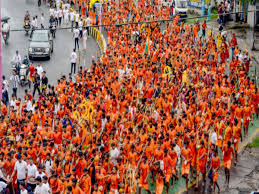
 In the shadow of the majestic Himalayas, Uttarakhand gears up for one of Hinduism’s most revered festivals: Maha Shivratri. Celebrated with fervent devotion, this auspicious night dedicated to Lord Shiva sees millions of devotees engaging in rituals that symbolise purification, devotion, and renewal.
Yet, as the state prepares for the influx of pilgrims during the Kanwar Yatra—a gruelling pilgrimage to fetch holy Ganga water—the lines between religious reverence and public inconvenience blur.
What was once a spiritual journey is now entangled in politics, infrastructure woes, and questions of fundamental rights. This article delves into the complexities surrounding the Yatra in Uttarakhand, exploring how efforts to “appease” devotees often come at the cost of everyday citizens’ safety and comfort.
The Sacred Call of the Kanwar Yatra
A Tradition Rooted in Devotion
The Kanwar Yatra, named after the bamboo pole (kanwar) used to carry pots of sacred water, is a cornerstone of Shivratri celebrations. Devotees, often barefoot and clad in saffron, trek hundreds of kilometers to holy sites like Haridwar or Gaumukh to collect Ganga jal. This water is then offered to the Shivalinga—a symbolic representation of Lord Shiva—along with belpatra (leaves from the bel tree – Aegle marmelos), milk, and other offerings. The ritual is believed to invoke Shiva’s blessings for prosperity, health, and moksha.
Historically, the Yatra traces back to ancient myths where Shiva consumed poison to save the world, earning him the title Neelkanth. Participants emulate this sacrifice through their arduous journey, fostering a sense of communal piety. In recent years, however, the Yatra has ballooned in scale. What began as a modest pilgrimage has transformed into a massive event drawing over 10-12 million devotees annually, particularly in northern states like Uttarakhand and Uttar Pradesh.
This surge can be attributed to improved connectivity, social media amplification, and political endorsements that frame participation as a badge of Hindu pride.
The Modern Surge: From Piety to Spectacle
Take, for instance, the 2023 Yatra, where estimates pegged participant numbers at a record 12 crore across India, with Uttarakhand alone hosting millions converging on Haridwar. Social media platforms buzz with videos of kanwariyas dancing to devotional DJ beats, turning the pilgrimage into a cultural festival.
Yet, this popularity isn’t without controversy.
Reports from past years highlight instances where enthusiastic groups have disrupted traffic by occupying roads, playing loud music, or even clashing with locals. In Uttarakhand, the Yatra’s epicenter in Haridwar sees devotees from neighbouring states like Uttar Pradesh flooding in, amplifying the strain on local resources.
Infrastructure Under Siege: Roads, Risks, and Redirects
The Lifeline of National Highways
Uttarakhand’s rugged terrain makes efficient roadways crucial for connectivity. National Highway 734, a vital toll road linking the western capital of Dehradun to eastern gems like Nainital and Jim Corbett Park, has revolutionised travel. Same is the case with NH 58 that connects Dehradun to Meerut, Noida and Delhi.
Spanning scenic routes through forests and hills, these significantly reduce journey time, boosting tourism and commerce. For residents and tourists alike, these are symbols of progress in a state often plagued by landslides and poor infrastructure.
However, as Shivratri approaches—falling on a Sunday this year—the highway becomes a battleground between devotion and daily life. To accommodate the swelling crowds of kanwariyas, authorities have closed portions of the road, diverting all traffic to the opposite lane.
This one-way conversion, while intended to create a “safe” corridor for pilgrims, exposes commuters to grave dangers.
The Perils of Diversion
Imagine a family en route from Dehradun to Nainital for a weekend getaway, only to find themselves squeezed into a single lane shared with oncoming vehicles. The risk of head-on collisions skyrockets. Past incidents paint a grim picture: In 2019, a similar diversion on NH-58 near Haridwar led to a multi-vehicle pile-up, injuring over 20 people.
Fatigue compounds the issue—drivers, already navigating Uttarakhand’s challenging topography, face extended travel times due to congestion, leading to exhausted motorists and heightened accident rates.
Moreover, the inconvenience ripples beyond safety. Commuters endure hours of gridlock, with essential services like ambulances and school buses caught in the chaos.
A local businessman from Haldwani shared in a 2024 interview: “What should be a two-hour drive turns into a nightmare. We’re paying tolls for convenience, not catastrophe.”
Indeed, despite these disruptions, toll booths operate unabated, collecting fees “religiously” even as the road’s utility is halved.
Political Appeasement: Flowers Over Functionality
Bowing to Electoral Pressures
In a state where Hinduism forms the cultural backbone, governments often prioritise religious sentiments to secure votes. The Bharatiya Janata Party (BJP)-led administration both in Uttarakhand and Uttar Pradesh have been vocal about supporting the Yatra, viewing it as a way to consolidate Hindu support ahead of elections. Chief Minister Pushkar Singh Dhami’s initiatives, such as declaring holidays or providing free facilities for pilgrims, exemplify this approach.
Yet, this “appeasement” manifests in peculiar ways. Instead of enforcing disciplined routes or traffic management, officials are seen showering flower petals on kanwariyas and even washing their feet—a gesture of respect that, while symbolic, diverts resources from practical solutions.
In 2022, viral videos from Haridwar showed police personnel halting traffic to perform these rituals, leaving commuters stranded. Critics argue this prioritises a vocal section of society over the broader public good, turning state machinery into a tool for political theater.
The Toll of Unwaived Tolls
Adding insult to injury, the state has overlooked waiving tolls during the Yatra period. While pilgrims walk toll-free paths, vehicular commuters bear the financial burden for a degraded service.
This disparity fuels resentment: Why should the average citizen subsidise a festival through inconvenience while the government reaps electoral dividends?
Comparisons to other states, like Uttar Pradesh under Chief Minister Yogi Adityanath, reveal similar patterns—extensive road closures and VIP treatment for devotees, often at the expense of infrastructure maintenance.
Silenced Voices: The Fear of Backlash
In a polarised socio-political climate, voicing discontent against such measures is fraught with peril. Commuters, despite enduring hardships, hesitate to protest, fearing labels like “anti-Hindu” or “anti-national.”
Social media amplifies this chill: Dissenters are often trolled or accused of undermining cultural heritage.
A Dehradun resident anonymously confided, “I support the Yatra, but not at the cost of my family’s safety. Speaking out means being branded a traitor to faith.”
This reluctance stifles dialogue, allowing imbalances to persist.
It’s not isolated to Uttarakhand; similar dynamics play out in Uttar Pradesh, where Yatra-related disruptions in cities like Meerut have sparked quiet grumblings but few organized challenges.
A Call for Judicial Intervention: Safeguarding Fundamental Rights
Breaching the Constitutional Compact
At its core, the issue transcends inconvenience—it’s a potential violation of citizens’ fundamental rights under the Indian Constitution. Article 21 guarantees the right to life and personal liberty, which includes safe travel and freedom from undue hardship.
Jeopardizing public safety through arbitrary road closures could be seen as a breach, warranting suo moto cognisance by the judiciary.
Precedents exist: In 2018, the Supreme Court intervened in the Sabarimala case to balance tradition with rights, and similar scrutiny has been applied to religious processions causing public nuisance. The Uttarakhand High Court, based in Nainital, could step in to mandate better planning—such as dedicated pilgrim lanes, toll waivers, or tech-driven traffic management—to harmonise devotion with duty.
Towards Balanced Reverence
Ultimately, appeasing Shiva shouldn’t mean alienating citizens. With innovative solutions like drone-monitored routes or eco-friendly transport for pilgrims, Uttarakhand can honour its spiritual legacy without compromising progress. As Shivratri dawns, it’s time for reflection: True devotion uplifts all, not just the devoted.
In conclusion, the Kanwar Yatra embodies the vibrancy of Hindu traditions, but its unchecked expansion risks eroding the very fabric of inclusive governance. By addressing these tensions head-on, Uttarakhand can ensure that the path to Shiva’s grace is paved with equity, not just petals.
Leave a Reply