 Edition: 16 May 2026 | 2130 hrs IST
I. The Mountain Pulse: Pan-Himalayan Analysis 🏔️
The Himalayan arc is navigating a highly synchronized period of structural strain today, May 16, as regional statehood milestones collide with accelerating climate-driven geomorphological risks.
-
The Status: “The Great Cryospheric Deficit.” As Sikkim celebrates its 50th Statehood Day today, the wider Himalayan region is facing long-term ecological shifts. The regional snow persistence remains 27.8% below the long-term average—the lowest in 24 years. This persistent deficit continues to expose darker, permanent ice and permafrost to high-altitude radiation, accelerating the structural destabilization of glacier snouts across the range.
-
The Tectonic Baseline: While no catastrophic earthquakes were registered inside the immediate grid over the last 24 hours, global seismic monitoring indicates a state of high energy flux. Deep-focus stress redistribution along the peripheral plates continues to strain the Main Central Thrust (MCT), keeping regional telemetry on high alert for sudden adjustments as seasonal mass unloading reaches its spring peak.
II. Global Echoes: The “Systemic Risk” Radar 🌏
Beyond the mountain range, today’s global profile highlights a historic push to redefine climate extremes and a devastating high-magnitude marine tremor.
-
United Nations (Geneva): In a groundbreaking move today, an independent pan-European commission convened by the World Health Organization (WHO) urged that the climate crisis be officially declared a “Global Public Health Emergency” (PHEIC). This would trigger the highest level of international alert—on par with historic pandemic responses—to address the immediate threat that extreme weather, food insecurity, and vector-borne diseases pose to national stability.
-
Japan (The Marine Shock): A massive Magnitude 6.7 earthquake struck off the coast of Iwate (near Kesennuma, Miyagi) late yesterday. Originating at a shallow depth, the quake triggered immediate localized coastal alerts and serves as a reminder of the massive seismic energy periodically discharged along active subduction margins.
-
Africa (Hydraulic Overload): FEWS NET reports from today confirm that a powerful low-pressure system has brought destructive heavy rains, high winds, and severe cold to South Africa and Cape Town, while permanent inundation continues to swamp the Sudd wetlands of South Sudan.
III. The Laboratory: Paleo-Seismology & Tectonic Architectures 🔬
The Topic: “The Allah Bund Template and Fluvial Redirection.”
-
The Science: Paleoseismological reviews released this month are shifting the spotlight toward how major earthquakes act as “Nature’s Architects.” When a massive thrust fault ruptures, it doesn’t just shake buildings; it can physically rewrite the topography of an entire basin overnight by elevating landscapes and creating massive natural barriers.
-
The Blueprint: Scientists are examining the historic Allah Bund (“Mound of God”) earthquake, one of the earliest documented examples of sudden surface faulting, where an 80-km-long scarp rose up to 5 meters off the ground. This sudden tectonic uplift instantly blocked major rivers, transformed thriving inland water trade routes into dry plains, and caused nearby fortifications to sink into the ground via widespread soil liquefaction.
-
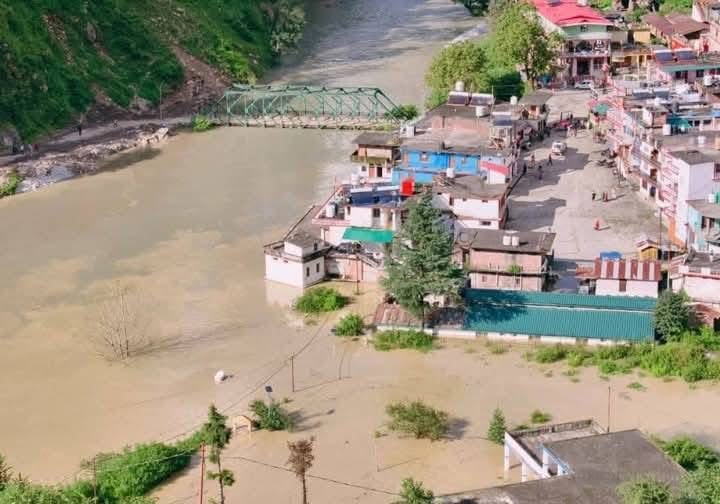
The Himalayan Application: In the narrow, steep-sided valleys of the Himalaya, a modern thrust-fault rupture will cause similar geomorphological inversions. Entire river systems can be permanently diverted into new channels or blocked completely, creating massive, unstable landslide-dams that threaten downstream communities with catastrophic failure hours after the initial shaking stops.
IV. The Time Machine ⏳
Historical Evidence: 16 May
-
1819 – The Run-Up to the Kutch Tectonic Shift: Historically, mid-May marks the period when 19th-century geologists and residents documented an unusually cool, showery transition into the monsoon season. This seemingly benign weather pattern masked the severe sub-surface stress building up beneath the Rann, which weeks later triggered a massive, landscape-altering earthquake.
-
The Lesson: It warns us that “The Calm is a Mask.” Natural systems often display completely normal or pleasant seasonal baselines right up to the moment a threshold is crossed and a fault line breaks.
-
-
1920 – The Post-War Engineering Delusion: Reflecting on early 20th-century mountain road construction, engineers frequently dismissed the long-term impact of deep vertical cutting on fragile shale slopes.
-
The Lesson: It reminds us that “Geological Fatigue” accumulates over decades. The slope-stability failures we witness today are often the result of construction methods deployed generations ago.
-
V. The Daily Ordinance: The “Hydro-Tectonic” Well Audit 📜
Your 60-second safety hack for the May 16 Cryospheric Deficit.
-
The Hack: The “Well-Water Clarity” Check.
-
The Observation: If your community relies on deep wells, natural springs (dharas/naulas), or boreholes, monitor the visual clarity of the water today.
-
The Danger: If the water suddenly turns muddy, turbid, or changes its taste under completely clear sky conditions, the sub-surface rock geometry has shifted. Minor, unfelt tectonic micro-fracturing or deep-seated slope settling can crush deep aquifers or pinch internal water channels, forcing water through new, un-sedimented fissures.
-
-
The Action: Sudden turbidity in groundwater is an “Inland Sentinel” warning of localized crustal stress or an impending deep landslide. Report the anomaly to local authorities and avoid sleeping in unreinforced masonry structures if the water remains muddy for more than 24 hours.
The devastating creation of the Allah Bund scarp and the high-magnitude tectonic displacement off Japan today warn us that the Earth can reshape our geography in a matter of seconds.
These past events tell us that ‘Environmental Debt’ and ‘Information Deserts’ are the true drivers of modern vulnerability.
Our ongoing initiatives in ‘Paleo-Seismological Mapping’ and ‘Decentralized Early Warning Systems‘ prove we are reading the mountain’s structural signs, but history warns us that if we do not integrate multi-hazard, cascading risk models into our infrastructure planning today, the sudden, unannounced shifts of a warming Third Pole will claim our future tomorrow.
Today tells us the peaks are dry; it warns us that the foundations are shifting under our feet.
Leave a Reply