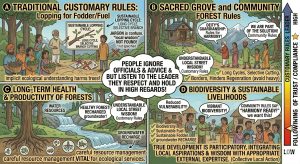
Long before modern environmental governance, traditional mountain communities practiced a highly sophisticated form of resource management. Through customary laws regulating tree lopping for fodder and fuel—especially within sacred groves—they protected their ecosystems from over-exploitation. They intuitively understood that aggressive cutting disrupts forest regeneration, stunts seed production, and degrades the land.
By enforcing selective branch-cutting and resting cycles, these ancestral rules preserved the forest’s long-term health. This wasn’t just about resource conservation; it was a foundational disaster risk reduction strategy. Healthy, un-degraded forests maintain critical ecological services—such as stabilizing slopes, anchoring soil, and facilitating groundwater recharge—creating natural safety nets against climate-induced hazards.