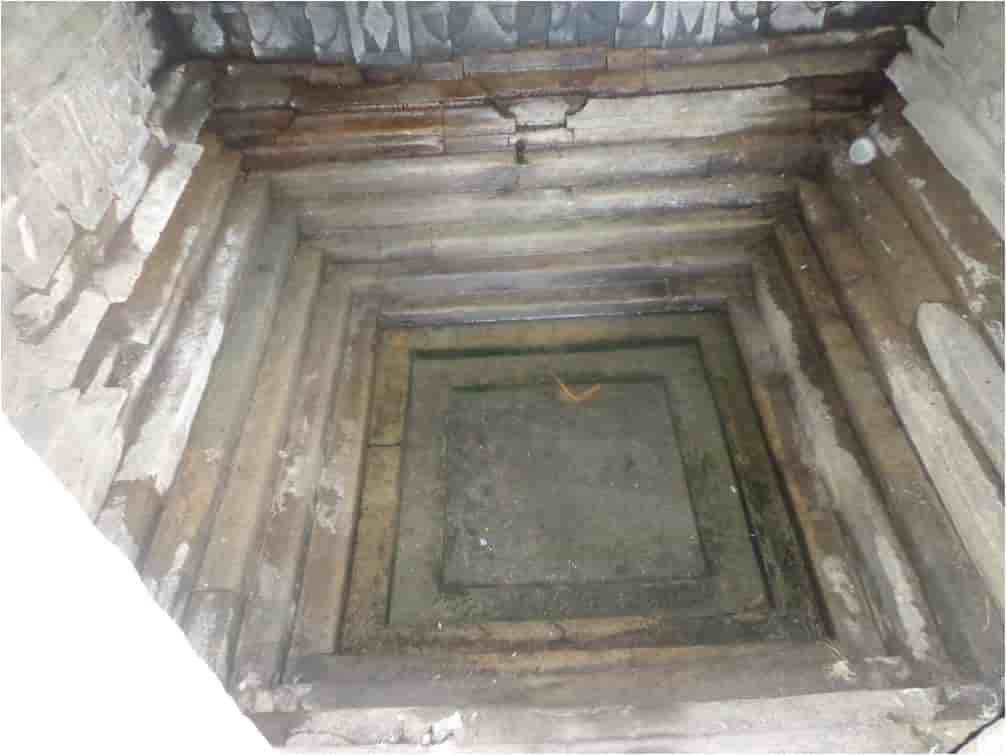
 Santa is looking worriedly at the meager trickle of water emerging from the village spring, the ‘dhara,’ which traditionally supplied much of their drinking water.
“Banta, look at our spring!”
“The monsoons were not too bad this year, but already the water flow is so weak.”
“By summer, it might just dry up completely!”
“Are the rain gods angry, or is there some curse upon our village?”
Banta observes the spring, then looks up towards the higher reaches of the mountain, where their community forest, bordering an old sacred grove dedicated to the local ‘Van Devi’, is located. He notices the forest looks thinner than he remembers from his childhood.
“Santa,” Banta says gently, “while we must always respect the divine, perhaps the answer to our shrinking spring lies not just in the sky, but up there on our mountain, in the health of our forests, especially our ‘banj‘ forests.”
“The forests?”
“How can trees affect a spring that comes from under the ground?” Santa asks, puzzled.
“Our ancestors understood this connection very deeply, Santa,” Banta explains.
“They observed for generations that springs flowing from near or below dense oak forests had the most reliable and abundant water.”
“You see, an ‘banj’ forest is like a giant natural sponge.”
“Its thick canopy of leaves breaks the force of the rain, its dense undergrowth and the rich layer of leaf litter on the forest floor prevent the rainwater from just rushing off the surface.”
“Instead, the water seeps slowly and deeply into the soil, recharging the underground channels that feed our springs.”
Santa looks thoughtful.
“So, the forest ‘catches’ the rain and ‘feeds’ the spring?”
“Precisely!” Banta affirms.
“And that’s why they often designated the forests in the upper reaches of their watersheds – the catchment areas of their springs and streams – as sacred groves, protected in the name of a local deity.”
“It wasn’t just superstition, Santa.”
“It was a profoundly wise way to ensure these critical recharge zones were preserved.”
“By restricting tree felling, excessive grazing, or other disturbances in these sacred ‘Dev Bhoomi’, they were protecting the very source of their life-giving water.”
He adds, “The rules around these groves – perhaps allowing only periodic, careful collection of dry firewood, or requiring a prayer before taking anything – ensured that the forest remained healthy, its ‘sponging’ capacity intact.”
“This practice of sacred groves, linking faith with conservation, is found across the Himalayas, from here to Nepal and Bhutan, safeguarding both water and biodiversity.”
Santa recalls his grandfather mentioning the sacred grove of Van Devi.
“So, when our elders forbade cutting green wood from the Devi‘s forest, they weren’t just being strict; they were protecting our spring’s mother?”
Banta nods. “They were. Perhaps the thinning of our community forest over the years, and maybe less respect for the old rules of the sacred grove, means our mountain ‘sponge’ isn’t holding as much water as it used to.”
“The oaks are becoming silent about their work of water conservation because we are not listening to their needs.”
Santa looks at the trickling spring with new understanding.
“So, to make our spring sing again, we need to help our forest, especially the sacred oaks, find their voice and strength once more.”
“It’s not just about rainfall, but also ‘jal-prabandhan’ through ‘van–raksha‘.”
संता – बंता की इस जुगलबन्दी से आज हमने क्या सीखा:-
- परम्परागत रूप से लोग वानस्पतिक आवरण, विशेष रूप से बांज के जंगलो व भू – जल के संवर्धन तथा धारो व नौलो की उत्पादकता के मध्य के रिश्तो को समझते थे / Traditional communities understood the critical role of healthy forests, particularly oak forests, in groundwater recharge and sustaining springs.
- जलागम के ऊपरी भाग में अवस्थित जंगलो को स्थानीय देवी – देवताओ को समर्पित करने से वर्षा के जल का संचय सुनिश्चित करने वाला क्षेत्र सुरक्षित रहता था और इस से संरक्षण का समावेश लोगो की मान्यताओं व आस्था में होता था / Sacred groves were a traditional institution for protecting vital watershed areas and recharge zones, linking conservation with cultural and spiritual beliefs.
- स्थानीय देवी – देवताओ को समर्पित जंगलो से संसाधनों के दोहन पर प्रतिबन्ध से पारिस्थितिक तंत्र सुदृढ़ रहता था और जल चक्र सुचारु रूप से कार्य करता था / Regulations on resource extraction from these groves ensured the long-term health of the forest ecosystem and its hydrological functions.
- इस प्रकार की परम्पराओ के ह्रास से जल उपलब्धता पर प्रतिकूल प्रभाव पड़ सकता है। अतः परम्परागत ज्ञान का सम्मान करते हुवे पुरखो के ज्ञान व आचार – व्यवहार को जीवित रखना जरूरी है / The decline of such practices can lead to reduced water availability, highlighting the need to revive and respect traditional ecological wisdom for water security.
संता – बंता की यह जुगलबन्दी आपको कैसी लगी, कृपया हमें जरुर बताये
व
इस जुगलबन्दी को बेहतर बनाने के लिये अपने सुझाव अवश्य दें।
हमें हमेशा की तरह आपके सुझावों, प्रतिक्रियाओं व कटाक्षो का बेसब्री से इंतजार रहता हैं और सच मानिये इसी के आधार पर हम अपने आप में, अपनी सोच व रचनात्मकता में सुधार करने को प्रेरित होते हैं।
सो अच्छा – बुरा जैसा आपको महसूस हुवा हो, कमेंट जरुर करते रहें।
Leave a Reply