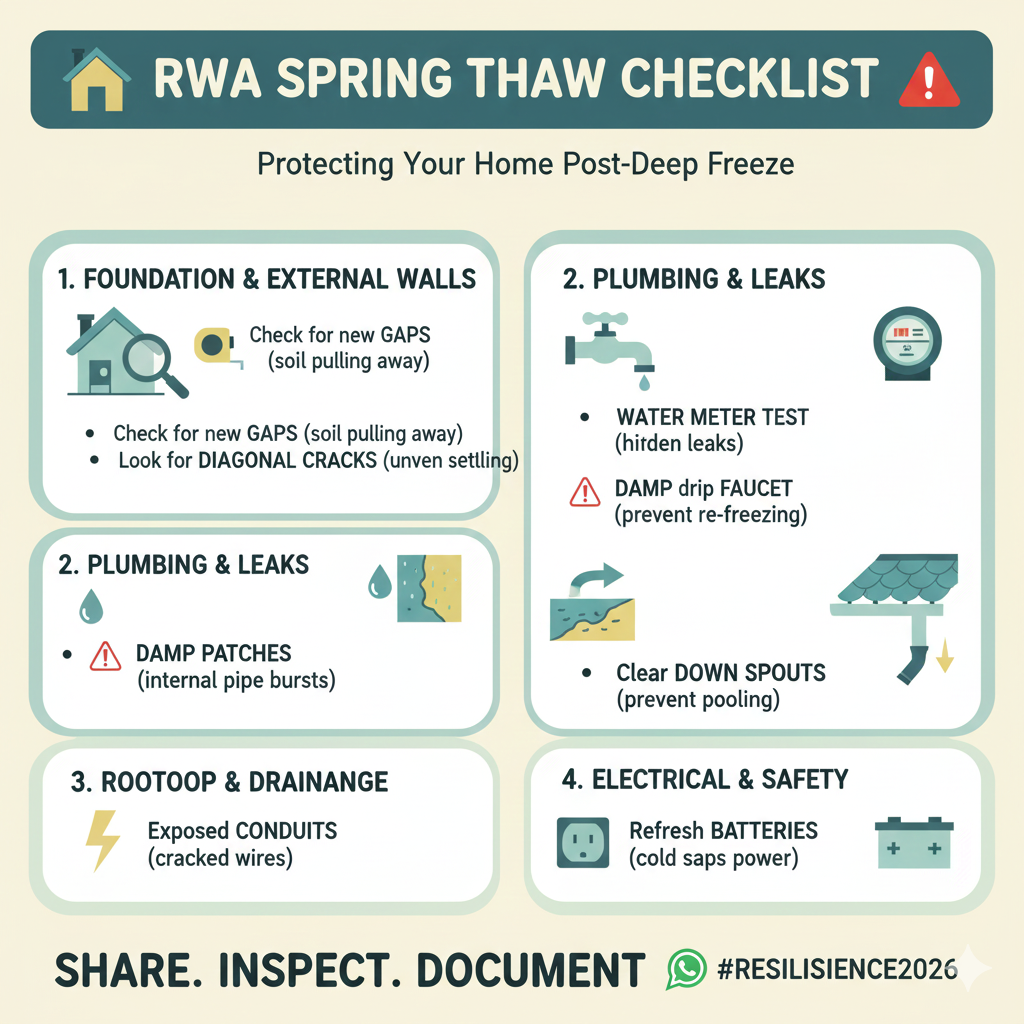
 As we move toward the mid-January thermal fluctuations in the Himalayan region, the “Spring Thaw Checklist” becomes a primary tool for Climate Change Adaptation (CCA). While the calendar says winter, the “Ground-Truth” indicates that the internal temperature of south-facing slopes is already rising, beginning the delicate process of seasonal transition.
The Mountain Pulse 🏔️
-
The Movement: Recent geotechnical data from the Beas and Satluj basins indicates a “Diurnal Heave” cycle. During the day, melt-water penetrates rock fissures; at night, it refreezes and expands. This “Frost Wedging” is the primary driver of winter rockfalls along the Himalayan Highways.
-
The Status: Observations near Lahaul and Spiti show “Slush-Flow” potential. Unseasonal warming has created a lubricated layer between the winter snowpack and the dry ground. For communities in Himachal, this is a “Yellow-Alert” status—the mountainside is no longer a solid mass but a layered system prone to sliding.
🛠️ Identifying Structural Fatigue Post-Freeze
1. External Shell & Foundation (The ‘Ice-Wedge‘ Audit)
When the ground thaws, it doesn’t always settle back into the same place.
-
The Foundation Gap: Inspect the perimeter where the soil meets your building. Look for “sink-holes” or gaps wider than 1 inch. This indicates the soil has contracted or washed away during the freeze.
-
The Hairline Watch: Check for new “diagonal” cracks above door frames and windows. Unlike vertical cracks, diagonal ones suggest the foundation has “heaved” and is now settling unevenly.
-
Retaining Wall Check: If you live on a slope (like in Mussoorie or Shimla), check if the wall is “bowing” or if new “weep-holes” (drainage holes) are clogged with frozen debris.
2. Plumbing & Liquid Dynamics (The ‘Silent Leak’ Hunt)
Ice expands pipes; the thaw reveals the cracks.
-
The Meter Test: Turn off all taps in the house for 30 minutes. Check your water meter. If the needle is moving, you have a “sub-surface leak” caused by a pipe that shattered during the freeze but only started leaking once the ice melted.
-
The Wall Dampness: Check the “Cold Side” (North-facing) walls for sudden damp patches or peeling paint. This is often where “Sweating Pipes” have caused internal masonry damage.
-
External Spigots: Turn on your outside taps. If the flow is weak or you hear a “hissing” inside the wall, the pipe behind the tap has likely burst.
3. Rooftop & Drainage (The ‘Gutter Load’ Review)
-
The Gutter Sag: Check if your gutters have pulled away from the roofline. The weight of “Black Ice” and frozen slush often bends the brackets.
-
Downspout Clearance: Ensure the bottom of your downspouts is clear of silt and frozen leaves. If the water “pools” at the base of your building during the thaw, it will seep directly into your foundation.
4. Electrical & Safety Systems
-
The Conduit Check: Inspect external electrical conduits. Plastic casings often become brittle and crack in -10°C weather. Exposed wires + Thaw water = Short circuits.
-
The Battery Refresh: As per our “Daily Ordinance,” replace any emergency batteries that were exposed to sub-zero temperatures, as their internal chemistry is likely compromised.
The Daily Ordinance: The “Hydrostatic Relief” Check 📜
The most critical item on your Spring Thaw Checklist.
-
Walk the perimeter of your retaining walls and look for “Icing.” If you see icicles forming on the face of the wall rather than dripping from the top, it means water is being forced through the masonry joints because the internal drainage is frozen or blocked. This increases the pressure on the wall tenfold. Use a warm salt-water spray to clear the “weep holes” and let the mountain breathe. #SpringThaw2026 #ShimlaResilience
How to Use This Checklist
-
Document Everything: Take “Before and After” photos of any cracks. This is vital for insurance claims or building audits.
-
The 24-Hour Rule: If you find a leak during the thaw, shut off the main valve immediately. A “pinhole” leak in a thawed pipe can release 1,000 liters of water in a single day.
-
Community Coordination: Share this with your neighbours. If five neighbours report the same “diagonal crack,” it’s a sign of a localized soil shift that needs a structural engineer.
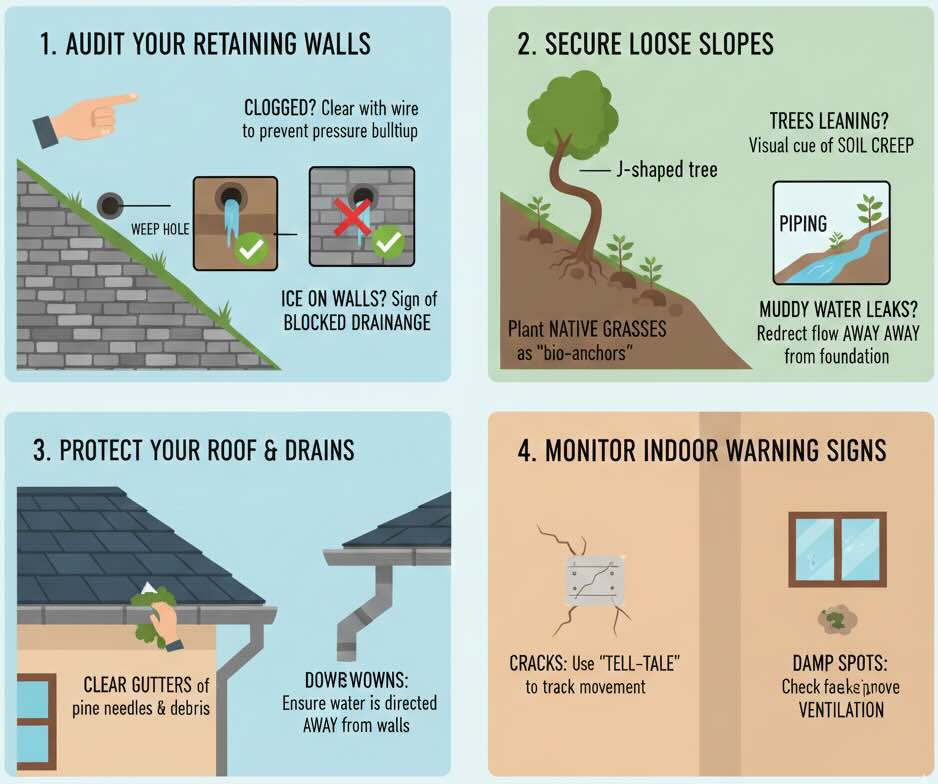 The history of the Himalayas teaches us that the transition between states—from ice to water, from tension to release—is the most dangerous hour. These past disasters warn us that a ‘Spring Thaw‘ is not just a change in weather, but a change in the physical load our infrastructure must bear.
Today’s checklist tells us that safety lies in the small details, like a clear weep hole or a monitored crack; if our ongoing initiatives don’t prioritise these micro-adjustments, we aren’t adapting to the climate—we are merely waiting for the thaw to decide our fate.
Leave a Reply