 Himalayan and Mountainous Regions
Call for Governance Reform
A major development is the joint submission made to the National Disaster Management Authority (NDMA) by over 30 organizations under the “People For Himalaya“ banner. The statement calls for urgent reforms in disaster governance and climate preparedness following the catastrophic 2025 monsoon season.
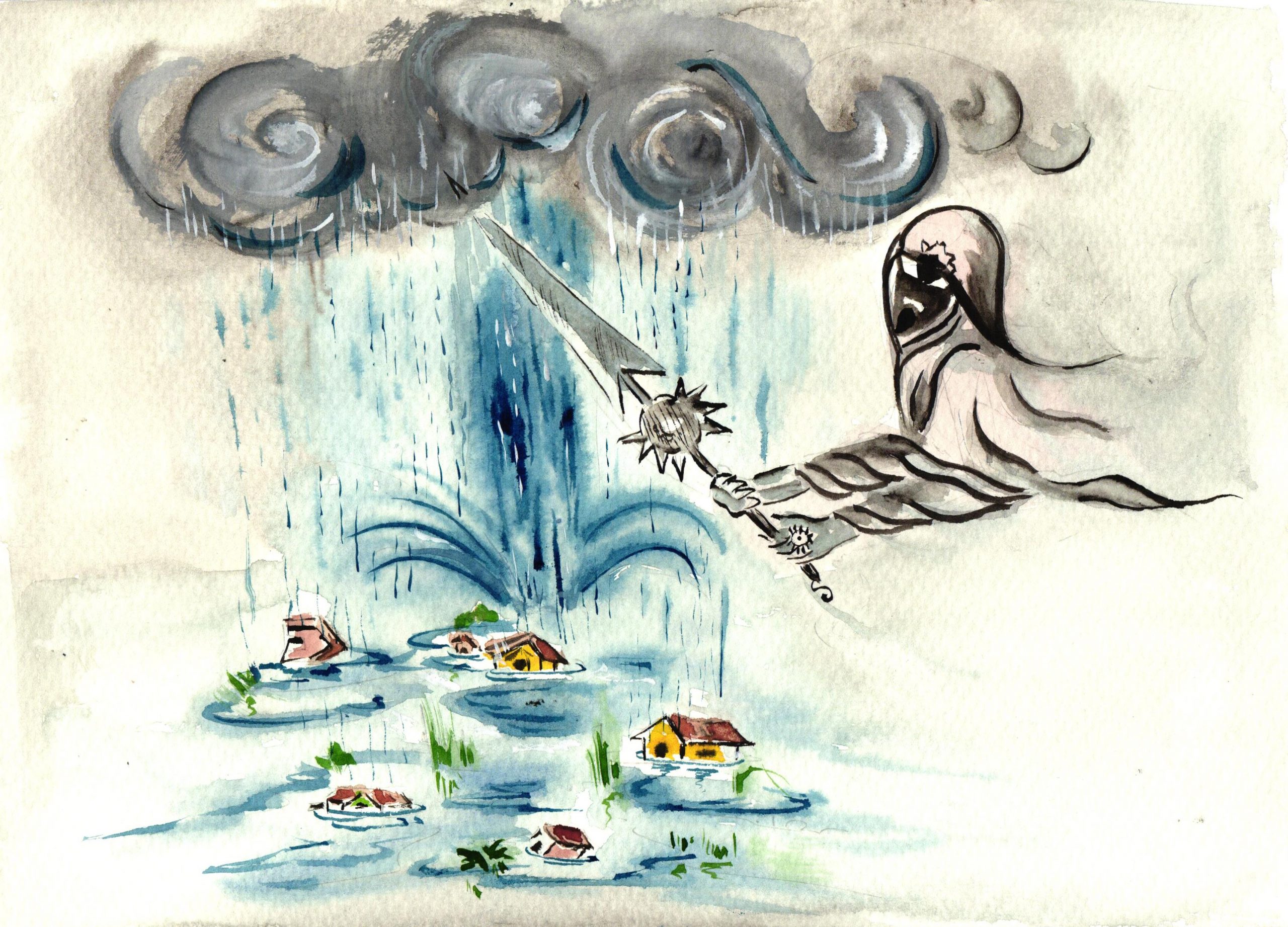
It argues that unscientific development (highways, tunnels, hydropower) has destabilized slopes and amplified disasters like floods and landslides across Uttarakhand, Himachal Pradesh, and the Northeast.
Ongoing Seismic Risk
While no major casualties were reported, seismic activity continues in the broader mountainous belt, with a M5.5 earthquake reported in Pakistan on October 17.
The Himalayan region is situated in highly active seismic zones, making earthquakes a constant high-risk threat.
Heavy Rains and Landslides in Nepal
Since Friday, flash floods and landslides have killed at least 47 people, blocking roads and washing away bridges.
Landslide in Pakistan
A major road link between provinces has been closed after a massive landslide buried a section of the route, disrupting transportation.
Major Incidences in Other Areas
Tropical Storm Fengshen (RAMIL) in the Philippines
Tropical Cyclone RAMIL is intensifying in the Philippine Sea and is forecast to reach severe tropical storm strength before its anticipated landfall in the Luzon area over the next 24-48 hours. The NDRRMC is maintaining a RED alert for preparedness and response.
The storm has caused widespread flooding and landslides, resulting in at least five deaths and two people missing. Heavy rains have soaked central islands like Samar and Panay, forcing thousands to evacuate.
One report notes over 22,000 displaced and at least one confirmed death.
Floods and Landslides in Mexico
At least 44 people have died due to severe flooding and landslides across the country this month, with ongoing impacts reported as of today.
Drownings in Illegal Sand Mine Pit in Uttar Pradesh, India
Twelve people drowned in a pit along the Utangan River, highlighting the dangers of illegal mining operations.
Environmental Incident in Thetford, UK
Mystery foam appeared on a river, prompting an investigation by the Environment Agency into potential pollution.
Volcanic Eruption (Indonesia)
Indonesia continues to monitor the ongoing eruption of Mount Lewotobi, which has led to evacuations and ashfall impacting air quality and agriculture on Flores Island.
DRR & CCA Conferences, Workshops, Reports and Others
Ongoing Conference Conclusion
The Resilient Week 13-10 in Zurich, which focused on resilience, is scheduled to conclude today (October 19).
New Report on Poverty and Climate
A groundbreaking report highlights that the vast majority of the world’s poor (887 million people) are directly exposed to extreme climate hazards, urging a unified approach to climate mitigation, adaptation, and poverty reduction.
Record CO2 Levels
The World Meteorological Organization (WMO) has released data showing that the atmospheric concentration of CO2 increased by a record amount between 2023 and 2024, underscoring the failure of international agreements to slow emissions and accelerate global warming.
Tipping Points
Scientists continue to warn that the planet has crossed a series of critical tipping points, with accelerating melting of the Greenland ice sheet and the potential for catastrophic consequences if global warming is not limited to 1.5o C.
Health Impacts
Climate change continues to severely impact human health by increasing the frequency of extreme weather and disrupting essential services like clean water and food supply, posing heightened risks, particularly in developing countries.
Historical Disasters on This Day (October 19)
202 BC: Battle of Zama
In one of the decisive battles of the Second Punic War, Roman forces under Scipio Africanus defeated Hannibal’s Carthaginian army near Zama (modern-day Tunisia).
The battle resulted in massive casualties—estimates suggest up to 20,000 Carthaginians killed and 20,000 captured, compared to about 1,500 Roman deaths. This crushing defeat ended Carthage’s dominance in the Mediterranean and led to the empire’s eventual decline, reshaping ancient geopolitics.
1781 – End of the American Revolutionary War
British General Lord Cornwallis formally surrendered to General George Washington at Yorktown, Virginia, effectively ending the American Revolutionary War.
1812: Napoleon’s Retreat from Moscow Begins
Following the disastrous French invasion of Russia, Napoleon Bonaparte ordered the Grande Armée to withdraw from Moscow on this date.
The retreat turned into a catastrophe due to harsh winter conditions, starvation, and Russian attacks. Over the following months, the army of around 600,000 was reduced to fewer than 40,000 survivors, marking one of the most infamous military disasters in history and contributing to Napoleon’s downfall.
1864: Battle of Cedar Creek
During the American Civil War, Confederate forces under Jubal Early launched a surprise attack on Union troops in Virginia’s Shenandoah Valley.
Although the Confederates initially gained ground, a Union counterattack led by Philip Sheridan turned the tide, resulting in about 5,700 Confederate casualties and 5,700 Union losses. The battle was a pivotal Union victory but highlighted the brutal toll of the war.
1914: First Battle of Ypres Begins
In World War I, Allied forces (primarily British, French, and Belgian) clashed with German troops in western Flanders, Belgium.
This marked the start of a month-long battle that devolved into trench warfare, with over 250,000 total casualties (including around 8,000 British killed in the first days alone). It symbolized the horrors of industrialized warfare and the stalemate on the Western Front.
1943 – Sinking of the Sinfra
The German cargo vessel Sinfra was attacked and sunk by Allied aircraft near Crete.
The sinking resulted in the drowning of approximately 2,000 Italian prisoners of war, marking a severe wartime disaster.
1950 – Chinese Troops Enter Korea
Chinese forces began crossing the border into Korea after the Battle of Pyongyang, dramatically escalating the Korean War.
1950: Battle of Chamdo (Qamdo) Ends
Chinese People’s Liberation Army forces captured the Tibetan city of Chamdo after a brief conflict, leading to the incorporation of Tibet into China.
While casualty figures are disputed, the battle resulted in hundreds of Tibetan deaths and marked the beginning of a larger humanitarian and cultural crisis in the region.
1987: Black Monday Stock Market Crash
Wall Street experienced its largest single-day percentage drop in history when the Dow Jones Industrial Average plummeted 508 points (22.6%). Triggered by program trading, overvaluation, and global economic fears, the crash wiped out billions in market value worldwide, leading to widespread financial panic and reforms in trading systems.
2004: Kirksville Regional Airport Plane Crash
A British Aerospace Jetstream 32 twin-turboprop aircraft crashed while attempting to land at Kirksville Regional Airport in Missouri, USA. Operated by Corporate Airlines (Flight 5966), the accident killed 13 of the 15 people on board, attributed to pilot error in poor weather conditions. It underscored ongoing concerns about regional aviation safety.
यह हमारा एक छोटा सा प्रयास हैं, आपको हर दिन आपदा से जुड़ी नवीनतम जानकारियाँ प्रदान करने का – विशेष रूप से वह आपदायें जो हिमालय व अन्य पहाड़ी क्षेत्रों में घटित हों.
हमारा यह प्रयास आपको कैसा लगा और कैसे हम इसे बेहतर व उपयोगी बना सकते हैं ?
हमेशा की तरह आपके सुझावों का हमें इंतजार रहेगा.
Leave a Reply