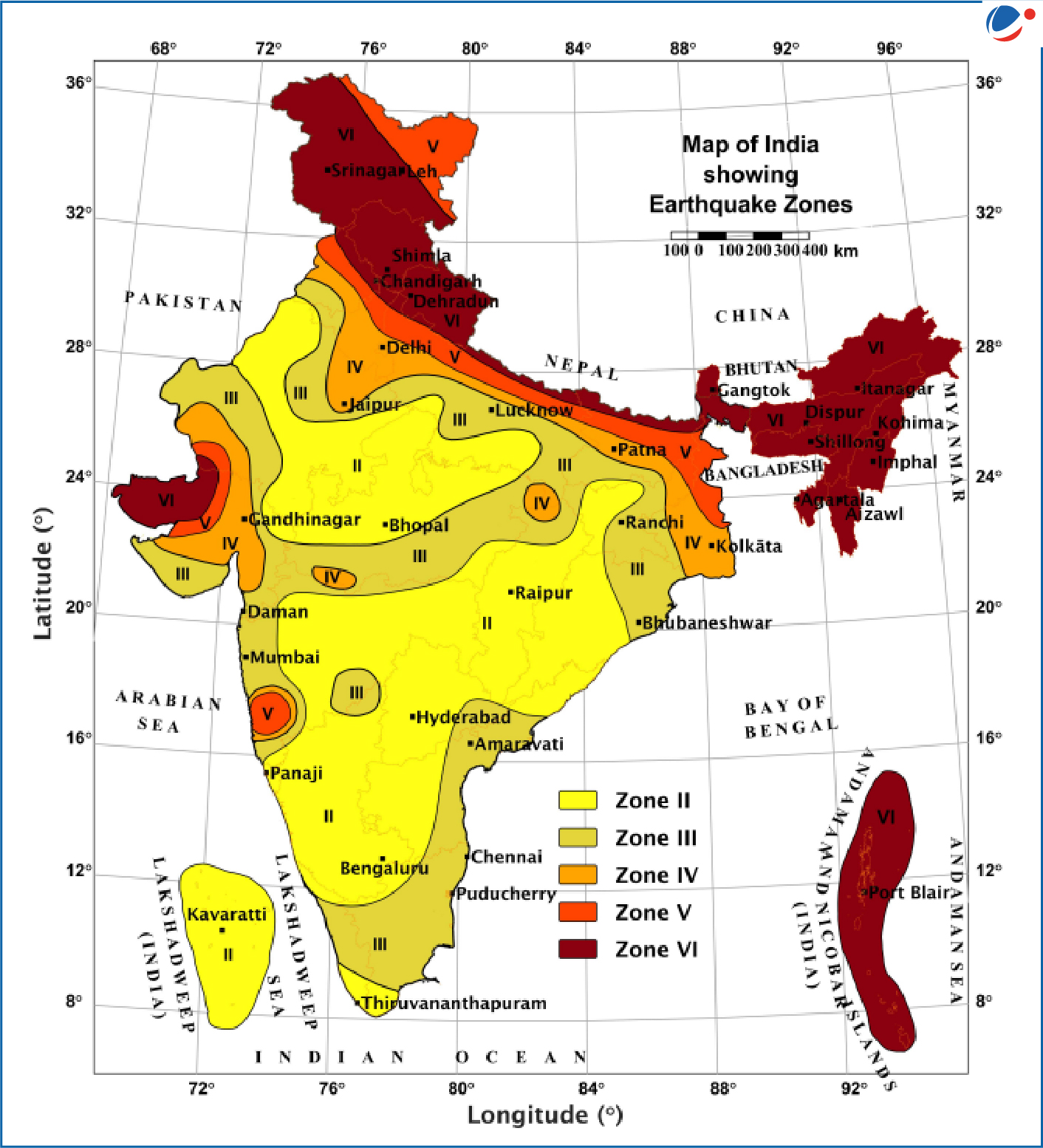
 सच मानिये, कबूतर की तरह आँख मूंद लेने से हम सम्भावित बड़े भूकम्प के झटकों का सामना तो निश्चित ही नहीं कर पायेंगे, और हमारा यह व्यवहार क्षति के परिमाण को बढ़ाएगा।
सम्भावित क्षति को कम करने के लिये तो हमें तैयारी करनी होगी, अपनी निर्मित अवसंरचनाओं को भूकम्प सुरक्षित बनाना होगा और इस सब में कुछ पैसा भी जरूर लगेगा।
अब फैसला आपको लेना है – थोड़ी सी बचत या फिर भविष्य पर निवेश और सुरक्षा?
The Ministry of Housing and Urban Affairs (MoHUA) and various developer groups have justified the withdrawal of IS 1893:2025 primarily on the grounds of “technical complexity” and “prohibitive cost escalation” (cited at 20–50%).
However, this narrow focus on Initial Capital Expenditure (CAPEX) ignores the catastrophic Life-Cycle Costs and the “Triple Dividend” of resilience.
Here we dismantle the MoHUA claims by contrasting short-term construction premiums against the long-term economic reality of Himalayan seismicity.
1. The “20% Premium” Myth vs. The “1:7” Reality
MoHUA Claim
The new code would increase construction costs by 20% for high-rises and up to 50% for Metros.
The Counter-Argument
Global and Indian empirical data suggest these figures are inflated by accounting for “gross project cost” rather than “structural cost.”
- Structural vs. Total Cost: In a typical Indian high-rise, the structural frame (RCC/Steel) accounts for only 25–30% of the total project cost. A 20% increase in structural reinforcement translates to only a 4–6% increase in total project CAPEX.
- The Benefit-Cost Ratio (BCR): According to the National Institute of Building Sciences (NIBS) and World Bank studies, for every ₹1 spent on seismic strengthening, a society saves ₹6 to ₹7 in post-disaster reconstruction, emergency response, and lost economic productivity.
2. The “Metro Escalation” Fallacy
MoHUA Claim
Metro projects face a 30–50% cost hike due to higher seismic demand.
The Counter-Argument
For critical infrastructure like Metro Rail, the cost of failure is not just the price of the pillar, but the total paralysis of a city’s economy.
- Indirect Economic Loss: The 2023 Turkey-Syria earthquakes showed that infrastructure failure accounts for 60% of total economic loss. If a Metro line in Delhi or Dehradun is out of service for 2 years post-quake, the GDP loss to the region would exceed the “saved” construction costs by a factor of 100.
- Design Optimization: The 2025 code promotes Performance-Based Design. While “Base Shear” demands increase, modern engineering allows for smarter damping and base isolation, which can actually reduce the volume of concrete and steel compared to “brute-force” over-designing under older codes.
3. The “Technical Complexity” Alibi
MoHUA Claim
The code is “too technical” for immediate implementation by practicing engineers.
The Counter-Argument
Complexity is a reflection of the Earth’s reality, not a choice by the Bureau of Indian Standards (BIS).
- The Zone VI Mandate: Reverting to the 2016 code doesn’t make the Himalayas safer; it only makes our ignorance “legal.” Using a deterministic 2016 model for a 2026 Himalayan project is engineering malpractice.
- Training vs. Deletion: The solution to complexity is Capacity Building, not a rollback. The Indian Concrete Institute (ICI) and IITs have already begun workshops. Deleting the code is equivalent to a hospital banning MRI machines because they are “harder to operate” than X-rays.
4. Post-Disaster Reconstruction: The Hidden Tax
When a non-resilient building collapses, the “saved” 5% construction cost is paid back by the public through:
- Ex-gratia Payments: Government funds used for victim compensation.
- Insurance Premiums: Higher risk profiles lead to a “Seismic Tax” on all property owners.
- Debris Management: The cost of clearing a collapsed high-rise often exceeds 15% of its original value.
Summary Table: Resilience vs. Response
|
Factor |
Building to 2016 Code (Current) |
Building to 2025 Code (Withdrawn) |
| Initial CAPEX Hike | 0% | 4% – 8% (Real terms) |
| Structural Integrity | Life Safety (likely collapse in M 8.0) | Immediate Occupancy / Repairable |
| Post-Quake Cost | 100% Replacement + Debris Cost | 2% – 5% for minor repairs |
| Economic Disruption | Years | Days to Weeks |
| Parameter | IS 1893:2016 (Current/Rollback) | IS 1893:2025 (Withdrawn) |
Engineering Impact
|
| Seismic Zones | IV & V (Highest) | Introduced Zone VI |
Acknowledges “Super-Critical” risk in the Himalayan belt.
|
| Zone Factor (Z) | Zone V = 0.36 | Zone VI = 0.48 to 0.54 |
A 33–50% increase in design force for Himalayan projects.
|
| Design Spectra | Standard 3-tier spectra. | Site-Specific PSHA |
Forces engineers to use the actual soil frequency rather than an average.
|
| Damping Ratio | Fixed at 5% for all structures. | Material-Specific Damping |
Allows lower damping for steel/glass, reflecting realistic energy dissipation.
|
The 2001 Bhuj Earthquake, where 18-story buildings collapsed due to ‘technical oversights,’ and the 2015 Nepal Earthquake warn us that the ‘cost of compliance’ is a fraction of the ‘cost of catastrophe.’
These past events tell us that an un-engineered building is not an asset, but a liability waiting for a trigger.
Our ongoing initiatives in ‘Probabilistic Seismic Hazard Assessment’ prove we have the science to survive, but history warns us that if we allow MoHUA’s ‘financial concerns’ to override the Zone VI reality today, the bill for our ‘savings’ will be signed in the blood of the masses tomorrow.
Today tells us the fault lines are loaded; it warns us that a rollback is not a saving, it’s a betrayal.
#SeismicResilience #IS1893 #TheEconomicsOfSafety #StructuralIntegrity #ZoneVI #DisasterMitigation #HimalayanSentinel #SafeConstruction #MoHUA #EngineeringEthics
Leave a Reply