 Santa excitedly flips through a brochure filled with pictures of modern houses.
“Look, Banta! These are the kind of houses people build now – so stylish!”
“See this one with a wing going this way, and another that way, and so many interesting corners.”
“Our old village houses look so… plain, just simple boxes.”
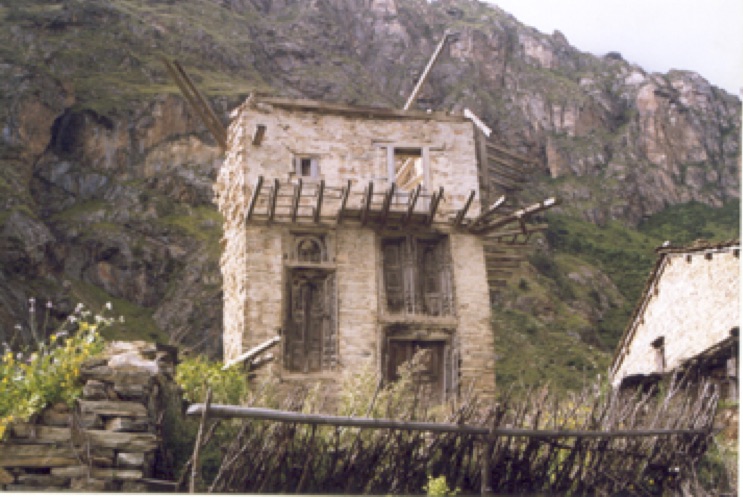
Banta looks at the glossy pictures and then glances around at the sturdy, time-tested rectangular houses of their village.
“They are indeed eye-catching, Santa.”
“New designs often prioritize a certain kind of visual appeal.”
“But our ancestors, when they designed their ‘simple boxes,’ were thinking about a different kind of appeal – the appeal of standing strong when the earth decided to dance.”
“What do you mean?” Santa asks.
“How can a plain box be stronger than these fancy shapes?”
“Think of it this way,” Banta explains.
“When an earthquake shakes the ground, a building experiences twisting forces, what engineers call torsion.”
“A simple, symmetrical rectangular shape, like our traditional houses, distributes these forces much more evenly throughout the structure.”
“There are no odd wings or far-out corners that might try to twist away from the main body of the house, causing stress to build up dangerously at those junctions.”
He continues, “Our old builders also followed certain ‘sunahre anupaat’ or golden ratios.”
“The length and width of the house, typically between 4 and 8 meters, were kept in a balanced ratio, often between 1.1 to 1.4 – meaning one side wasn’t excessively long compared to the other.”
“And the height of the house above its solid platform was generally limited to about twice the length of its shorter side.”
“These weren’t just random numbers; they ensured the house wasn’t too skinny or too oddly proportioned, making it inherently more stable against sideways shaking.”
Santa, trying to visualize it, says, “So, a simple, well-proportioned box doesn’t get easily twisted out of shape like a more complicated structure might?”
“Precisely!” Banta affirms.
“In a complex shape, different parts of the house can try to vibrate at different rates during an earthquake, leading to concentration of stress at the corners or where the wings join, and those are often the first places to crack or fail.”
“Our ancestors’ ‘plain boxes’ were a masterstroke of structural simplicity and symmetry, designed to behave predictably and resist those damaging twisting forces.”
“It’s a principle even modern earthquake engineering codes advocate for: keep the design simple and symmetrical for better performance.”
Santa looks at the brochure again, then at the sturdy old house next door.
“So, plain was actually smart and strong.”
“Our forefathers weren’t lacking in imagination; they were just very practical about living safely in these shaky mountains.”
संता – बंता की इस जुगलबन्दी से आज हमने क्या सीखा:-
- हिमालय में परम्परागत रूप से बनाये जाने वाले बहुमंजिला भवनों का प्रारूप सरल आयताकार या वर्गाकार तथा संतुलित अनुपात का होता था / Traditional Uttarakhandi houses typically featured simple rectangular plans with balanced proportions (length/width ratios and height restrictions).
- यह संरचनात्मक सरलता व समरूपता भूकम्प के समय घूर्णन प्रभावों के साथ ही भूकम्पीय बलों के जमाव को न्यून कर संरचना को स्थिरता प्रदान करती थी / This structural simplicity and symmetry helped minimize torsional effects and stress concentrations during earthquakes, enhancing stability.
- यह संरचना आधुनिक भवन निर्माण विधियों के अनुरूप हैं जो सरल व समरूप संरचना की वकालत करती हैं / These principles align with modern seismic design codes that advocate for regular and symmetrical building configurations.
- संरचनाओं का इस तरह का परम्परागत प्रारूप सांरचनाओ को सुरक्षित बनाने की जटिल व व्यावहारिक अभियांत्रिकी का प्रतिफल हैं / “Plain” and “boxy” traditional designs were often a result of sophisticated, practical engineering for resilience.
संता – बंता की यह जुगलबन्दी आपको कैसी लगी, कृपया हमें जरुर बताये
व
इस जुगलबन्दी को बेहतर बनाने के लिये अपने सुझाव अवश्य दें।
हमें हमेशा की तरह आपके सुझावों, प्रतिक्रियाओं व कटाक्षो का बेसब्री से इंतजार रहता हैं और सच मानिये इसी के आधार पर हम अपने आप में, अपनी सोच व रचनात्मकता में सुधार करने को प्रेरित होते हैं।
सो अच्छा – बुरा जैसा आपको महसूस हुवा हो, कमेंट जरुर करते रहें।
Leave a Reply