 Santa was working as an inspector for a major commercial regional restaurant association along a national highway.
He was walking around a busy roadside eatery, checking a massive, glass-fronted outdoor display cabinet packed with hundreds of 1-liter water bottles facing the direct morning sun.
“Everything is shining, Banta!” Santa cheered, checking off his clipboard.
“The inventory is full, the branding is prominent, and travellers can see the bottles clearly from a kilometer away!”
“This is a model roadside retail setup!”
Banta walked up, holding a sheet of dark reflective film, a roll of thermal insulation canvas, and a prototype blueprint for a shaded, hydro-cooled earthenware display box.
He placed the insulation canvas directly over Santa’s clear glass display, cutting off the direct sunlight completely.
“Santa-ji, your model display is a public health hazard blueprint,” Banta said, taping the reflective film onto the glass panel.
“You are prioritizing marketing visibility over product safety parameters.”
“To minimize plastic degradation risks, we need an immediate change in retail vendor practices.”
“Oye Banta!”
“If I cover the glass, how will the speeding travellers know we sell cold water?”
“The sales will drop!” Santa argued.
“The sales will drop if your customers find out your water contains leached carcinogens and organic compounds, Santa!” Banta countered, opening his blueprint layout.
“Look at this cost-effective, socially acceptable solution.”
“Retailers and restaurants must store their PET inventories in completely shaded, covered areas or use reflective, insulated display cabinets.”
“They must practice strict stock rotation—ensuring old stock is sold first before it accumulates pre-exposure damage in hot warehouses.”
“On the policy side, we need state health departments to mandate strict storage guidelines for highway outlets, and encourage beverage manufacturers to research UV-resistant biodegradable linings.”
“We don’t need to destroy the highway economy, Santa; we just need to use basic engineering—like insulated storage boxes or reflective curtains—to keep our drinking water cool, pure, and safe from photodegradation!”
Santa looked at the insulated canvas cover, then at the shaded prototype box.
He nodded slowly, picking up his marker to rewrite the inspection rules.
“Oye Banta… you’re right.”
“A truly grand restaurant isn’t one where the bottles look shiny in the sun; it’s one where the water stays safe in the shade!”
संता – बंता की इस जुगलबन्दी से आज हमने क्या सीखा:-
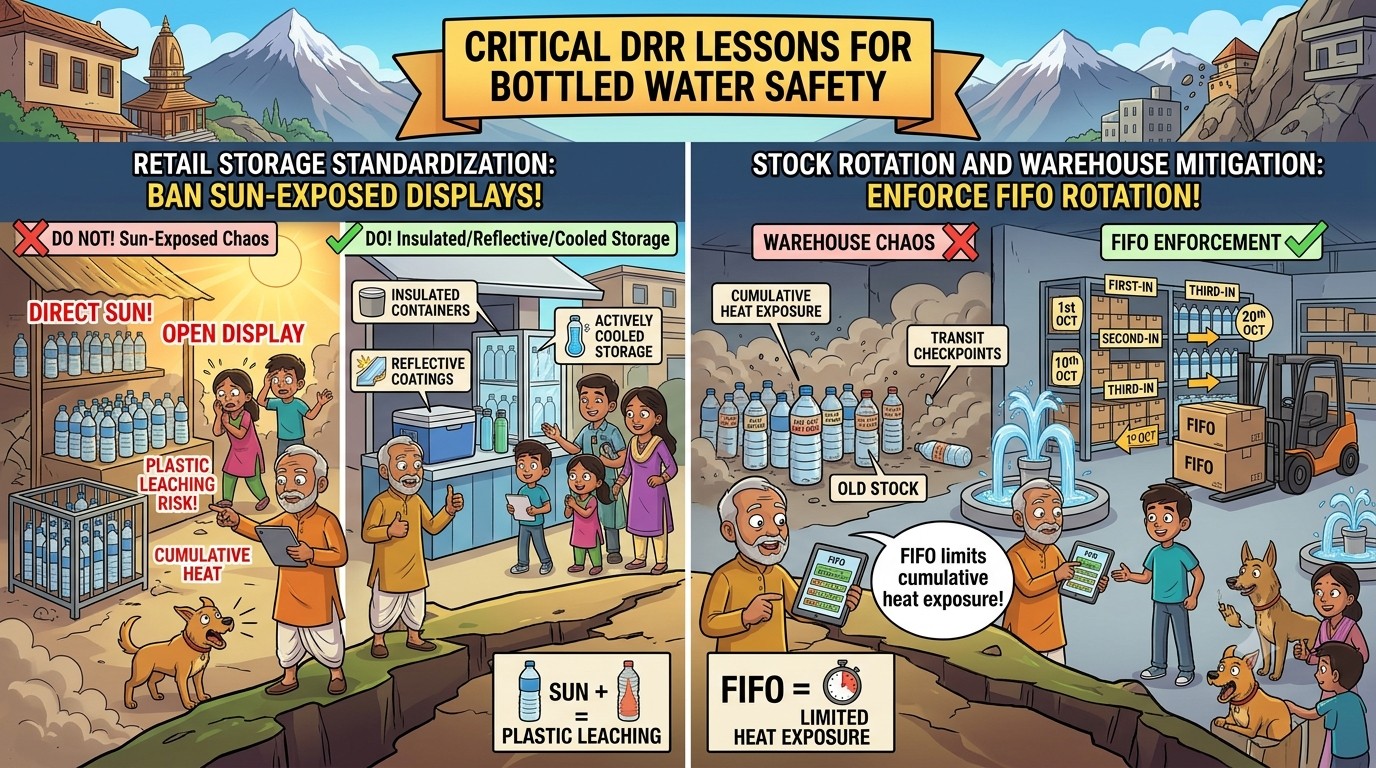
- खुदरा भंडारण का मानकीकरण / Retail Storage Standardization:
- प्लास्टिक रिसाव के खतरों को कम करने के लिए खुदरा विक्रेताओं पानी की बोतलों को धूप में रखना बंद करना होगा। उन्हें पानी की बोतलों का भण्डारण इंसुलेटेड, परावर्तक (reflective) या ठंडे भंडारण स्थानों में करना होगा / Minimizing plastic leaching risks mandates commercial vendors to eliminate direct sun-exposed open displays, transitioning to insulated, reflective, or actively cooled stock management infrastructures.
- स्टॉक रोटेशन और गोदाम प्रबंधन / Stock Rotation and Warehouse Management:
- बोतलों की सुरक्षा के लिए सख्त ‘स्टॉक रोटेशन‘ (FIFO) का पालन किया जाना चाहिये ताकि उपभोक्ताओं तक पहुँचने से पहले गोदामों और परिवहन के दौरान पानी पर गर्मी और धूप का संचयी प्रभाव न्यूनतम रहे / Bottled water safety requires strict First-In, First-Out (FIFO) inventory rotation to limit cumulative heat exposure in intermediate warehouses and transit checkpoints prior to consumer purchase.
संता – बंता की यह जुगलबन्दी आपको कैसी लगी, कृपया हमें जरुर बताये
व
इस जुगलबन्दी को बेहतर बनाने के लिये अपने सुझाव अवश्य दें।
हमें हमेशा की तरह आपके सुझावों, प्रतिक्रियाओं व कटाक्षो का बेसब्री से इंतजार रहता हैं औरसच मानिये इसी के आधार पर हम अपने आप में, अपनी सोच व रचनात्मकता में सुधार करने को प्रेरित होते हैं।
सो अच्छा – बुरा जैसा आपको महसूस हुवा हो, कमेंट जरुर करते रहें।
#RetailReforms #ShadedStorage #StockRotation #InfrastructureSafety#HighwayHydration #SantaBantaStories
Leave a Reply