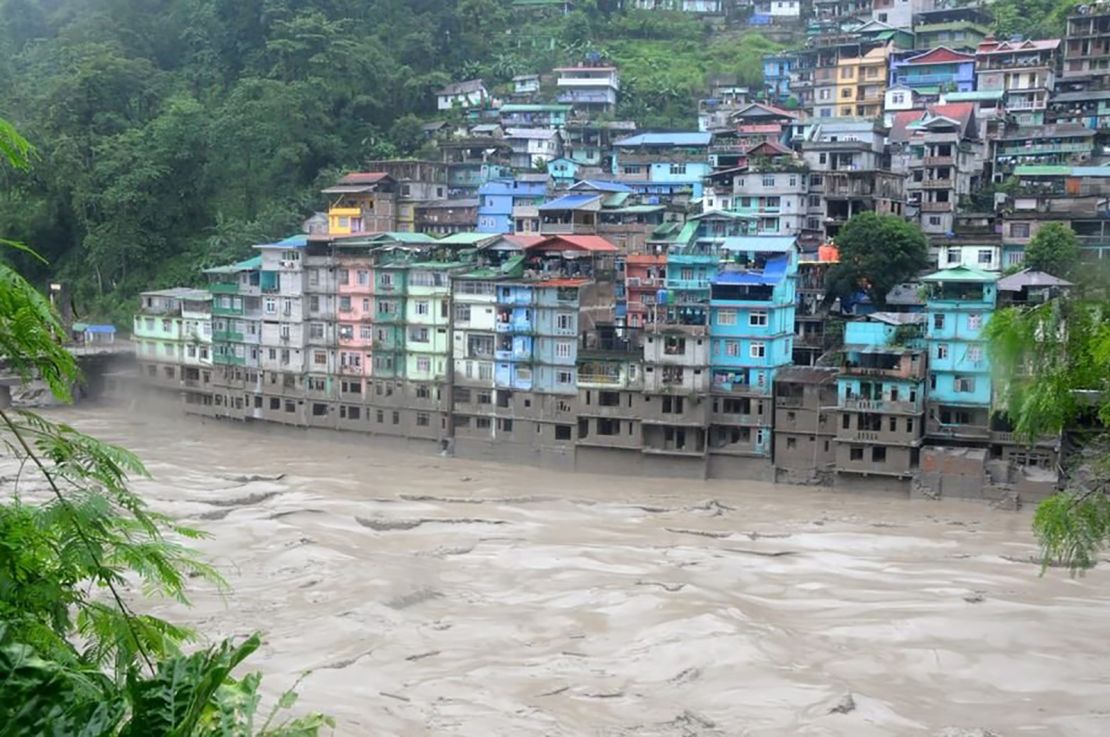
 Himalayan and Mountainous Regions
Nepal Himalayas
A deadly avalanche struck the base camp on Mount Yalung Ri in eastern Nepal, killing at least seven climbers, including five foreigners (three Americans, one French, and one Italian) and two Nepali guides.
The incident occurred amid days of ferocious snowstorms exacerbated by a recent cyclone, with rescue operations ongoing for additional missing mountaineers in the Rolwaling region.
Five others have been rescued so far, but seven remain unaccounted for.
This marks the latest in a surge of high-altitude disasters in the region this year, driven by climate-accelerated glacial instability and extreme weather.
Western Himalayan Region (New Threat)
The main concern for the Himalayas today is the arrival of a fresh Western Disturbance (WD). The India Meteorological Department (IMD) confirmed that this WD is beginning to influence the Western Himalayan Region (Jammu & Kashmir, Himachal Pradesh, and Uttarakhand) starting today.
This system is expected to bring heavy rain and snowfall to the higher reaches of the mountains.
This poses a significant, immediate risk of avalanches and will reactivate zones prone to landslides that were already severely destabilized during the intense 2025 monsoon season.
Afghanistan
Cleanup underway after a 6.3 magnitude earthquake struck northern provinces, killing at least 20 people and injuring dozens.
The quake caused widespread structural damage in remote villages, complicating aid delivery amid ongoing conflict.
Major Disasters in Other Areas
Asia (Non-Mountain Focus)
Western/Coastal India
The low-pressure area over the Arabian Sea is weakening, leading to a gradual decrease in rainfall over Gujarat and the Konkan coast. Coastal surveillance is easing as strong wind warnings are downgraded.
Philippines
Typhoon Kalmaegi (locally named Tino) made landfall in the central Visayas region overnight, leaving at least two dead, submerging cars, and trapping residents on rooftops in Cebu City.
A Philippine Air Force helicopter en route to deliver aid crashed, injuring all five aboard but with no fatalities reported.
President Ferdinand Marcos Jr. has mobilized resources, with Signal No. 4 warnings issued for Cuyo Islands.
Flooding has affected thousands, with the storm continuing to weaken but still posing risks.
Americas
Caribbean (Jamaica and Cuba)
Recovery efforts intensify post-Hurricane Melissa, which battered the region last week with high winds and storm surges.
India dispatched 20 tonnes each of humanitarian aid, including medical supplies, generators, and hygiene kits via the Indian Air Force, underscoring global solidarity for reconstruction.
DRR & CCA Conferences, Workshops, Reports, Concerns and Incidences
Chronic Himalayan Crisis
Policy attention remains on the underlying factors that turned 2025’s extreme weather into a disaster.
Reports emphasize that the geological fragility of the Himalayas, combined with unscientific and extensive infrastructure projects (like tunnels and large hydropower dams), has fundamentally increased the region’s vulnerability to climate-fueled hazards like cloudbursts and GLOFs.
Major International Conference Kick-off
The EU Science for Preparedness Conference begins today (November 4) in Turin, Italy, and runs until November 6.
Experts from science, policy, and crisis response are meeting to explore how science can help better anticipate and prepare for future crises related to climate change and other complex risks.
Global Social Summit
The Second World Summit for Social Development is scheduled to begin today in Doha, Qatar.
A key theme is “Reframing social development for a risk-prone world,” emphasizing the need to integrate resilience and disaster risk reduction into poverty alleviation and social equity goals.
New Report Expected
The UNEP Emissions Gap Report 2025 is expected to be released today. This critical report will assess the gap between current global greenhouse gas emissions and the levels needed to meet the Paris Agreement goals, providing a crucial update on global climate action.
The report is expected to highlight the collective failure to cut emissions rapidly enough. The report will likely reinforce the fact that global fossil fuel dependence remains the single largest driver of global warming.
Climate and Infectious Diseases
Reports warn that climate change is driving a surge of infectious diseases globally.
Rising temperatures and erratic rainfall are expanding the range of vectors, contributing to the spread of illnesses like dengue, chikungunya, and leishmaniasis, making these diseases a threat year-round in many regions.
Paris Agreement Milestone
Today marks the anniversary of the Paris Agreement coming into effect (November 4, 2016), serving as a reminder of the global commitment to limit warming and the ongoing, urgent need for scaled-up adaptation and mitigation efforts.
Historical Disasters on This Day (October 21)
1791 – Battle of the Wabash
A coalition of Native American tribes won a major victory over the US Army at the Battle of the Wabash, inflicting the greatest defeat ever suffered by the US Army at the hands of North American Indians.
1942 – Second Battle of El Alamein
During World War II, British troops under General Montgomery decisively defeated the German forces led by Erwin Rommel in North Africa.
This Allied victory was a major turning point in the war.
1956 – Soviet Invasion of Hungary
Soviet troops entered Hungary to crush the Hungarian revolution against Soviet influence.
Thousands were killed or wounded, and nearly a quarter million people fled the country, marking a dark moment in the Cold War.
1966 – Florence Flood in Italy
The Arno river burst its banks after days of relentless rain, surging up to 6.7 meters deep and submerging the Renaissance city’s historic center.
The deluge left 113 people dead, thousands homeless, and irreparably damaged millions of art masterpieces in libraries and museums—earning it the moniker “the Mud Angel” disaster for the volunteers who waded through toxic sludge to save cultural treasures.
It remains a stark reminder of how urban development can amplify flood risks in floodplains.
2016 – Paris Agreement Comes into Effect
The Paris Agreement, aimed at limiting global temperature rise, officially came into force, a significant milestone in international climate governance.
2017 – Antonov AN-26 plane crash
Antonov AN-26 plane crash at Juba International Airport in South Sudan, killing 31 of 33 aboard amid poor weather and mechanical failure during a domestic flight.
Only a man and a young girl survived, pulling each other from the wreckage—a poignant tale of improbable resilience amid aviation hazards in conflict zones.
These echoes from November 3 urge vigilance:
Floods that drown cities, Quakes that crack the ground, Storms that swallow shores.
In 2025’s quivering world, these whisper that yesterday’s scars are blueprints for tomorrow’s shields.
Stay vigilant; history whispers warnings.
यह हमारा एक छोटा सा प्रयास हैं, आपको हर दिन आपदा से जुड़ी नवीनतम जानकारियाँ प्रदान करने का – विशेष रूप से वह आपदायें जो हिमालय व अन्य पहाड़ी क्षेत्रों में घटित हों.
हमारा यह प्रयास आपको कैसा लगा और कैसे हम इसे बेहतर व उपयोगी बना सकते हैं ?
हमेशा की तरह आपके सुझावों का हमें इंतजार रहेगा.
Leave a Reply