 Santa was working as a sanitation contractor for a high-density tourist campsite in Uttarakhand.
He had collected a massive, mountain-high pile of plastic water bottles, disposable plates, and multi-layered noodle wrappers left behind by a group of weekend pilgrims.
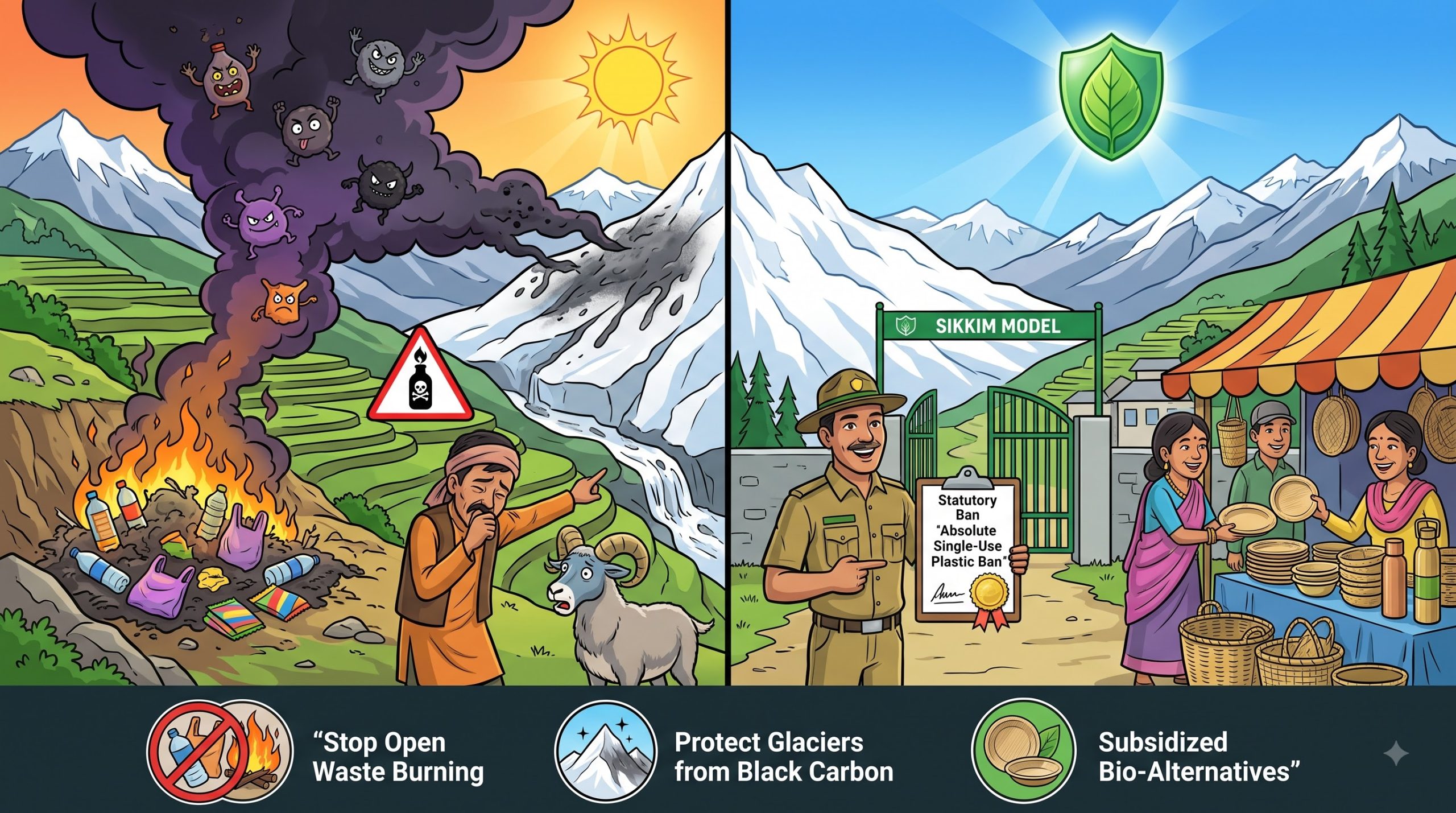
To clear the campsite quickly for the next batch, Santa took a matchstick, struck it, and threw it into the pile, creating a massive, roaring black bonfire that filled the clean mountain air with a pungent, thick chemical stench.
“Look at my low-cost, decentralized engineering, Banta!” Santa laughed, coughing slightly as the black smoke swirled around his face.
“The waste management infrastructure in these remote areas is non-existent.”
“Transporting this trash to a city recycling center costs thousands of rupees.”
“A single matchstick costs less than five paise, and boom—the garbage is vanished into thin air!”
“Problem solved!”
Banta rushed into the campsite, holding a wet cloth over his nose and pulling Santa back forcefully from the toxic fumes.
“Santa-ji, you haven’t vanished the garbage; you have just transformed a physical soil pollutant into an airborne chemical weapon!”
“You are releasing dioxins, furans, and heavy metals directly into our fragile atmosphere!”
“Oye Banta!”
“It’s an open campsite, the mountain wind carries the smoke away instantly!” Santa coughed, his eyes watering.
“The wind carries those toxins straight into the lungs of local children and grazing wildlife, Santa!” Banta shouted, pointing toward the ridge.
“Open burning of plastics in the Himalayas is a desperate, short-sighted reaction to an artificial systems flaw.”
“Look across the country at Sikkim’s leadership!”
“As early as 1998, inspired by grass-roots community efforts in Yuksom village near Khangchendzonga National Park, Sikkim became the first state to impose absolute ban on disposable plastic carry bags.”
“They didn’t look for easy, toxic cleanup bonfires; they expanded the ban to include single-use mineral water bottles and legally subsidized eco-friendly alternatives like paper, bamboo, bagasse, and areca nut plates!”
“As a result, their documented waste generation decreased significantly from 102.7 tons to 82.75 tons.”
“We cannot burn our way out of a plastic crisis, Santa.”
“A true welfare state must ban the production of these toxic materials and empower Self-Help Groups (SHGs) to manufacture traditional, low-waste biodegradable alternatives!”
संता – बंता की इस जुगलबन्दी से आज हमने क्या सीखा:-
- खुले में कचरा जलाने का वायुमंडलीय खतरा / The Atmospheric Toxification Hazard:
- पर्वतीय पारिस्थितिकी प्रणालियों में प्लास्टिक कचरे को खुले में जलाना हवा में अत्यधिक विषैले रसायन (dioxins/furans) छोड़ता है, जो वायु गुणवत्ता को नष्ट करता है और ग्लेशियरों पर ब्लैक कार्बन के जमाव को तेज करता है / Open burning of plastic waste in fragile mountain ecosystems releases hazardous air pollutants (dioxins/furans), degrading localized air quality and exacerbating black carbon accumulation on adjacent glacial surfaces.
- स्रोत-स्तरीय प्रतिबंधों की सफलता / The Efficacy of Source-Level Prohibitions:
- सिक्किम का मॉडल यह साबित करता है कि सिंगल-यूज़ प्लास्टिक पर सख्त कानूनी प्रतिबंध लगाने और स्थानीय स्तर पर पर्यावरण-अनुकूल विकल्पों(जैसे गन्ने की खोई या सुपारी के पत्तों की प्लेटें) को बढ़ावा देने से कुल कचरे की मात्रा को प्रभावी ढंग से कम किया जा सकता है / Sikkim‘s institutional framework demonstrates that combining absolute statutory bans on single-use plastics with subsidized localized alternatives (bagasse/areca nut) can successfully compress aggregate waste metrics.
संता – बंता की यह जुगलबन्दी आपको कैसी लगी, कृपया हमें जरुर बताये
व
इस जुगलबन्दी को बेहतर बनाने के लिये अपने सुझाव अवश्य दें।
हमें हमेशा की तरह आपके सुझावों, प्रतिक्रियाओं व कटाक्षो का बेसब्री से इंतजार रहता हैं औरसच मानिये इसी के आधार पर हम अपने आप में, अपनी सोच व रचनात्मकता में सुधार करने कोप्रेरित होते हैं।
सो अच्छा – बुरा जैसा आपको महसूस हुवा हो, कमेंट जरुर करते रहें।
#OpenBurningHazards #SikkimModel #ToxicIncineration #EcoFriendlyAlternatives #BiodiversityLoss #SantaBantaStories
I hope to see other states following what Sikkim did for the environment. Thank you very much for bringing this to our attention.