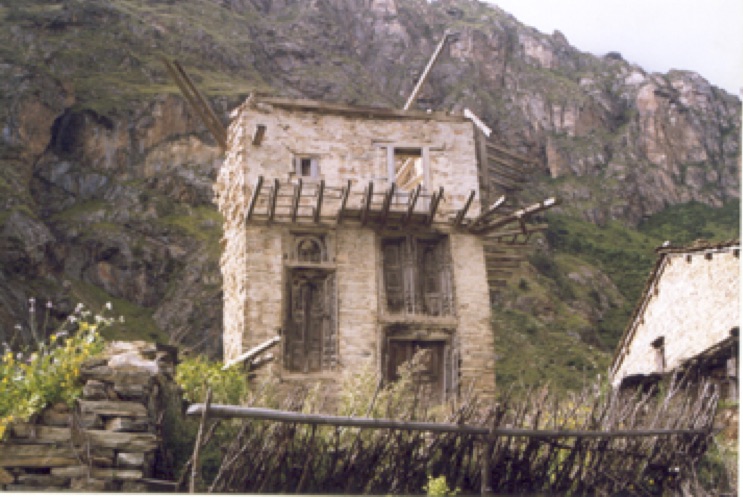
 Himalayan and Mountainous Regions
Forthcoming Risk
While no new high-casualty incidents were reported in the Himalayas in the last 24 hours, the fundamental risks remain high.
A Western Disturbance is expected to impact the Western Himalayan Region starting October 27, potentially bringing heavy precipitation and increasing risks of avalanches or landslides.
Himalayan Vulnerability
Multiple reports cite that the region has faced a crisis almost daily in 2025, with geological fragility, accelerated glacial melt, and unchecked construction turning landslides and floods into killers.
The International Centre for Integrated Mountain Development (ICIMOD) emphasised the region’s susceptibility to cloudbursts, floods, glacial lake outburst floods (GLOFs), and droughts, with over 241 million people at risk due to poverty and fragile ecosystems.
Major Disasters in Other Areas
South India Rainfall and Flooding
The immediate national disaster focus has shifted to South India, where an early northeast monsoon is creating a “triple whammy“ of risk. Heavy rainfall has led to fatal incidents, including a wall collapse in Tamil Nadu that killed three people.
In Chennai, the floodgates of two major reservoirs (Chembarambakkam and Poondi) were opened wider to regulate water levels and prevent flood risk, highlighting the urgency of urban flood management during extreme weather.
Tropical Cyclone RAMIL or Fengshen Landfall
Tropical Cyclone RAMIL is expected to make landfall in the Luzon area of the Philippines today or tomorrow, threatening the mountainous and coastal regions with severe winds, heavy rainfall, and potential landslides. The NDRRMC continues to lead response operations and maintain high alert.
In Central Vietnam, Tropical Storm Fengshen is poised for a second landfall in Quang Nam province, with winds up to 65 km/h, having already caused 7 deaths, displaced 25,000 people, and affected 245,000. Heavy rainfall continues to threaten infrastructure.
Monsoon Flooding in Malaysia
In Malaysia, monsoon flooding in Johor, Melaka, and Selangor has displaced 139 people, with no fatalities reported.
US Recovery
In the United States, recovery efforts continue in New York and New Jersey following a nor’easter that killed 3 and caused 40,000 power outages. Southern California battles persistent wildfires, contributing to $131 billion in global losses this year.
Earthquakes
In Costa Rica, a 5.9-magnitude earthquake struck at 03:57 UTC, affecting 50,000 people within 100 km, though no significant damage was reported.
Minor tremors (3.1–4.4 magnitude) also occurred in Bhutan, near Baguio City (Philippines), and Istanbul, Turkey, causing evacuations but no major losses.
A 3.6-magnitude quake hit Tibet at 12:46 IST, with no immediate impacts.
DRR & CCA Conferences, Workshops, Reports, Concerns and Incidences
Upcoming Training Workshop
A key event is the 2025 Common Alerting Protocol (CAP) Implementation Workshop and Training, scheduled to take place virtually from Rome on October 22-23.
This is crucial for strengthening Early Warning Systems (EWS) globally.
Ongoing Resilience Week
Resilient Week 20-26 October in Zurich continues today, bringing together experts to discuss complex risks and resilience strategies.
Worsening Air Pollution Preparedness
Authorities are actively reviewing and implementing the Graded Response Action Plan (GRAP) to curb severe air pollution in the Delhi-NCR region ahead of the winter season.
A review meeting on October 17 re-emphasized the strict ban on older commercial vehicles from entering Delhi starting November 1, a key intervention against human-caused environmental disaster.
Climate Change and Health
Tamil Nadu‘s Health Minister stated today that the State is fully prepared for the northeast monsoon, with hospitals on high alert and primary health centers stocked with supplies for snake and dog bites.
This proactive measure reflects the growing global requirement for health systems to adapt to intensified climate-related health risks (flooding, vector-borne diseases).
Historical Disasters on This Day (October 22)
1707: Scilly Naval Disaster (England)
A storm sank four British warships off the Isles of Scilly, killing nearly 2,000 sailors due to navigational errors in foggy conditions. This disaster led to the Longitude Act of 1714, improving maritime navigation.
1797 – First Parachute Jump
French balloonist André-Jacques Garnerin made the first recorded parachute jump from a height of 1,000 meters (3,300 ft) over Paris.
1962 – Cuban Missile Crisis
President John F. Kennedy publicly announced the discovery of Soviet nuclear missile bases in Cuba and declared a naval “quarantine” (blockade) of the island.
This event is widely considered the closest the world has ever come to a full-scale nuclear war.
1877: Blantyre Mining Disaster (Scotland)
A firedamp explosion in a coal mine killed 207 miners, one of Europe’s deadliest mining incidents, exposing lax safety standards and spurring labor reforms.
1884 – International Meridian Conference
This conference adopted the Royal Observatory in Greenwich, England, as the initial longitude meridian (0 degrees), establishing the basis for modern global time and location standards.
1936 – End of the Long March
The 6,000-mile military retreat by the Chinese Red Army, led by Mao Zedong, ended, marking a pivotal moment in the history of the Chinese Communist Party.
1963: BAC One-Eleven Crash (England)
A prototype airliner crashed during a test flight, killing six due to elevator design flaws, influencing stricter aviation safety protocols.
1998: Hurricane Mitch Formation (Caribbean)
Tropical Depression Thirteen formed, later becoming Hurricane Mitch, a Category 5 storm that killed over 11,000 in Central America, highlighting the devastating potential of climate-driven hurricanes.
यह हमारा एक छोटा सा प्रयास हैं, आपको हर दिन आपदा से जुड़ी नवीनतम जानकारियाँ प्रदान करने का – विशेष रूप से वह आपदायें जो हिमालय व अन्य पहाड़ी क्षेत्रों में घटित हों.
हमारा यह प्रयास आपको कैसा लगा और कैसे हम इसे बेहतर व उपयोगी बना सकते हैं ?
हमेशा की तरह आपके सुझावों का हमें इंतजार रहेगा.
Leave a Reply