 Santa was driving his open-top jeep down a sizzling highway in the middle of summer, singing a loud Punjabi pop song. He pulled over at a roadside dhaba where hundreds of 1-liter plastic water bottles were stacked proudly on an open iron rack, baking directly under the blazing 44° C afternoon sun.
“Oye Banta, give me a bottle of this ice-cold sun-kissed mineral water!” Santa shouted, wiping sweat from his beard.
He grabbed a bottle that felt as warm as a fresh cup of tea and was about to twist the seal.
Banta snatched the hot bottle out of Santa’s hands and tossed it back into the shade of the dhaba’s thatch roof.
“Stop, Santa-ji!”
“You think you are buying pure mineral water for your journey, but you are actually about to drink an industrial Antimony Cocktail seasoned with heavy metals!”
“Oye Banta!”
“It’s a sealed bottle from a famous company!” Santa argued, grabbing a cold clay kulhar instead.
“Look at the crystal-clear plastic!”
“The sun just makes it look shiny and premium!”
“The shiny look is exactly the trap, Santa,” Banta explained, pointing to the distorted shape of the plastic base.
“These standard 1-liter travel bottles are made of PET or polyethylene terephthalate plastic.”
“These are not designed with UV stabilizers for prolonged outdoor sunbathing.”
“When these roadside dhabas leave them under direct sunlight, the UV radiation combined with intense heat triggers photodegradation.”
“It breaks the chemical bonds of the plastic, causing it to leach antimony—a toxic catalyst used in manufacturing—along with heavy metals like lead, arsenic, and chromium directly into your water!”
“At cool room temperatures, it’s fine.”
“But bake it on a roadside rack for days, and the chemical migration jumps drastically.”
“Chronic consumption of this heated water can elevate your cholesterol, mess with your blood sugar, and quietly strain your liver and kidneys!”
“You are buying convenience but drinking chemical runoff!”
Santa looked at the shimmering wall of hot plastic bottles on the rack, feeling a sudden chill despite the heat.
“Oye… so the dhaba owner isn’t just storing the water; he’s cooking the plastic into it?”
“Precisely,” Banta said, handing Santa a stainless-steel flask filled from a shaded, mud-insulated water cooler.
“True travel safety means buying only from vendors who keep their stock completely shaded, or better yet, carrying your own steel shield!”
संता – बंता की इस जुगलबन्दी से आज हमने क्या सीखा:-
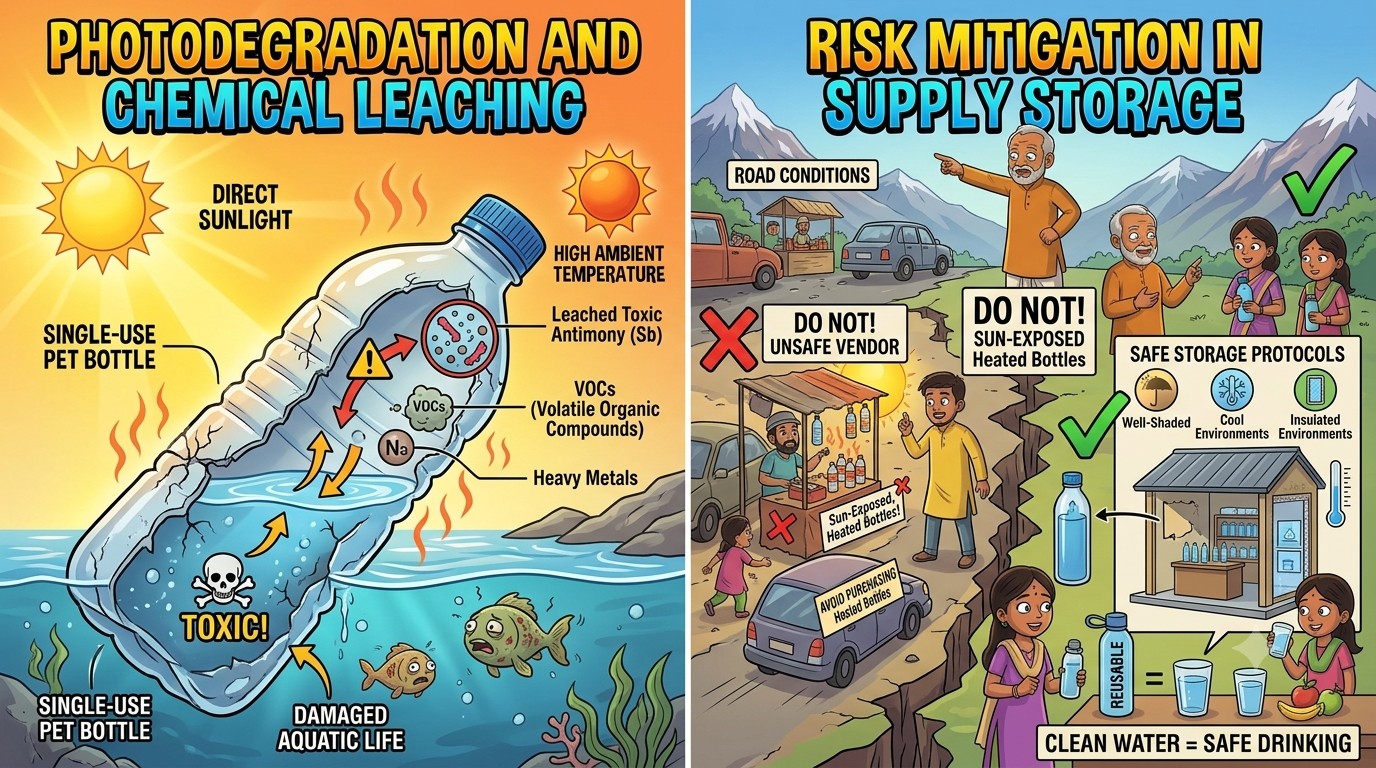
- फोटो-डिग्रेडेशन और रासायनिक क्षरण / Photodegradation and Chemical Leaching
- सिंगल-यूज़ प्लास्टिक की बोतलों को सीधे सूर्य के प्रकाश और अत्यधिक तापमान में रखने से फोटो-डिग्रेडेशन की प्रक्रिया तेज हो जाती है, जिससे प्लास्टिक से जहरीला एंटीमनी, वाष्पशील कार्बनिक यौगिक (VOCs) और भारी धातुएं पीने के पानी में रिसने लगती हैं / Prolonged exposure of single-use PET bottles to direct sunlight and high ambient temperatures accelerates photodegradation, causing the plastic to leach toxic antimony, volatile organic compounds (VOCs), and heavy metals into drinking water.
- आपूर्ति भंडारण में जोखिम न्यूनीकरण / Risk Mitigation in Supply Storage:
- सड़क किनारे के दुकानदारों और उपभोक्ताओं को धूप में रखी, गर्म प्लास्टिक की बोतलों को खरीदने या बेचने से बचना चाहिये। सुरक्षित भंडारण नियमों के अनुसार पानी की बोतलों को हमेशा छायादार, ठंडे या इंसुलेटेड स्थानों पर रखा जाना चाहिये / Roadside vendors and consumers must actively avoid purchasing or selling sun-exposed, heated plastic bottles. Safe storage protocols mandate keeping bottled water in well-shaded, cool, or insulated environments.
संता – बंता की यह जुगलबन्दी आपको कैसी लगी, कृपया हमें जरुर बताये
व
इस जुगलबन्दी को बेहतर बनाने के लिये अपने सुझाव अवश्य दें।
हमें हमेशा की तरह आपके सुझावों, प्रतिक्रियाओं व कटाक्षो का बेसब्री से इंतजार रहता हैं औरसच मानिये इसी के आधार पर हम अपने आप में, अपनी सोच व रचनात्मकता में सुधार करने कोप्रेरित होते हैं।
सो अच्छा – बुरा जैसा आपको महसूस हुवा हो, कमेंट जरुर करते रहें।
#ChemicalLeaching #PETBottleHazards #AntimonyToxicity #RoadsideSafety #SafeStorage#SantaBantaStories
Leave a Reply