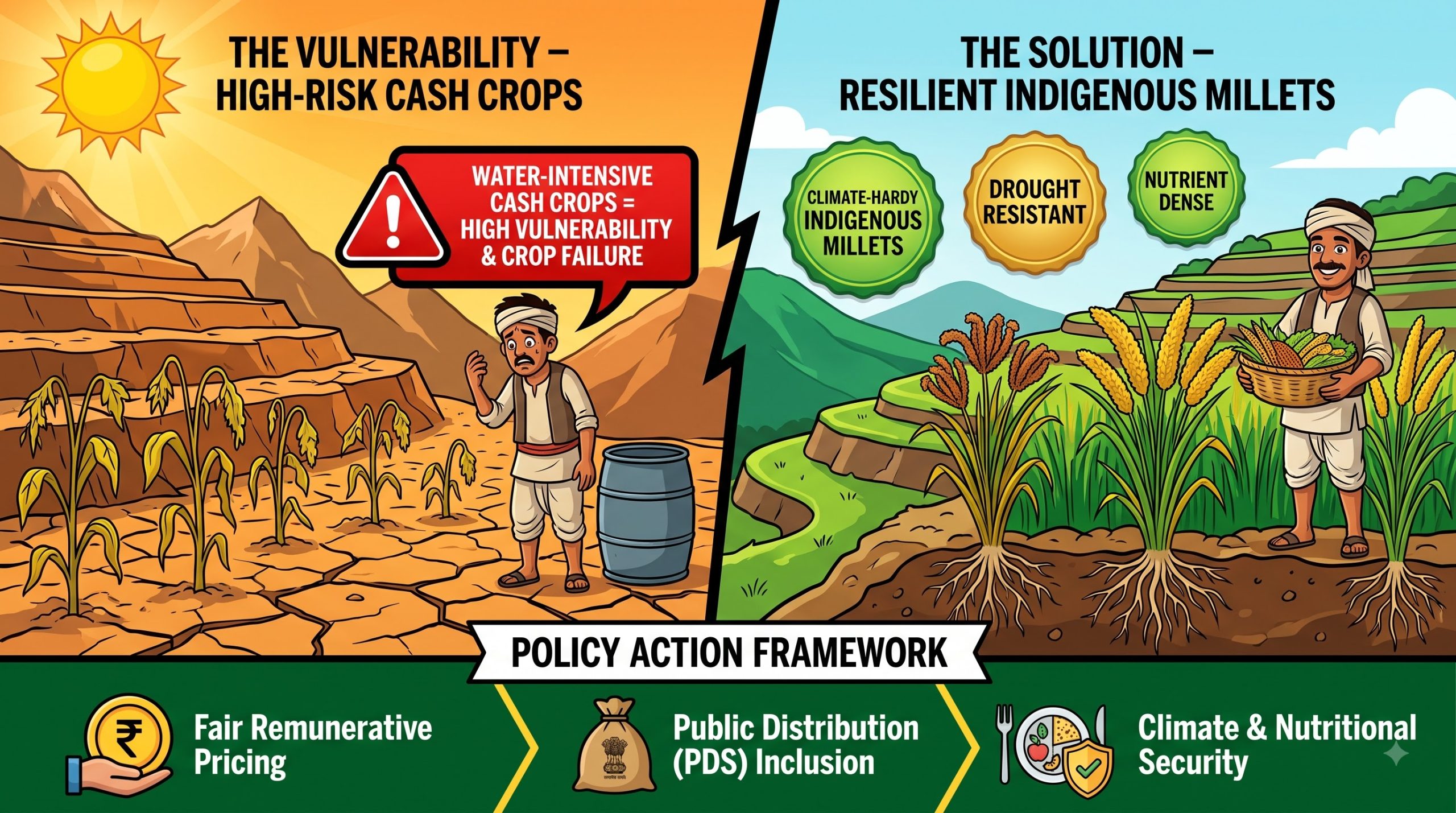
 Santa kicks a dry clod of earth, raising a puff of dust.
“It’s a disaster, Banta!” he moans dramatically.
“The trader in the city promised me a fortune for these English peas! “
“I spent all my savings on the special seeds and fertilizer.”
“I dreamed of buying a new TV!”
“Now look!”
“Without rain, my field looks as sad as a deflated balloon.”
“My dreams have dried up along with my plants!”
Banta, whose own neighbouring terrace is planted with a hardy mix of traditional Mandua and Jhangora, looks on with sympathy.
His crops are stressed but still standing green and alive.
“Your dream of a new TV was a good one, Santa,” Banta says gently.
“But sometimes, the dreams the market sells us are not suited for the reality of our mountain soil and sky.”
“They are thirsty dreams for a thirsty land.”
“But peas fetch such a good price!” Santa protests.
“Who wants to buy our old Mota Anaaj anymore?”
“The price is so low; it’s hardly worth the effort.”
“You speak a sad truth, Santa,” Banta agrees with a sigh.
“The Bazaar and the government policies have often favoured the crops of the plains, giving them better prices and promotion.”
“They have made our own ancestral grains feel poor and unimportant.”
“But our grandmothers, who carefully saved the seeds of these millets, knew a deeper truth.”
“They knew these grains were not just crops; they were a Suraksha Chakra.”
“Suraksha Chakra?” Santa asks.
“Yes,” Banta explains.
“These grandmother’s grains are the children of this very soil.”
“They are drought-resistant; they laugh at a weak monsoon!”
“They don’t demand expensive fertilizers.”
“They provide us with immense nutrition and energy.”
“And most importantly, they guarantee that even in a bad year, there will be food on our plates.”
“They might not buy you a new TV in one season, but they will never let your family sleep hungry.”
“Is that not the greatest profit of all?”
He continues, “We have started chasing the fleeting profit of cash crops, forgetting the enduring security of our own food grains.”
“We have loosened the societal bonds that valued growing our own food, and now we are dependent on the whims of both the market and the monsoon.”
Santa looks at his failed pea crop, then at Banta’s sturdy millets.
He imagines a simple, hot roti made of Mandua.
His stomach rumbles, not just with hunger, but with a dawning realisation.
“So, while I was chasing a shiny TV, I gambled away my family’s Roti ki Suraksha?”
“Banta, you are right.”
“A full stomach is a much better picture than any TV can show.”
संता – बंता की इस जुगलबन्दी से आज हमने क्या सीखा:-
हिमालयी क्षेत्रों की वर्षा-आधारित (बारानी) खेती में सूखा एक बड़ा और अक्सर अनदेखा किया जाने वाला ख़तरा है, जिसके कारण फ़सलें बर्बाद होती हैं और खाद्य असुरक्षा बढ़ती है / Drought is a major, underappreciated hazard in rain-fed Himalayan agriculture, leading to crop failure and food insecurity.
सूखा-रोधी पारंपरिक अनाजों और मोटे अनाजों (मिलेट्स) को छोड़कर केवल बाज़ार-आधारित नकदी फ़सलों पर ध्यान देने से पहाड़ी खेती की कमज़ोरी और जोखिम बहुत अधिक बढ़ गया है / The focus on market-driven cash crops at the expense of traditional, drought-resistant millets and grains has increased agricultural vulnerability.
सरकारी नीतियों को पारंपरिक फ़सलों की खेती को बढ़ावा देना चाहिए—जिसके लिए बेहतर समर्थन मूल्य, राशन प्रणाली (PDS) में इन्हें शामिल करना और इनके पोषण व जलवायु-अनुकूल फायदों के प्रति जागरूकता फैलाना बेहद ज़रूरी है / Policies should promote and incentivize the cultivation of traditional crops through better pricing, public distribution, and awareness about their nutritional and climate-resilient benefits.
संता – बंता की यह जुगलबन्दी आपको कैसी लगी, कृपया हमें जरुर बताये
व
इस जुगलबन्दी को बेहतर बनाने के लिये अपने सुझाव अवश्य दें।
हमें हमेशा की तरह आपके सुझावों, प्रतिक्रियाओं व कटाक्षो का बेसब्री से इंतजार रहता हैं औरसच मानिये इसी के आधार पर हम अपने आप में, अपनी सोच व रचनात्मकता में सुधार करने को प्रेरित होते हैं।
सो अच्छा – बुरा जैसा आपको महसूस हुवा हो, कमेंट जरुर करते रहें।
Leave a Reply