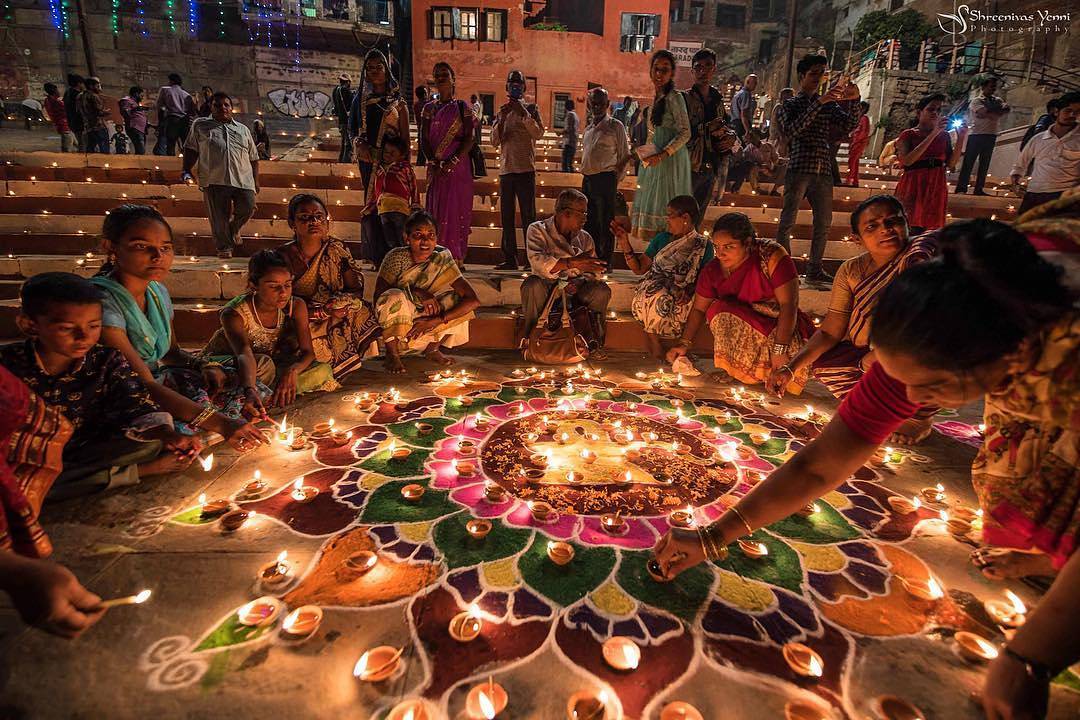
 Wishing everyone a joyous, safe, and prosperous Deepawali!
May the festival of lights bring happiness, peace, and prosperity to your homes and hearts.
The annual celebration of Deepawali is one of the most significant festivals in India, observed by Hindus, Jains, Sikhs, Buddhists, and diverse communities worldwide.
However, the modern form of this ancient observance is often overshadowed by a dense cloud of pollution and risk.
This article delves into the profound spiritual roots of the festival, examines the environmental and human costs of evolving traditions, and charts a course back to a celebration defined by light, peace, and responsibility.
The Spiritual Core: Light Over Darkness
The name Deepawali—derived from the Sanskrit words deepa (lamp) and avali (a row or series) — describes its essence: a ‘row of lamps’ lit outside homes to symbolize the inner light that protects from spiritual darkness.
Historically traced back over 2,500 years, Deepawali commemorates the victory of good over evil across multiple faiths:
Hinduism
The festival primarily marks the triumphant return of Lord Rama, his wife Sita, and brother Lakshmana to Ayodhya after 14 years of exile and the defeat of the demon king Ravana.
Lighting lamps was the populace’s heartfelt gesture to welcome the victory of righteousness.
Jainism
It honors the enlightenment and liberation (moksha) of Lord Mahavira, marking a moment of profound spiritual achievement.
Sikhism
It is celebrated as Bandi Chhor Divas, commemorating the release of Guru Hargobind and 52 Hindu princes from imprisonment in the early 17th century.
Traditionally, the festival is a serene five-day observance involving intensive cleaning and renewal of homes, creating intricate rangoli (colorful patterns), exchanging sweets and gifts, and performing puja (worship) to invite Goddess Lakshmi, the deity of wealth and prosperity.
The Modern Dilemma: From Lamps to Loudspeakers and Firecrackers
While the foundation of Deepawali rests on the soft, steady glow of the diya, modern celebrations have become increasingly defined by noise and spectacle.
The widespread adoption of firecrackers—initially used to signify joy and ward off evil spirits—has spiraled, fundamentally transforming the festival’s atmosphere. This shift persists even as public awareness grows, prioritising the loud, fleeting thrill of the burst over the enduring serenity of the lamp.
This change, driven by consumerism and spectacle, has introduced catastrophic health and safety challenges.
The Triple Toll: Environment, Safety, and the Law
The consequences of this evolving tradition are quantifiable and devastating, creating a severe public health crisis every year.
The Environmental Burden: A Toxic Cocktail
The environmental toll of firecrackers is immediate and severe, particularly in densely populated areas like the Indo-Gangetic Plain.
Air Pollution Spikes
Studies consistently show PM2.5 levels—fine particulate matter that penetrates deep into the lungs—spike dramatically during and immediately after Deepawali.
In urban centers like New Delhi, post-Diwali air quality frequently ranks as the world’s worst, with the city often topping global pollution charts due to defiant bursting despite official bans.
Toxic Release
Firecrackers do not simply release smoke; they release a toxic cocktail of heavy metals and chemicals.
Research indicates that burning releases harmful ions such as NO3−, K+, Cl−, and SO42−, along with poisonous elements like Lead (Pb), Zinc (Zn), and Antimony (Sb).
In Tamil Nadu, studies showed CO2 concentrations spiking 1.8 times higher compared to pre-Diwali levels.
Noise Pollution
The high decibel levels generated by firecrackers disrupt entire communities, causing stress, sleep disturbances, and irreversible hearing damage.
The cumulative effect across India’s cities rivals industrial pollution, affecting millions of people and disrupting urban wildlife.
The Human Cost: Preventable Tragedies
The direct risk to human safety posed by firecrackers transcends the environmental toll, creating a seasonal epidemic of preventable injuries.
Accidents and Injuries
Burn injuries dominate the statistics, often affecting the hands, face, and eyes.
Hospitals across the country report hundreds of firecracker-related injuries annually.
In recent years, major hospital networks have treated scores of eye injuries alone, with many leading to permanent vision loss—a life-altering tragedy stemming from a brief moment of celebration.
These incidents disproportionately affect children and bystanders.
Fatalities at the Source
The human cost extends grimly to the point of production. Explosions at illegal fireworks factories—often due to unsafe storage, lack of regulatory oversight, and highly volatile materials—routinely claim dozens of lives, including those of vulnerable laborers and children, highlighting a severe policy and enforcement failure in industrial safety.
Legal Interventions and the Enforcement Gap
The judiciary has repeatedly attempted to curb these hazards. The Supreme Court of India has issued several landmark judgments:
- It banned certain toxic chemicals (like antimony, mercury, arsenic, and lead) in firecrackers in 2017.
- The 2018 judgment prohibited conventional firecrackers in the National Capital Region (NCR), allowing only “green” (less-polluting) variants, verified by QR codes.
- Despite these rulings, the ongoing challenge of enforcement means violations are common, and pollution levels persist, demonstrating a deep chasm between progressive policy and ground-level implementation.
Towards a Safer and Greener Deepawali: A Call to Responsibility
As we embrace the timeless spirit of Deepawali, it is essential that we prioritize safety and environmental consciousness. The greatest respect we can pay to tradition is to ensure our celebrations do not harm our communities or our shared planet.
A Return to the Light
Opt for the original spirit of the festival: traditional clay diyas, intricate rangoli, and eco-friendly decorations. Focus on community events and the exchange of goodwill rather than excessive noise and haze.
Safety First
If you choose to use firecrackers, select only green variants and strictly adhere to local regulations and time limits.
Always supervise children, maintain a safe distance from combustible materials, and have water or a first-aid kit readily available.
Remember, true celebration is inclusive and does not come at the cost of public health or safety.
Let us illuminate our lives with light, hope, and responsible action, ensuring that the legacy of Deepawali remains one of joy, peace, and prosperity for all.
DRR Takeaways
उत्सवजनित प्रदूषण किसी आपदा से कम नहीं / Treat Festival Pollution as a Disaster Event /
पटाखो के कारण होने वाले प्रदूषण व स्वास्थ्य पर पड़ने वाले दुष्प्रभावों के प्रति जागरूकता / Recognise the severe air quality degradation caused by firecrackers as a seasonal public health disaaster requiring proactive, multi-agency response, not just post-event monitoring.
निर्माण व वितरण पर नियंत्रण को प्राथमिकता / Prioritise Supply Chain Safety
अवैध रूप से संचालित पटाखो की फैक्ट्रियो पर नियंत्रण / The fatalities at illegal fireworks factories underscore a severe vulnerability. DRR must focus upstream on strictly regulating and monitoring production sites to eliminate these deadly hazards, preventing losses before products reach the market.
अनुपालन हेतु व्यवस्था / Policy Needs Implementation Cadre
सर्वोच्च न्यायालय के आदेशों के अनुपालन हेतु प्रयाप्त व्यवस्था का होना जरूरी / Judicial rulings (e.g., Supreme Court bans) require robust, dedicated local police and administrative cadres for effective enforcement. The persistence of pollution despite bans points to a significant flaw in the implementation chain.
सुरक्षा हेतु जागरूकता / Targeted Awareness for Injuries
पटाखो के कारण होने वाली मानव क्षति के निवारण हेतु वृहद् जन जागरूकता अभियान जरूरी / DRR campaigns must specifically target the most vulnerable (children) and emphasise the catastrophic risk of eye injuries, linking the need for safety gear and adult supervision directly to the threat of permanent vision loss.
Leave a Reply