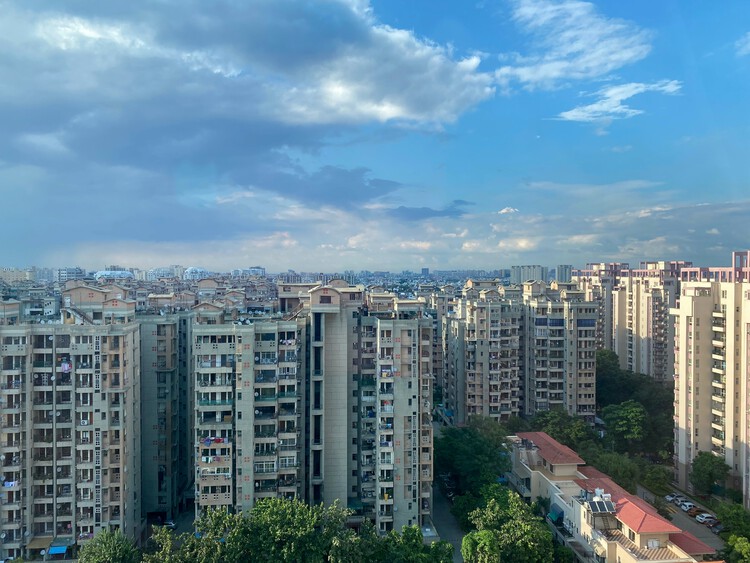
 While the 1964 Alaska earthquake ( 9.2) occurred in a subduction zone and a potential Himalayan event would be a continental collision thrust, the physics of long-duration shaking provides a terrifyingly accurate blueprint for what the Indo-Gangetic plains and Himalayan valleys might face.
1. The “Duration” Factor: The Silent Killer
The most critical takeaway from 1964 wasn’t just the magnitude, but the length of shaking.
-
Alaska 1964: Shaking lasted between 4 to 5 minutes.
-
Himalayan Projection: A 8.5+ event along the Main Central Thrust (MCT) or Main Boundary Thrust (MBT) is expected to produce sustained strong ground motion for 3 to 4 minutes.
-
The Technical Impact: Most modern buildings are designed for “Impulse” loads (short bursts). Long-duration shaking leads to Incremental Structural Fatigue. Even if a building survives the first 60 seconds, the cumulative degradation of reinforced concrete (RCC) joints over the next 180 seconds leads to “Pancake Collapse.”
2. Soil Response: The “Bootlegger Cove” vs. “Himalayan Alluvium”
The catastrophic damage in Anchorage was largely due to a specific soil type called Bootlegger Cove Clay.
| Feature | Alaska |
Himalaya
|
| Soil Type | Sensitive Glacial-Marine Clay |
Deep, Unconsolidated Silts and Sands
|
| Behavior |
Turns from solid to liquid under sustained vibration. |
Pore-water pressure ejects sand “volcanoes,” causing foundations to sink.
|
| Amplification | Moderate. |
Extreme:
The soft deep soil of the Indo-Gangetic plain acts like a bowl of jelly, magnifying seismic waves by 2x to 5x.
|
| Failure Mode | Massive translational landslides (e.g., Turnagain Heights). |
Lateral spreading and “Basin Effects” where waves bounce off the hard rock boundaries.
|
3. The “Basin Effect” and Resonance
In 1964, the distance from the epicenter didn’t always guarantee safety because of long-period waves.
-
Alaska: The long-period waves traveled hundreds of kilometers, affecting high-rise structures far from the rupture.
-
Himalaya: The deep sedimentary fill of the Indo-Gangetic basin (which can be up to 4-5 km deep in some parts) will trap seismic energy. This creates “Surface Waves” that roll through cities like Delhi, Chandigarh, and Kathmandu.
-
Resonance Trap: If the frequency of the earthquake waves matches the “natural frequency” of a building (common in 10-20 story high-rises on soft soil), the building will shake violently until it disintegrates.
4. Secondary Hazards: Tectonic Reset
-
Alaska: Landslides triggered tsunamis in fjords.
-
Himalaya: The primary secondary hazard is the “Landslide Dammed Lake Outburst Flood” (LLOF). Long-duration shaking will destabilise massive mountain flanks, blocking rivers and creating “Instant Dams” that could breach within hours, devouring downstream settlements.
Summary Table: Technical Vulnerability
| Parameter | 1964 Alaska Event |
Projected Himalayan Event
|
| Mechanism | Subduction
(Oceanic-Continental) |
|
| Dominant Soil Failure | Sensitive Clay Slump | |
| Primary Building Risk | Wood-frame
(flexible, survived better) |
|
| Structural Warning | Soils failed before buildings in many cases |
Buildings likely to fail due to poor ductile detailing
|
The M 9.2 Alaska quake of 1964 and the 2015 Nepal tragedy warn us that ‘Magnitude’ is just a number, but ‘Duration’ is a death sentence for brittle structures.
These past events tell us that unconsolidated soil doesn’t just hold a building—it can swallow it.
Our ongoing initiatives in ‘Seismic Microzonation’ and ‘Deep-Basin Modeling’ prove we are identifying the ‘Resonance Traps,’ but history warns us that if we do not enforce ‘Ductile Detailing’ and ‘Base Isolation‘ today, the soft sands of our valleys will turn into a liquid grave tomorrow.
Today tells us the fault is locked; it warns us that the basin is ready to ring like a bell.
#SeismicResilience #HimalayanGeology #EarthquakeEngineering #SoilLiquefaction #Alaska1964 #TectonicPulse #StructuralSafety #IndoGangeticBasin #DisasterPreparedness #HimalayanSentinel
Leave a Reply