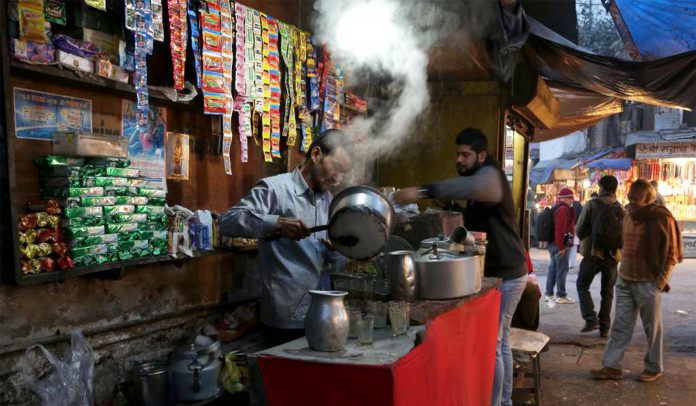
 The young geology student from the tea stall, whose passionate arguments about a landslide–dammed lake had been so thoroughly humbled by the simple, painful truth of old Keshav Das, approached Banta the next day. The student, whose name was Rohan, had a look of deep, existential confusion on his face.
“Banta-ji,” he said, “yesterday, you made me question everything.”
“I have spent five years studying geology, geomorphology, GIS and remote sensing.”
“I can read a satellite image like a book.”
“But in that moment, I felt like all my knowledge was useless.”
“If debating the trigger is a distraction, then what is the point?”
“What should we scientists be doing?”
Santa, who was now a passionate convert to Banta’s philosophy, jumped in with his own brilliant idea for a research project.
“I know!” he declared.
“You brilliant scientists should invent a giant, space-based vacuum cleaner!”
“We can use it to suck the big, black, angry clouds out of the sky before they get a chance to burst!”
“It would be a proactive, high-tech solution!”
Banta smiled at Santa’s enthusiasm before turning to the young, conflicted scientist.
“That is a very… ambitious idea, Santa,” he said.
“But Rohan is asking the most important question a scientist can ask.”
“And the answer is not in inventing new, fantastical machines.”
“The answer is in changing the direction of your compass.”
“My compass?” Rohan asked, puzzled.
“Yes,” Banta affirmed. “Your scientific compass.”
“For too long, you have been pointing it at the wrong things.”
“You have been looking for the spectacular, the mysterious, the uncontrollable.”
“I will give you a new compass, with three new directions for your research.”
He held up one finger.
“First, stop being a disaster detective; start being a community doctor.“
“A detective arrives after the crime, figures out what happened, and writes a report.”
“A good doctor studies the patient‘s lifestyle, diagnoses their weaknesses, and writes a prescription to make them stronger.”
“Don’t just give us a brilliant report on the ‘cause of death‘ of Dharali.”
“Go there – Map the patterns of damage.”
“Tell us why this house, built with traditional Koti Banal architecture, stood firm, while that new concrete hotel collapsed.”
“Give us a prescription for stronger, safer building codes that are tailored to our local reality.”
He held up a second finger.
“Second, stop talking only to your computers; start talking to our grandmothers.“
“You have terabytes of satellite data.”
“But an old woman in the remote village has a different kind of data, stored in her memory.”
“She knows which slope has always been unstable, which stream always floods, which path is always the first to wash away.”
“This is invaluable, multi-generational data.”
“Your mission is to use your modern science to test, validate, and enhance this traditional wisdom, creating a hybrid knowledge that is both scientifically robust and deeply trusted by the local community.”
Finally, he held up a third finger.
“Third, give us a compass, not just a history book.“
“Your reports are often brilliant historical accounts of what went wrong.“
“But a person lost in the forest doesn’t need a history of the forest; they need a compass to guide them out.”
“Your research must become that compass.”
“Give the Public Works Department a clear, legally defensible map of ‘no-build’ zones.”
“Give the Forest Department a precise, data-driven plan for reforestation.”
“Give the villagers a simple, color-coded chart that shows them the exact risk level of the land their house is built on.”
“Focus your brilliant minds on the factors we can actually control.”
A new light was dawning in Rohan’s eyes. The confusion was gone, replaced by a powerful, renewed sense of purpose. His science wasn’t useless; it just needed to be aimed at the right targets.
“Thank you, Banta-ji,” he said, his voice filled with a new energy.
“You have given me a new direction.”
“Good,” Banta replied.
“Now, your first mission is to go and talk to our grandmothers. And Santa,” he said, turning to his friend, “you can help.”
“You can start by interviewing them about their traditional wisdom.”
Santa’s face lit up. “An excellent idea!”
“I will start by researching their ancient, time-tested, and highly resilient recipes for mutton curry!”
संता – बंता की इस जुगलबन्दी से आज हमने क्या सीखा:-
- विज्ञान की नयी भूमिका: आज के समय में और तेजी से बदल रहे आपदा परिदृश्य में प्रभावी आपदा जोखिम न्यूनीकरण के लिये वैज्ञानिको की भूमिका में भी परिवर्तन नितांत आवश्यक है। वैज्ञानिकों को हत्या के उपरान्त जासूस के द्वारा की जाने वाली तहकीकात की अपेक्षा प्रभावित जन समुदाय के साथ मिल कर असली बीमारी या घातकता के कारणों का पता लगाना चाहिये और साथ ही चिन्हित बीमारी या घातकता के उपचार या निवारण हेतु आम सहमति के साथ ही लोगो के परम्परागत ज्ञान का उपयोग कर एक प्रभावी व क्रियान्वयन योग्य योजना तैयार करनी चाहिये।
- व्यवहार्य विज्ञान ही सर्वोपरि: जीवन बचाने के लिये विज्ञान का कार्यवाही योग्य होना जरुरी है। अतः वैज्ञानिको को सदैव ही स्पष्ट, व्यवहारिक व अमल में लाये जा सकने योग्य ऐसे सुझाव देने चाहिये जो कि सीधे-सीधे नीति निर्धारण, नियोजन व समुदाय के स्तर पर की जाने वाली कार्यवाही के अन्तर्गत उपयोग में लाये जा सकें।
- परम्परागत ज्ञान व विज्ञान का समागम: किसी भी स्थान में रह रहे लोग अपने अनुभव व अर्जित ज्ञान के आधार पर क्षेत्र में प्रायः घटित होने वाली आपदाओ के साथ ही स्थानीय पर्यावरण के बारे में काफी कुछ जानते है और विषम परिस्थितियों में जिन्दा रहने की जद्दोजहद में उन्होंने आपदाओं का सामना करने व उनसे बचने की कला भी विकसित कर ही ली होती है, और सच मानिये यह ज्ञान अमूल्य है और केवल किताबो से अर्जित नहीं किया जा सकता है, इसके लिए तो वातानुकूलित प्रयोगशाला से बाहर लोगो के बीच धक्के खाने पड़ेंगे। पर इतना झेल लेने के बाद इस ज्ञान व कौशल का आधुनिक विज्ञान व तकनीकी के साथ समागम कर के हमारे वैज्ञानिक सहज ही प्रभावी, सरल, मितव्ययी व समाज को स्वीकार्य आपदा सुरक्षा उपाय विकसित कर सकते है।
- नियंत्रित की जा सकने वाली घातकता पर ध्यान: सच कहें तो वैज्ञानिकों का उत्तरदायित्व भविष्यवाणी करना या फिर स्थितियों या घटनाओ (जैसे कि बादल कहाँ और कब फटेगा) का पूर्वानुमान करने से कहीं ज्यादा, नियंत्रण में लाये जा सकने वाले पक्षों के बारे में स्पष्ट व साक्ष्य आधारित जानकारी उपलब्ध करवाना है – जैसे कि भू – उपयोग, क्षेत्र में विभिन्न आपदाओं का जोखिम, भवन निर्माण विधिया, अवसंरचनाओं का डिजाइन – और यही सब तो समाज की आपदाओं के प्रति घातकता का निर्धारण करते है और इन्ही के आधार पर समाज आपदाओं से प्रभावित होता हैं या फिर सुरक्षित रहता हैं।
- संवाद शोध जितना ही जरूरी: वैज्ञानिक व तकनीकी जानकारियों तथा ज्ञान का लोगो को समझ में आ सकने वाली सरल भाषा में रूपान्तरण व समाज के मध्य प्रचार-प्रसार वैज्ञानिक शोध जितना ही महत्त्वपूर्ण है और सच कहें तो यह वैज्ञानिको या वैज्ञानिक संस्थानों का उत्तरदायित्व नहीं है और यह तो हर हाल में राज्य आपदा प्रबन्धन प्राधिकरण को ही करना होगा । प्रायः उपेक्षित इस पक्ष पर अपेक्षित ध्यान दे कर समाज का क्षमता विकास करने से आपदा प्रतिरोध्य समाज की परिकल्पना को सहज ही साकार किया जा सकता है।
संता – बंता की यह जुगलबन्दी आपको कैसी लगी, कृपया हमें जरुर बताये
व
इस जुगलबन्दी को बेहतर बनाने के लिये अपने सुझाव अवश्य दें।
हमें हमेशा की तरह आपके सुझावों, प्रतिक्रियाओं व कटाक्षो का बेसब्री से इंतजार रहता हैं और सच मानिये इसी के आधार पर हम अपने आप में, अपनी सोच व रचनात्मकता में सुधार करने को प्रेरित होते हैं।
सो अच्छा – बुरा जैसा आपको महसूस हुवा हो, कमेंट जरुर करते रहें।
Great work sir,it will beneficial for aall of us.