
Banks are like people who offer you an umbrella only when the sun is shining. In a world where the rich get their loans written off and the poor get entrenched in disaster-induced poverty, we are building a society on a fault line deeper than any in the Himalayas.
General articles
Cryo-Hazard Field Guide: Local Village Sentinel Edition

As the Himalayan ‘Water Tower’ transitions into a ‘Water Trigger,’ the rules of mountain survival are being rewritten. Our latest Cryo-Hazard Field Guide moves beyond traditional glacial lake monitoring to address the emerging threat of Ice-Patch Collapses in nivation hollows—events that trigger devastating flash floods under perfectly clear blue skies. From decoding the ‘chocolate-brown’ turbidity of mountain streams to identifying the silent ‘Basal Glide’ of untethered ice, this guide empowers local village heads to become the first line of defense in an era of rapid deglaciation. Discover why the ‘milky surge’ is the most critical early warning sign of 2026.
Oil on Fire: India’s Delicate Dance Amidst Middle East Conflict

The Middle East is on fire, with hostilities between Iran, Israel, and the USA intensifying. This crisis has sent shockwaves through the global economy, leading to petroleum product scarcity and rising prices. For India, which relies heavily on Middle Eastern oil imports, the situation is particularly critical. Navigating this geopolitical minefield requires a delicate balance between energy security and strategic alliances. India’s traditional Non-Alignment Policy, coupled with its consistent advocacy for diplomatic solutions, offers a potential way out. Diversifying energy sources and upholding humanitarian principles will be crucial in charting a course through these turbulent waters.
High-Altitude Survival Brief: The Spring Thaw Edition

As the Himalayan spring arrives, the greatest threats aren’t the ones you see, but the ones you step over. High-altitude streams are currently carving silent tunnels beneath the snow, turning solid-looking trails into deceptive Snow Bridges. From the immediate physiological crisis of Cold-Water Shock to the critical ‘Reach-Throw-Row’ rescue protocol, our latest survival brief explores the hidden hydraulic hazards of the inner-Himalayan ranges. Discover why the ‘Probe-and-Poke’ test is your most vital tool for the 2026 spring trekking season.
Professional Bodies and the IS 1893:2025 Rollback
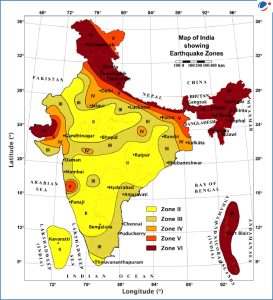
When profits outweigh physics, everyone loses. We’re calling on India’s professional engineering bodies to adopt a ‘Model Resolution’ challenging the rollback of our latest seismic codes. It’s time to choose: do we serve the builders’ lobby or the lives of the people?
The Precision Revolution: How AI is Turning “Global Warnings” into “Local Lifelines”

The era of “one-size-fits-all” alerts is over. From the shifting slip-planes of the Himalayas to the flood-prone basins of the Global South, Artificial Intelligence is finally bridging the gap between a global forecast and a local lifeline. Discover how precision engineering is turning data into destiny, ensuring that in 2026, a warning isn’t just a noise—it’s a neighborhood-level shield.
The Weekend Warrior’s Dilemma

Why are the best seats on the Shimla-Dehradun Volvo always “booked” yet empty? A look at why HRTC should adopt an airlines-style premium model for its extra-legroom seats.
Appeasing Shiva: The Kanwar Yatra’s Double-Edged Sword in Uttarakhand

From “one-way” highway hazards to the politics of appeasement, it’s time to ask if we can honor our traditions without compromising our fundamental right to safe travel.
The “VIP Jam” and the Ambulance’s Longest Kilometer
Santa’s face is pale and his hands are still trembling slightly. “Banta,” he says, his voice low, “yesterday, I saw death on that highway.” “My cousin’s little son fell gravely ill.” “We got him into an ambulance, heading for the big AIIMS hospital in Rishikesh.” “But as we neared the city… everything stopped.” “The traffic?” […]
The Lesson of the Rishiganga Avalanche (2021–2026)

The Dhauliganga flood of February 7, 2021, was a masterclass in the “Hazard Cascade” phenomenon. Occurring in the dead of winter—when glacial rivers are at their lowest and skies are clear—this disaster claimed 204 lives and devastated the Rishiganga (13.2 MW) and Tapovan (520 MW) hydropower projects.