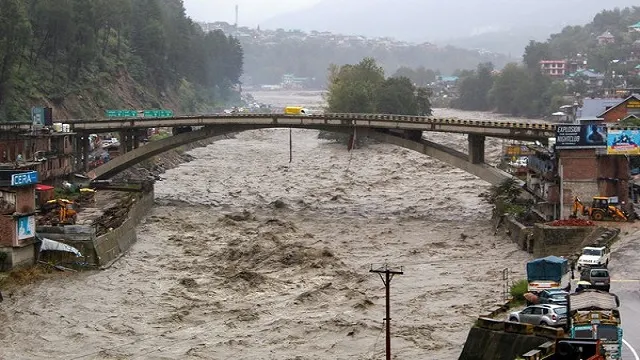
 Himalayan and Mountainous Regions
Western Himalayan Region
The region remains under the full influence of the Western Disturbance (WD) that arrived yesterday.
The WD is bringing widespread rain and fresh snowfall to the higher reaches of Jammu & Kashmir, Himachal Pradesh, and Uttarakhand today. This is a critical development as the fresh snow immediately increases the risk of avalanches at high altitudes.
Furthermore, the accompanying rain in the lower hills can reactivate zones prone to landslides that were already severely destabilized during the severe 2025 monsoon season.
Nepal Himalayas
Deadly avalanche cluster continues.
Yalung Ri (6500 m, eastern Nepal):
Avalanche struck Base Camp on November 3–4, killing 7 (5 foreign climbers + 2 Nepali guides); 7 Italian climbers still missing as of Nov 5.
Panbari Himal (Manaslu region):
Separate avalanche killed 2 climbers on November 3–4.
Autumn 2025 now one of the deadliest post-monsoon seasons in years; at least 9 confirmed dead in avalanches since late October.
Afghanistan (Hindu Kush Mountains)
M6.3 earthquake on November 4 still active on GDACS orange alert. Epicenter in mountainous Feyzabad area; damage assessments ongoing, UNICEF/UNOSAT activations in progress.
Indonesia (Java Mountains)
15th eruption (Mount Semeru, 3,676 m) in past week this morning (Nov 6).
Ash plume to 1,000 m; Level II alert, aviation code orange, 10 km exclusion zone. No casualties reported yet.
Italian Alps
5 German climbers killed in Sudtirol avalanche Nov 2 (carry-over reporting).
Major Disasters in Other Areas
Typhoon KALMAEGI (Philippines: “Tino”; international name 25W)
Deadliest storm in Asia 2025. 114 confirmed dead, 127 missing (mostly Cebu & Negros Occidental).
Entire neighbourhoods obliterated by floods/landslides; state of calamity declared in multiple provinces.
Now crossing South China Sea toward central Vietnam; landfall expected overnight Nov 6–7 near Da Nang/Hue. Vietnam on red alert for catastrophic rain (300–600 mm) and flash floods.
Western Pacific
Tropical Storm FUNG-WONG (formerly LPA 11a) lingering east of Philippines; no major impacts.
North America
Four atmospheric rivers queued up for US West Coast Nov 3–9; heavy rain/mountain snow forecast, but not yet disaster-level.
DRR & CCA Conferences, Workshops, Reports, Concerns and Incidences
Conference Conclusion
The EU Science for Preparedness Conference in Turin, Italy, concludes today. The conference, organized by the Joint Research Centre’s Disaster Risk Management Knowledge Centre, focused on advancing science-based crisis preparedness and testing new tools for scenario planning and emergency response.
Social Development Summit
The Second World Summit for Social Development in Doha, Qatar, concludes today.
A key outcome emphasizes the need to integrate resilience and disaster risk reduction into global poverty alleviation and social equity strategies, recognizing climate change as a critical threat multiplier.
Global DRR Policy
Reports continue to disseminate the key message from the Global Platform for Disaster Risk Reduction (GP2025), which warned that risk is outstripping resilience efforts and called for an acceleration of the Sendai Framework implementation.
Emissions Gap Update
The recent release of the UNEP Emissions Gap Report (expected to be released around this time) is a major global incidence, reinforcing the need for immediate, drastic cuts in global greenhouse gas emissions to meet the Paris Agreement goals.
Climate and Health Crisis
The World Health Organization (WHO) continues to highlight that climate change is a critical health crisis.
Rising temperatures, floods, and storms lead to death and illness, disrupt food systems, and increase the range of vector-borne diseases.
The WHO urges the phase-out of fossil fuels, which are major contributors to both climate change and air pollution (a major health hazard).
Anticipatory Action
The global DRR community is strongly promoting the implementation of AI-based predictive models and automated sensors to improve early warning systems for disasters like GLOFs, floods, and landslides, an action prioritized by the accelerating rate of climate change.
Historical Disasters on This Day
447 – Earthquake in Constantinople
The area around Constantinople was affected by a major earthquake in AD 447.
It caused serious damage to the recently completed Theodosian walls in Constantinople, destroying 57 towers and large stretches of the walls.
The historical records contain no mention of casualties directly associated with this earthquake, although many thousands of people were reported to have died in the aftermath due to starvation and a “noxious smell”.
1860 – Abraham Lincoln Elected
Abraham Lincoln was elected the 16th US President. This event immediately triggered the secession of Southern states and set the stage for the American Civil War.
1913 – Great Lakes Storm (“White Hurricane”)
The Great Lakes Storm of 1913, historically referred to as the Big Blow, the Freshwater Fury and the White Hurricane, was a blizzard with hurricane-force winds that devastated the Great Lakes Basin in the Midwestern United States and Southwestern Ontario, Canada, between November 7 and 10, 1913.
The storm was most powerful on November 9, battering and overturning ships on four of the five Great Lakes, particularly Lake Huron.While the worst hit Nov 7–9, the storm began intensifying on Nov 6.
Hurricane-force winds and blizzard conditions sank 19 ships and killed 250 sailors—the deadliest natural disaster in Great Lakeshistory.
1943 – World War II: Liberation of Kyiv
The Soviet Red Army successfully liberated Kyiv from German occupation.
Before withdrawing, the Germans destroyed most of the city’s ancient buildings.
1977 – Toccoa Falls Dam Failure, Georgia, USA
After five straight days of torrential rain, the earthen Kelly Barnes Dam above Toccoa Falls Bible College burst at 1:30 AM.
A 30-foot wall of water roared through the campus, killing 39 people (20 children, 19 adults) and destroying 20 homes.
Most victims were asleep in trailers and dorms directly in the flood path. The dam had been built in 1899 and poorly maintained; the disaster led to the first US federal dam-safety program.
1977 – Appalachian Floods, USA
Same storm system dumped 8–12 inches of rain across western North Carolina, triggering one of the worst flash floods in 61 years.
Rivers rose 20+ feet in hours; towns like Boone and Blowing Rock were cut off. At least 9 dead, hundreds of homes destroyed, and damage topped $100 million (1977 dollars).
1986 – Sumburgh Disaster
A British International Helicopters Boeing 234LR Chinook crashed 2.5 miles (4.0 km) east of Sumburgh Airport, killing 45 people.
It remains one of the deadliest civilian helicopter crashes on record.
Stay safe out there —
especially climbers waiting out the Himalayan post-monsoon window
and anyone in central Vietnam tonight.
Stay vigilant; history whispers warnings.
यह हमारा एक छोटा सा प्रयास हैं, आपको हर दिन आपदा से जुड़ी नवीनतम जानकारियाँ प्रदान करने का – विशेष रूप से वह आपदायें जो हिमालय व अन्य पहाड़ी क्षेत्रों में घटित हों.
हमारा यह प्रयास आपको कैसा लगा और कैसे हम इसे बेहतर व उपयोगी बना सकते हैं ?
हमेशा की तरह आपके सुझावों का हमें इंतजार रहेगा.
Leave a Reply