 Santa is enthusiastically hammering nails, helping his neighbour quickly erect the frame for a new cowshed.
“See, Banta!” he calls out, wiping his brow.
“With these long nails and a good hammer, this frame will be up in no time!”
“So much faster than how old Manbir Kaka fusses for days when he has to join beams in an old house, carving and fitting them like a puzzle.”
Banta, who has been admiring the intricate joinery in the exposed beams of a nearby old, sturdy house, smiles.
“Speed is certainly a virtue in many things, Santa.”
“And nails are useful for holding things together.”
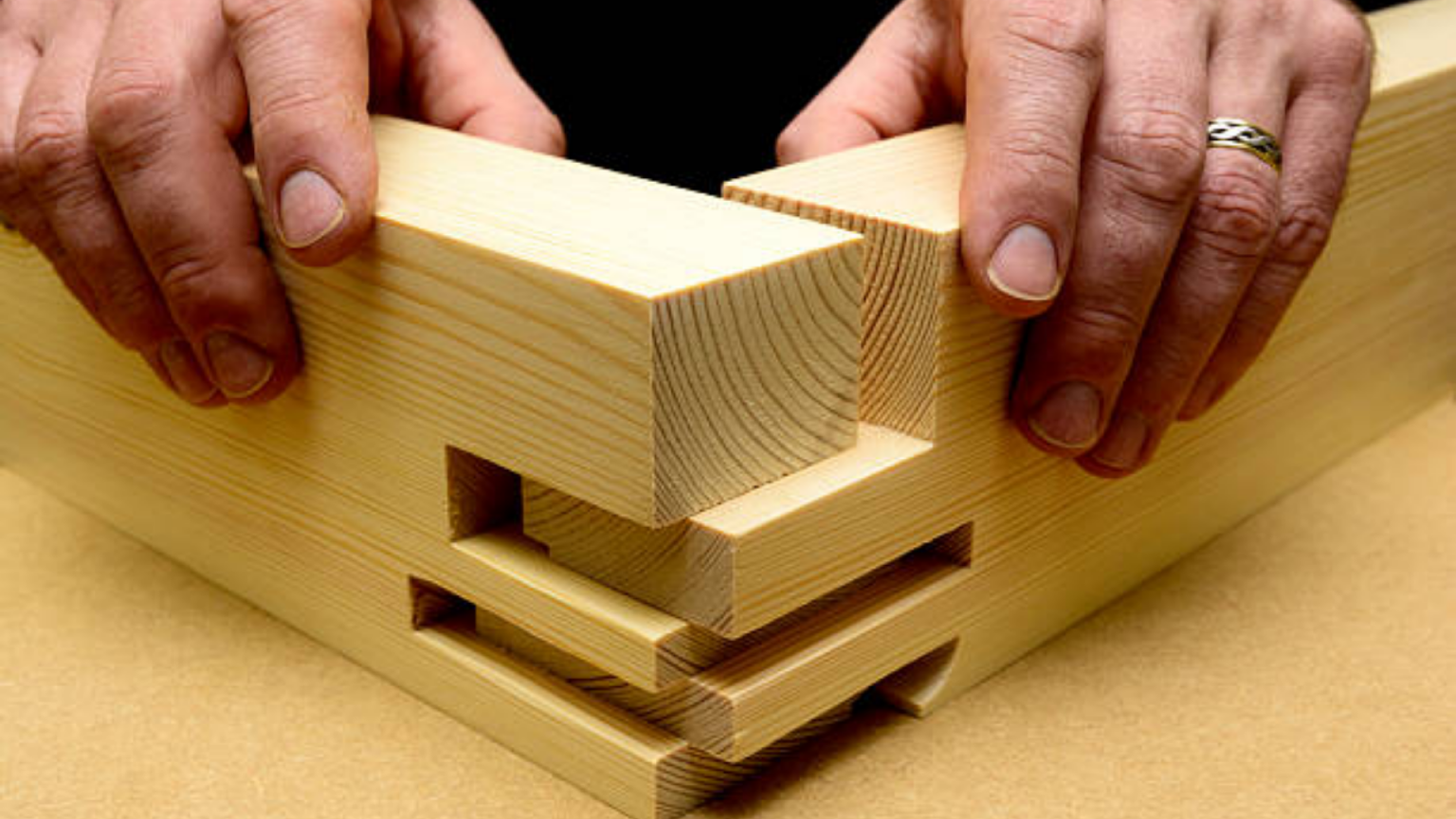
“But when our ancestors, and skilled craftsmen like Manbir Kaka, ‘fussed’ over carving those ‘khat-pat’ or housed joints, fitting one piece of wood snugly into another, often with a wooden peg or a carefully placed nail for added security, they were thinking about more than just speed.”
“They were thinking about creating an ‘interlocking embrace‘ that could withstand the violent pushes and pulls of a shaking earth.”
“Interlocking embrace?” Santa repeats, pausing his hammering.
“What’s stronger than a good, long nail?”
“Imagine, Santa,” Banta explains, “when the earth shakes, the joints in a wooden frame are pulled and squeezed, twisted and turned.”
“While nails provide some resistance, a well-made housed joint – where one timber is carefully shaped to sit inside a groove or mortise in another – distributes those forces over a much larger area.”
“The timbers support each other directly.”
“It’s not just the nail taking the strain; the wood itself shares the load.”
“This makes the joint much more rigid and less likely to loosen, split, or pull apart during strong vibrations.”
He points to the old house.
“Those complex joints in Dayal Kaka’s house frame are not just for show.”
“They make the entire wooden skeleton act as one strong, unified body.”
“It can absorb and dissipate the earthquake‘s energy more effectively than a frame that relies only on the shear strength of many individual nails.”
“Our ancestors used both types of joints, nails for certain connections, and these more elaborate ones where greater strength and rigidity were needed.”
Santa looks at the quickly assembled, nailed frame of the cowshed, then at the robust, interlocked frame of the old house.
“So, Manbir Kaka‘s ‘fussing’ is actually creating a stronger, more ‘gale milne wala‘ joint that won’t easily break up when the earth tries to tear it apart?”
“It’s like the difference between just holding hands and linking arms firmly.”
Banta nods approvingly.
“A very good way to see it, Santa!”
“For a simple cowshed, quick nailing might be adequate.”
“But for a house that needs to protect families through generations in these active mountains, that ‘interlocking embrace‘ of traditional joinery offers a deeper, more enduring strength.”
“It’s the wisdom of making every connection count towards the resilience of the whole.”
#piyoosh #piyooshrautela #riskavoider #riskavoideracademy
संता – बंता की इस जुगलबन्दी से आज हमने क्या सीखा:-
- हिमालयी क्षेत्र के परम्परागत भवनों में उपयोग में लाये जाने वाले लकड़ी के अवयवों को जोड़ने के लिये कील के साथ ही खाँचो का उपयोग किया जाता था / Traditional wooden joinery in the Himalayan region often involved intricate housed joints (mortise and tenon, dovetails, etc.) in addition to nailing.
- इस प्रकार के जोड़ इमारतों को मजबूती व दृढ़ता प्रदान करते थे, जिसके कारण यह अवसंरचनाये भूकम्प के झटको का प्रभावी रुप से सामना कर पाते थे / These joints created stronger, more rigid connections that distributed forces effectively, enhancing the structure’s ability to resist earthquake shaking without easily loosening or pulling apart.
- हिमालय के लोगो की यह कारीगरी लकड़ी के ढांचे की अखंडता व अवरोद्यता सुनिश्चित करते हुवे इसे एक एकीकृत प्रणाली का स्वरुप प्रदान करती थी / This meticulous craftsmanship contributed to the overall integrity and resilience of the wooden frame, making it act as a unified system.
- लकड़ी के अवयवों को जोड़ने वाली इस प्रणाली के सिद्धांतो की समझ वर्तमान में बनने वाली लकड़ी की संरचनाओं को अधिक मजबूत बनाने के लिये उपयोग में लायी जा सकती है / Understanding and appreciating the principles behind traditional joinery can inform stronger connections in modern timber construction as well.
संता – बंता की यह जुगलबन्दी आपको कैसी लगी, कृपया हमें जरुर बताये
व
इस जुगलबन्दी को बेहतर बनाने के लिये अपने सुझाव अवश्य दें।
हमें हमेशा की तरह आपके सुझावों, प्रतिक्रियाओं व कटाक्षो का बेसब्री से इंतजार रहता हैं और सच मानिये इसी के आधार पर हम अपने आप में, अपनी सोच व रचनात्मकता में सुधार करने को प्रेरित होते हैं।
सो अच्छा – बुरा जैसा आपको महसूस हुवा हो, कमेंट जरुर करते रहें।
Leave a Reply