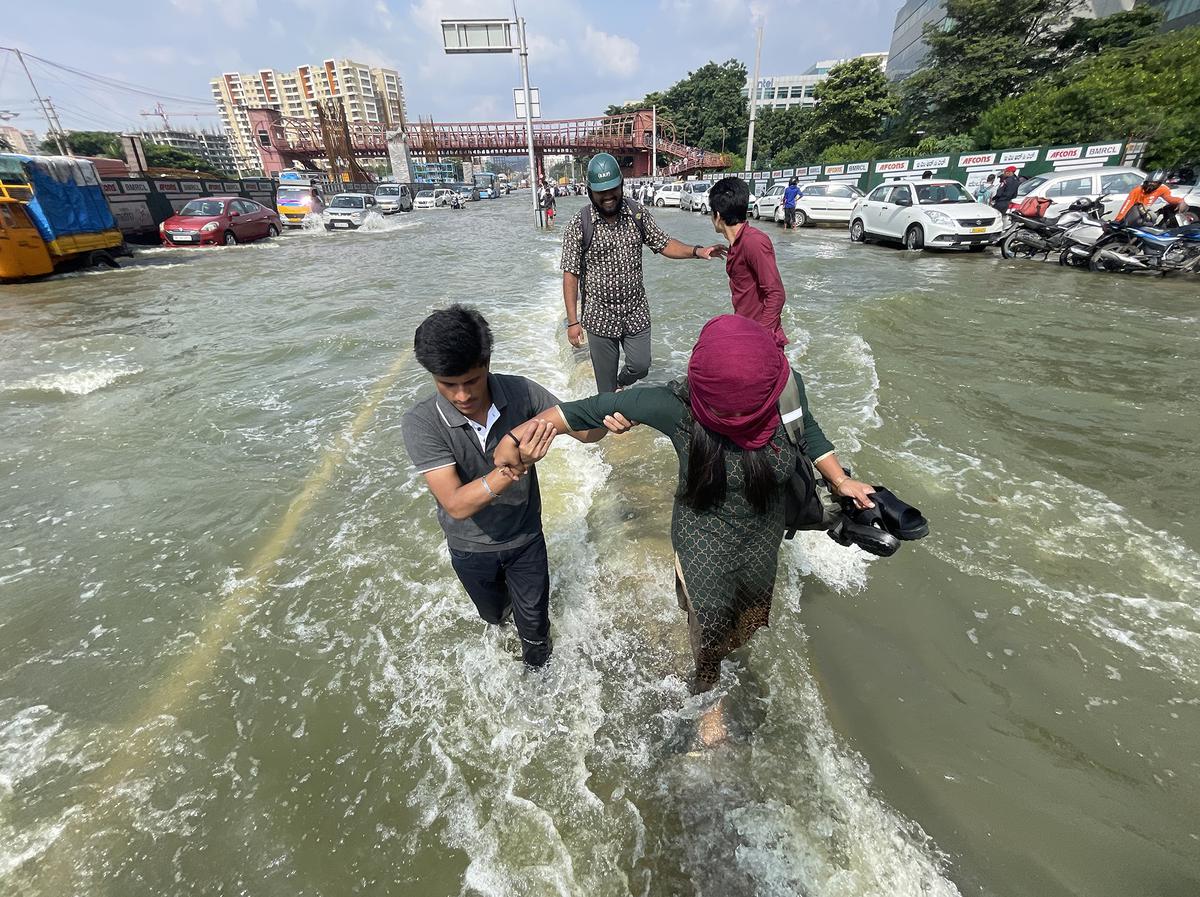
 Disaster managers worldwide identify floods as among the most devastating and widespread natural hazards. Their impact is continuously exacerbated by accelerating climate change and relentless, often unplanned urbanization, with South and Southeast Asia frequently cited as the worst-affected regions.
In India, a nation whose agrarian economy and cultural rhythms are deeply intertwined with the monsoon, the arrival of these life-giving rains paradoxically signals a period of heightened alert. Disaster Management Authorities meticulously update monitoring and warning infrastructure, preposition response personnel, clean relief /relief shelters, and stockpile supplies.
This annual ritual of our preparedness, while essential in the current context, invites a deeper reflection – have floods always been a calamity we perceive these to be today, or have we, through our actions, transformed their very nature?
Echoes of a Water-Wise Past: When Floods Nurtured Civilizations
Historically, all river valley civilizations – from ancient Egypt along the Nile to Mesopotamia between the Tigris and Euphrates, the Indus Valley civilization, and early Chinese societies along the Yellow River – did not just endure floods; they thrived on their bounty.
Rivers were the arteries of life, providing not only essential drinking water and means of transport but also strategic safety. Crucially, annual floods delivered nutrient-rich silt, replenishing the fertility of agricultural lands year after year, forming the bedrock of their sustenance.
These ancient societies largely viewed floods not as a curse, but as a vital, cyclical event. The Egyptians, for instance, based their early calendars on the Nile‘s inundation, an event often welcomed with feasting and festivities, marking the passage of time and the promise of renewed fertility. They learned to live in harmony with the river‘s rhythms, adapting their agricultural practices and settlement patterns. Homes were built on higher ground, while the crops chosen to suite the flood rhythm.
What is particularly telling is that despite possessing the technical competence to construct monumental edifices like the pyramids or sophisticated urban centers, these civilizations made little attempt to “control” or entirely stop the floodwaters by erecting extensive, river-confining dykes. This wasn’t due to a lack of capability, but rather stemmed from a profound, inherent understanding of the river’s ecological processes and the immense benefits the floods bestowed.
This respect for the river‘s might and its natural cycles is perhaps why, barring mythological accounts of a great deluge, historical records are not replete with tales of recurring, devastating floods in the way these document droughts or epidemics.
It appears that until relatively recently, widespread, catastrophic flooding was not the persistent societal concern it has become. This makes it imperative to examine the profound changes humanity has introduced to the hydrological regime, particularly over the past few centuries.
The Age of Intervention: Taming Rivers, Unintended Consequences
The human urge to control nature, particularly the powerful flow of rivers, gradually led to a paradigm shift away from adaptation and towards engineered interventions. This transition, beginning in various parts of the world and accelerating during the colonial period and post-independence nation-building efforts, fundamentally altered river dynamics and human settlements.
The Embankment Era: Confining the Flow, Unleashing New Problems
In India, the construction of dykes or embankments – Tatbandhs or Bunds as these are commonly known – began systematically during the British Raj, driven by the need to protect colonial infrastructure, specific agricultural tracts, and facilitate revenue collection.
This practice intensified significantly after independence, often as a primary flood control measure.
While embankments were intended to restrict floodwaters within defined channels, offering localized protection to certain areas, these introduced a cascade of unintended and often detrimental side effects:
Loss of Natural Fertilization
The most immediate impact was the disruption of the age-old process of floodplain fertilization.
The silt-laden waters, now confined, no longer spread across the plains, leading to a gradual decline in soil fertility. This had a profound adverse impact on agricultural productivity and the traditional life-support strategies of communities heavily reliant on floodplain farming, necessitating increased use of chemical fertilizers in many regions.
The Lure of False Security
Areas previously understood as flood-prone and used seasonally for agriculture, now seemingly protected by embankments, attracted permanent settlements.
A false sense of safety encouraged people to build homes and infrastructure in close proximity to rivers, occupying lands that were historically part of the river’s natural domain during high flows.
Channel Aggradation and Rising Riverbeds
Rivers naturally carry sediment.
In an unconfined state, this sediment is dispersed across the floodplain during floods. When constrained by embankments, a significant portion of this sediment started to gets deposited within the channel itself. Over time, this process of aggradation raises the riverbed.
Paradoxically, the river, now flowing at a higher elevation than its surrounding floodplain, becomes even more dangerous.
The Kosi River in Bihar, often termed the “Sorrow of Bihar,” is a tragic testament to this, with its bed having risen several meters, making it exceptionally prone to devastating breaches and avulsions despite extensive embankments. Similar challenges are observed along stretches of the Brahmaputra and Ganga.
Drainage Congestion and Prolonged Inundation
When embanked rivers do breach or overtop, the very structures designed to protect now hinder the backflow of water into the channel once the main flood peak has passed. This results in prolonged inundation of vast areas, waterlogging, and severe damage.
Authorities sometimes resort to deliberately breaching embankments at selected points to drain flooded areas, a clear admission of the system’s inherent flaws.
The Vicious Cycle of Escalation
The response to floods in embanked areas has often been to further raise the height of existing embankments or construct new ones, leading to an escalating cycle of higher riverbeds, more intense confinement, and potentially even greater devastation when breaches inevitably occur.
The water of many major Indian rivers now flows within artificially restricted channels, often elevated above their natural floodplains. This means that when excess discharge conditions arise, the resulting floods are often more sudden, cover vast areas outside the embankments, and cause massive disruption and loss, as evidenced by continuously increasing flood impact data.
The Dam-Building Drive: Harnessing Waters, Altering Regimes
Dams represent another monumental human endeavour to manage and utilize river waters for diverse purposes, including irrigation, hydropower generation, domestic and industrial water supply, and often, stated flood moderation. The first known dam, the Jawa Dam in Jordan, dates back to 3000 BC. In India, the Kallanai Dam (Grand Anicut) on the Kaveri river in Tamil Nadu, an engineering marvel built around 150 AD by King Karikala Chola, stands as an early example.
From approximately 350 dams with a storage capacity of around 15 billion cubic meters (bcm) at the time of independence in 1947, India today boasts over 6,100 large dams with a combined storage capacity exceeding 257 bcm, ranking third globally after China and the USA.
While dams provide undeniable benefits, their construction, particularly large ones often sited in the geomorphologically suitable upper reaches of rivers, profoundly disrupts the natural hydrological and sediment regimes:
Sediment Trapping and Its Consequences
Dams act as significant barriers to sediment transport. Large reservoirs trap a majority of the incoming sediment, depriving downstream areas, including deltas and coastal regions, of this natural replenishment.
This can lead to coastal erosion, delta subsidence, and a decline in the fertility of downstream floodplains.
Altered Flow Regimes
The natural flow patterns of rivers – including seasonal variations in discharge essential for aquatic life and riparian ecosystems – are significantly altered.
Reduced flows downstream, especially during lean seasons, can impact biodiversity, water quality, and traditional water users.
Upstream Aggradation and Induced Flood Risk
As rivers with reduced velocity enter reservoirs, they deposit their sediment load at the reservoir’s head.
This process, called reservoir sedimentation, reduces the dam‘s storage capacity over time.
More critically, significant sediment deposition can occur in the river channel just upstream of the reservoir, leading to riverbed aggradation. This rising riverbed can, in turn, increase the flood risk for habitations located in these upstream reaches, even during moderate flows.
Uttarkashi town in Uttarakhand, for example, has experienced increased flood vulnerability due to such aggradation along the course of Bhagirathi river.
Dam-Induced Floods
While often designed for flood control, dams can sometimes contribute to flooding.
Emergency releases of large volumes of water from reservoirs during extreme rainfall events to protect the dam structure can cause sudden and severe downstream flash floods. Furthermore, though rare, the catastrophic risk of dam failures poses an immense threat.
New Specters: Modern Flooding Challenges in India
Beyond the altered riverine systems, India faces increasingly severe flood threats in its rapidly changing coastal and urban landscapes, both compounded by global climate change.
Coastal Flooding: The Confluence of Rising Seas and Sinking Lands
The world’s coastal zones – typically defined as areas within 100 kilometers of the coast and below 100 meters elevation – are home to a large and rapidly growing proportion of the global population and economic activity.
Over half the global population and the majority of megacities are coastal.
India, with its extensive 7,500 km coastline, is no exception, hosting major metropolises like Mumbai, Chennai, Kolkata, Kochi, and numerous other densely populated towns and industrial hubs.
These vital regions face a multi-pronged and escalating flood threat:
Sea Level Rise
Global warming is causing thermal expansion of oceans and melting of land-based ice, leading to an inexorable rise in global mean sea levels.
This directly increases the frequency and severity of coastal inundation, saltwater intrusion into freshwater aquifers, and permanent submergence of low-lying areas.
Extreme Weather Events
Climate change is also linked to an increase in the intensity and, in some regions, frequency of extreme weather events, including tropical cyclones.
Stronger storm surges, higher wind speeds, and intense rainfall associated with these events dramatically elevate coastal flood risk. Coastal states like Odisha, Andhra Pradesh, Tamil Nadu, and West Bengal are particularly vulnerable.
Coastal Erosion and Degradation of Natural Defenses
Natural coastal ecosystems like mangroves, coral reefs, and sand dunes act as crucial buffers against storm surges and erosion.
However, these are being rapidly degraded due to deforestation – mangrove clearing for aquaculture, agriculture, or development, destructive fishing practices, pollution, and unregulated coastal construction.
Uncontrolled sand mining from beaches and riverbeds further exacerbates coastal erosion.
Land Subsidence
In many coastal urban centers, excessive groundwater extraction for domestic and industrial use is leading to land subsidence, effectively lowering the land elevation relative to the sea level and compounding the flood risk.
Unsustainable Development
Rapid population growth and economic development in coastal zones often lead to the reclamation of low-lying areas, construction in high-risk zones, and inadequate planning for drainage and flood mitigation, amplifying vulnerability.
The devastating floods in Chennai (2015) and several coastal areas of Kerala (2018) serve as stark reminders of the complex interplay of these factors, resulting in immense human suffering and economic losses.
Urban Flooding: Concrete Expansion, Constricted Channels
Urban flooding has emerged as a frequent and highly disruptive phenomenon across Indian cities, large and small.
This isn’t always directly linked to overflowing rivers; often, it’s a consequence of intense, localized rainfall overwhelming an urban landscape ill-equipped to manage the water.
Key drivers of urban flooding include:
Rapid and Unplanned Urbanization
As cities expand, natural soil surfaces are increasingly replaced by impervious materials like concrete and asphalt – roads, buildings, parking lots.
This drastically reduces rainwater infiltration into the ground, leading to a massive increase in surface runoff volume and velocity.
Encroachment and Constriction of Natural Drainage Systems
Natural streams, rivers, nalas, and drainage channels that once carried excess water are often encroached upon, narrowed, diverted, or built over to make way for urban development.
This severely curtails their carrying capacity.
Destruction of Urban Wetlands and Water Bodies
Lakes, ponds, and wetlands act as natural sponges, absorbing and retaining storm water, thereby moderating flood peaks.
However, these vital urban ecosystems are frequently filled in or degraded for construction and real estate development, eliminating their crucial hydrological function.
Inadequate and Obsolete Storm water Infrastructure
Many Indian cities rely on aging storm water drainage systems designed for much lower rainfall intensities and smaller urban sprawls.
These systems are often poorly maintained, choked with silt and solid waste, and lack the capacity to handle the runoff generated by contemporary urban landscapes and more intense rainfall events.
Indiscriminate Waste Disposal
The rampant dumping of solid waste, particularly plastics, into drains and water channels is a major contributor to blockages, further crippling the drainage capacity during heavy rains.
The recurring deluge in major cities like Mumbai, Delhi, Bengaluru, Hyderabad, Patna, Srinagar and Gurugram vividly illustrates this crisis. These events cause widespread disruption, massive economic losses, damage to critical infrastructure, and pose significant public health risks.
Climate Change: The Overarching Threat Multiplier
While specific human interventions have created localized flood vulnerabilities, climate change acts as a pervasive, overarching threat multiplier, exacerbating all forms of flooding across India:
Intensified Rainfall
Warmer air holds more moisture, leading to an increased frequency of short-duration, high-intensity rainfall events that can overwhelm natural and artificial drainage systems, triggering flash floods and urban flooding.
Altered Monsoon Dynamics
Changes in monsoon patterns – including variability in onset, duration, spatial distribution, and overall rainfall quantity – create greater uncertainty and increase the likelihood of both extreme rainfall and prolonged dry spells, stressing water management systems.
Glacial Retreat and GLOFs
In the Himalayas, accelerated glacial melt due to rising temperatures increases the risk of Glacial Lake Outburst Floods (GLOFs), which can release enormous volumes of water and debris with catastrophic downstream consequences. The 2013 Kedarnath tragedy and the 2021 Chamoli disaster had elements linked to high-altitude glacial/periglacial instabilities.
Sea Level Rise and Intensified Cyclones
As discussed, these directly amplify coastal flood risks.
The scientific consensus indicates that these climate-driven changes will continue and likely intensify, making adaptive and resilient flood management an even more urgent national priority.
Conclusion: Towards a Future of Flood Resilience – Reclaiming Harmony with Water
The narrative of floods in India has dramatically transformed from an ancient acceptance of natural cycles that nurtured civilizations to a modern saga of escalating crisis.
Our journey through interventions – from embanking rivers to constructing large dams and rapidly urbanizing coasts and plains – while often driven by developmental aspirations, has inadvertently disrupted intricate hydrological balances and amplified our vulnerability.
The historical quest to “control” and “tame” rivers has, in many instances, led to a more precarious and reactive relationship with water, where engineered solutions often spawn new, more complex problems. The overarching shadow of climate change further intensifies these challenges, promising more frequent and severe flood events across diverse landscapes.
The path forward cannot solely rely on building higher walls or stronger defences.
It demands a paradigm shift: a move towards Integrated Flood Management (IFM) that recognizes rivers as dynamic ecological systems and floodplains as integral parts of their domain. This involves:
Embracing “Living with Water”
Shifting from a purely defensive posture to one that strategically allows rivers more room, especially in designated floodplain zones, thereby reducing risks to critical infrastructure and human settlements located elsewhere.
Prioritizing Non-Structural Measures
Investing significantly in improved forecasting and early warning systems, robust emergency preparedness and response mechanisms, comprehensive floodplain zoning regulations that restrict unsafe development, risk-informed land-use planning, and accessible flood insurance schemes.
Harnessing Ecosystem-based Solutions (EbS) / Nature-based Solutions (NbS)
Recognizing the immense flood mitigation potential of healthy ecosystems.
This includes aggressive programs for wetland restoration and conservation, mangrove afforestation and protection along coasts, sustainable watershed management in river catchments, including afforestation with native species and soil conservation, and restoring riverine connectivity where feasible.
Designing Water-Sensitive Urban Spaces
Implementing principles of “sponge cities” or water-sensitive urban design that incorporate green infrastructure, permeable surfaces, rainwater harvesting, and the protection/rejuvenation of urban water bodies to manage storm water locally.
Revitalizing Traditional Wisdom and Community Participation
Recognizing and integrating valuable Traditional Ecological Knowledge (TEK) related to water management and flood adaptation, and empowering local communities to be active partners in planning and implementing flood resilience measures.
Strengthening Governance and Data-Driven Decisions
Ensuring better inter-agency coordination, transparent data sharing, and the use of advanced scientific tools – remote sensing, hydrological modelling, for improved flood risk assessment and management.
Investing in Climate-Resilient Infrastructure
Ensuring that new infrastructure is designed to withstand future climate impacts and that existing vulnerable infrastructure is progressively retrofitted or relocated.
India stands at a critical juncture. Continuing with purely reactive, control-oriented approaches will likely lead to ever-increasing losses and hardship.
Alternatively, embracing a more holistic, adaptive, and ecologically informed strategy – one that respects the power of nature while leveraging the best of science and traditional wisdom – can pave the way towards a more flood-resilient future.
The challenge is immense, but so is the opportunity to redefine our relationship with water, transforming a source of recurrent crisis into one of sustained security and well-being for all.
सच कहें तो मानव सभ्यताओं ने कभी भी बाढ़ को एक समस्या के रूप में नहीं देखा और कभी भी बाढ़ के पानी को रोकने के लिये अवरोध निर्मित करने की कोशिश नहीं की। इन्होने नदी और बाढ़ के पानी के महत्त्व को समझा और यह सभ्यतायें इसी समझ के आधार पर फली-फूली। बाढ़ का यह पानी अपने साथ बहा कर लायी गयी मिट्टी को नियमित रूप से बाढ़ मैदान में जमा कर के उसे उपजाऊ व उत्पादक जो बनाता था।
वैसे तो बाढ़ के पानी को रोकने के लिए तटबंध मिर्माण की शुरुवात अंग्रेजो ने की, परन्तु आज़ादी के बाद बाढ़ सुरक्षा के नाम पर इस काम में काफी तेजी आयी। तटबंध निर्माण से बाढ़ का पानी निश्चित ही कुछ समय के लिये नदी की सीमा में बंध कर रह गया। लोगो को लगा कि यह क्षेत्र अब सुरक्षित हो चुका हैं; सो तटबंध के कारण मिली अस्थाई सुरक्षा के भ्रम के चलते अब तक केवल खेती-बाड़ी के लिये उपयोग में लाये जाने वाले बाढ़ मैदान में बसावत होने लगी और धीरे-धीरे पक्के निर्माण भी हो गये।
साथ ही तटबंधों के कारण बाढ़ के पानी के नदी की सीमा में बंध कर रह जाने के कारण, अब तक बाढ़ मैदानों में जमा होने वाली मिट्टी व गाद अब नदी के तल पर ही जमा होने लगी; अब इस सब को कही तो जमा होना ही था क्योकि बहाव के धीमा होने के कारण नदी के पानी में इसे और आगे बहा कर ले जाने की सामर्थ्य थी नहीं। इससे धीरे-धीरे नदी का तल ऊपर आने लगा या फिर यह कहें की नदी छिछली होने लगी, उसकी गहराई कम होने लगी। कम गहराई का सीधा तात्पर्य हैं – नदी की पानी को सुरक्षित रूप से प्रवाहित कर सकने की क्षमता में कमी।
पहले पानी की जितनी मात्रा को नदी आसानी से बहा ले जाती थी, गहराई कम होने के कारण यह पानी तटबंधों की सीमा को लांघने लगा। कई स्थितियों में नदी का प्रवाह कम हो जाने के बाद भी बाढ़ का यह पानी तटबंधों के कारण वापस नदी में नहीं जा पाता था और लम्बे समय तक जलभराव की स्थिति बनी रहती थी और कई बार तो तटबंध को तोड़ना ही एकमात्र विकल्प रह जाता था।
पर तटबंधों के पार तो अब तक बस्तिया बस चुकी थी। सो इन्हे सुरक्षा देने के लिये तटबंधो की ऊंचाई बढ़ाने का विकल्प चुना गया और समय बीतने के साथ हम इस मकड़जाल में बस फंसते चले गये।
हद तो यह हैं कि इतना सब देखते, जानते, समझते आज हमने बाढ़ सुरक्षा और सौंदर्यीकरण के नाम पर यहाँ हिमालय में ग्लेशियर के द्वारा जमा अस्थिर अवसाद के ऊपर कही तेजी से, तो कही बल खा कर बह रही नदियों के साथ छेड़खानी शुरू कर दी हैं। कहीं तटबंध, कहीं सौंदर्यीकरण, तो कहीं घाट निर्माण के नाम पर और फिर इन्ही सब के चलते हमने इननदियों के प्रवाह को बदलने की कोशिश भी शुरू कर दी हैं। अब बल खा कर बहना ऊर्जा कम करने का प्रकृति का अपना तरीका हैं, और इसके साथ छेड़छाड़ बड़े विनाश को न्योता देने से कुछ कम नहीं हैं।
सच कहें तो दुनिया भर के जल-वैज्ञानिक पहाड़ी नदियों के प्रवाह और कटाव की गुत्थी को अब तक सुलझा नहीं पाये हैं, और यह नदियाँ कब और कितना कटाव करेंगी उसे आंकलित करने के लिये हमारे पास कोई फार्मूला भी तो नहीं हैं। तो फिर ऐसे में सच में यह समझ से परे हैं कि हमारे ये अभियन्ता बन्धु, किस ज्ञान व कौशल के बल पर यहाँ हिमालय की नदियो के साथ छेड़खानी करने में व्यस्त हैं और वो भी इतने आत्मविश्वास के साथ कि बीच नदी में निर्माण करने से भी बाज नहीं आ रहे हैं।
अब रेत-सीमेंट के ऊपर उनके इस अति-आत्मविश्वास को दाद देना तो बनता हैं।
हमें हमेशा की तरह आपके सुझावों, प्रतिक्रियाओं व कटाक्षो का बेसब्री से इंतजार रहता हैं और सच मानिये इसी के आधार पर हम अपने आप में, अपनी सोच व रचनात्मकता में सुधार करने को प्रेरित भी होते हैं।
सो लाइक करे या फिर ना करे, पर अच्छा-बुरा जैसा आपको महसूस हुवा हो, कमेंट अवश्य करें।
Leave a Reply