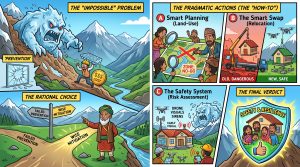
Rigorous feasibility and cost-effectiveness assessments must steer disaster risk reduction decisions, recognizing that engineering total prevention against large-scale geological hazards is often technically unviable and financially impossible. When absolute prevention hits structural and economic limits, pragmatic mitigation strategies—primarily risk-informed land-use zoning and the planned relocation of vulnerable assets—represent the most rational path to safety. Embracing strategic mitigation over futile attempts at hazard elimination is not an institutional defeat, but an evidence-based, mature choice grounded in scientific risk assessment to secure vulnerable mountain populations.