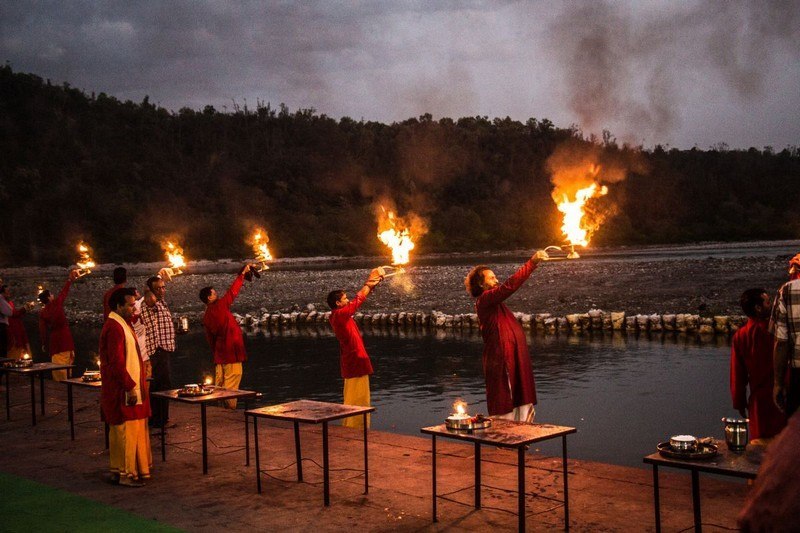
 Rishikesh, revered as the ‘Gateway to the Garhwal Himalaya,’ is a vibrant confluence of spirituality, adventure, and commerce. Its unique position, however, also places it at the epicenter of a complex matrix of natural and anthropogenic hazards.
Situated astride major tectonic boundaries and serving as a critical node for immense tourist and pilgrim traffic, the city faces significant risks from earthquakes, landslides, floods, and urban pressures.
Compounded by fragmented administrative jurisdictions and logistical bottlenecks, these vulnerabilities demand a paradigm shift from reactive management to proactive, integrated disaster resilience.
Out here we discuss the multi-hazard profile of Rishikesh and proposes a strategic framework centered on unified governance, enhanced response capabilities, and mainstreamed disaster risk reduction to secure the city’s future.
The Paradox of Rishikesh
Nestled where the sacred Ganga river descends from the mountains to the plains, Rishikesh occupies a unique space in India‘s cultural and geographical landscape. It is the serene global capital of Yoga, the adrenaline-fueled hub of river rafting and adventure sports, and the primary staging point for the revered Char Dham and Kanwar Yatras, which attract millions annually.
Its strategic importance is further underscored by its role as a logistical base and a critical medical evacuation center—hosting an All India Institute of Medical Sciences (AIIMS)—for any major disaster unfolding in the Garhwal division.
However, beneath this veneer of spiritual tranquility and dynamic activity lies a profound paradox.
The very geography and dynamism that give Rishikesh its character also make it exceptionally vulnerable.
The city is not merely a gateway for pilgrims; it is a gateway for risk.
Understanding and addressing this risk is not just an administrative task; it is a moral imperative to protect the lives and livelihoods that depend on this iconic city.
The Multi-Hazard Vulnerability Profile
The threats facing Rishikesh are not singular but interconnected, where one hazard can trigger or exacerbate another. A holistic risk assessment reveals several critical areas of concern.
Geological Hazards: The Shaking Earth and Sliding Slopes
Seismic Threat
Rishikesh is located in a seismically active and precarious geological setting, flanked by major Himalayan tectonic discontinuities including the Main Boundary Thrust (MBT) and the Himalayan Frontal Fault (HFF).
The presence of transverse structures like the Ganga Tear Fault further complicates the tectonic stress regime.
This places the city in Seismic Zone IV, indicating high vulnerability to major earthquakes.
A significant seismic event could lead to widespread structural collapse, liquefaction in the sandy river banks, and potentially trigger a cascade of secondary disasters like landslides and fires.
Landslide Risk
The proximity to the MBT and the abrupt change in topographical gradient create classic conditions for slope instability.
While the core city is on relatively gentler slopes, it is highly vulnerable to the runout from major landslides originating in the fragile higher reaches, such as those around Narendranagar.
Debris from such an event could dam the river, inundate parts of the city, and sever critical transportation arteries.
Hydro-Meteorological and Environmental Hazards
Flood Risk
While the dams on the Bhagirathi and Alaknanda rivers (Tehri, Koteshwar, Srinagar) provide a degree of flood moderation, they also pose a latent risk.
Towards the end of an intense monsoon season, when reservoirs are near their full capacity, a cloudburst or extreme rainfall event in the upper catchment areas could necessitate large-scale water releases.
Such a scenario could cause significant flash flooding and severe bank erosion in the low-lying areas of Rishikesh, particularly affecting ashrams, informal settlements, and commercial establishments along the riverfront.
Fire Hazard
The risk of fire in Rishikesh is twofold.
Firstly, the surrounding hills are prone to forest fires, which degrade the environment, increase landslide risk, and cause air quality to plummet.
Secondly, and perhaps more acutely, the densely populated and often unplanned informal settlements within the city, with their narrow lanes and combustible building materials, present a severe urban fire hazard. A fire in such an area would be incredibly difficult to fight and could spread rapidly.
Water and Sanitation Crisis
The immense and constant influx of tourists and pilgrims places an unsustainable pressure on the city‘s water supply and sanitation infrastructure.
This chronic stress escalates into an acute threat of water-borne disease outbreaks (e.g., cholera, typhoid) during peak seasons.
Inadequate solid and liquid waste management further pollutes the river Ganga, contradicting the very essence of its sanctity.
Anthropogenic and Socio-Technical Hazards
Traffic Congestion and Logistical Paralysis
Rishikesh is a bottleneck. The single highway serving as the lifeline to Badrinath, Kedarnath, Hemkund Sahib, and the Valley of Flowers is perpetually congested.
This congestion is amplified by the numerous adventure sports hubs lining the highway stretch near the city.
In a disaster scenario, these routine traffic jams would transform into a critical failure, paralyzing the movement of emergency services, search and rescue teams, and evacuation efforts.
Accidents and Crowd Management
The high volume of traffic and adventure activities inevitably leads to a high incidence of road and water accidents.
Furthermore, the sheer density of crowds at locations like Lakshman Jhula, Ram Jhula, and Triveni Ghat during festivals poses a constant and severe threat of a stampede, which can be triggered by the slightest panic.
The Governance Conundrum: Compounding the Risk
The ability to manage these hazards is critically undermined by a fragmented and challenging administrative landscape.
Fractured Jurisdiction
Rishikesh city is uniquely administered by three different districts. The right bank of the Ganga falls under Tehri Garhwal and Dehradun districts, while the left bank is under Pauri Garhwal.
This trifurcation creates a significant governance vacuum. It impedes the development of a unified urban plan, complicates resource allocation, and creates dangerous confusion in command and control during a disaster response.
A simple question like “Who is in charge?” does not have a simple answer.
VIP Protocol Strain
As a major spiritual and political destination, Rishikesh sees a high footfall of VIP guests. The administrative machinery is frequently occupied with managing protocols and security for these visits, diverting critical leadership attention and resources that should otherwise be focused on core governance and disaster preparedness.
A Strategic Way Forward: Building a Resilient Rishikesh
Addressing Rishikesh’s complex risk profile requires a decisive and integrated strategy that moves beyond siloed departmental actions. The following pillars should form the foundation of this new approach:
Establish a Unified Command and Control Structure
The most critical step is to overcome the administrative fragmentation.
Proposal
The creation of a Rishikesh Municipal Disaster Management Authority (RMDMA), empowered by the state in accordance with S. 41A of the Disaster Management Act, 2005.
This single-point authority would be responsible for disaster management across the entire urban agglomeration, irrespective of district boundaries. Its mandate would include integrated risk assessment, unified planning, resource mapping, conducting multi-agency drills, and public awareness campaigns.
Strengthen and Specialise Response Capabilities
Existing response mechanisms must be enhanced to match the specific risks.
Proposal
The State Disaster Response Force (SDRF) unit stationed at Dhalwala must be significantly strengthened and up-skilled. This includes:
Amphibious Capabilities
Advanced training and equipment for swift water rescue, including inflatable motorboats and trained divers, to respond to floods and rafting accidents.
Fire Response
Specialized equipment and training for fighting fires in densely packed settlements and for high-angle rescue operations on slopes.
Medical First Response
Integrating SDRF response protocols directly with AIIMS Rishikesh to create a seamless chain of evacuation and trauma care.
Mainstream Disaster Risk Reduction (DRR) into Urban Planning
Resilience cannot be an afterthought; it must be built into the city’s fabric.
Proposal
Land Use Zoning
Strictly enforce geo-scientifically informed land-use zoning that prohibits new construction in high-risk landslide paths, liquefaction zones, and floodplains.
Building Codes
Mandate and enforce seismic-retrofitting for all critical infrastructure (hospitals, schools, bridges) and promote earthquake-resistant construction practices for all new buildings.
Traffic Decongestion Plan
Develop and implement a long-term traffic management plan, including bypass roads, multi-level parking facilities outside the city core, and promoting public transport to reduce vehicular load on the single highway.
Safe Evacuation Routes
Clearly demarcate and maintain multiple, pre-identified evacuation routes and safe assembly points, ensuring they are well-publicized and free of encroachments.
Streamline Administrative Processes
Governance must be made more efficient and focused.
Proposal
VIP Protocol Reform
Develop a standardised, minimal-disruption protocol for handling VIP visits that does not compromise the core functions of the local administration, particularly during peak tourist seasons or warning periods.
Administrative Reorganisation (Long-Term Vision)
Initiate a high-level dialogue on the long-term feasibility of bringing the entire Rishikesh urban area under a single administrative district to ensure coherent governance and accountability.
Conclusion
Rishikesh stands at a critical juncture. Its continued growth and prosperity are intrinsically linked to its ability to manage the formidable risks it faces.
The city can no longer afford a fragmented, reactive approach to disaster management.
By embracing a strategy of unified governance, specialized response, and proactive risk reduction, Rishikesh can transform its vulnerabilities into strengths.
The goal is to build a city that is not only a beacon of spirituality and adventure but also a national model of urban resilience, ensuring that the Gateway to the Gods is safe, secure, and prepared for whatever the future may hold.
क्या आपको ऋषिकेश में विगत में घटित किसी बड़ी आपदा के बारे में पता हैं?
शायद आपका जवाब “ना” हो, यही हैं ना?
विगत में लम्बे समय से किसी बड़ी आपदा के घटित ना होने के कारण, आप हो या मैं, हम में से ज्यादातर को यही लगता हैं कि जब अब तक कोई आपदा घटित नहीं हुयी तो क्षेत्र सुरक्षित है और वहाँ आगे भी कोई आपदा घटित नहीं होगी। ऐसे में आपदा कि तैयारी करने का कोई औचित्य भी प्रतीत नहीं होता हैं।
ऐसे में हम भूल जाते हैं कि ऋषिकेश Main Boundary Thrust (MBT) व Himalayan Frontal Fault (HFF) के मध्य अवस्थित हैं और ये दोनों ही हिमालयी पर्वत शृंखला की कमजोर कड़ी हैं। हिमालय में भूकम्प आने की स्थिति में अवमुक्त होने वाली ऊर्जा का एक बड़ा भाग इन भ्रंशों के माध्यम से ही अवमुक्त होगा। सो भूकम्प ऋषिकेश के लिये एक बड़ा खतरा हैं।
अब ऋषिकेश की भू-आकृति जरुर मैदानी हैं – पर समीप की पहाड़ियों में होने वाले भू-स्खलन का मलबा शहर तक भी आ सकता हैं।
वैसे तो अलखनंदा व भागीरथी, गंगा की दोनों ही प्रमुख सहायक नदियों पर श्रीनगर, कोटेश्वर व टिहरी में बांध हैं जो गंगा के प्रवाह को नियंत्रित करते हैं और सरसरी तौर पर ऋषिकेश में बाढ़ का कोई खतरा नजर नहीं आता हैं – पर मानसून के आखिर में जब बांध ऊपर तक लबालब भरा होता हैं – यदि उस समय ऊपरी जलागम क्षेत्र में झमाझम बारिश होती हैं या बादल फटता हैं, तब क्या?
ऐसी स्थिति में अचानक बहुत ज्यादा पानी छोड़ना इन बांधो की मज़बूरी बन जायेगा और ऐसे में ऋषिकेश के गंगा किनारे के निचले हिस्से निश्चित ही बाढ़ से प्रभावित होंगे।
जंगलो के साथ ही ऋषिकेश घने-बसे इलाको में आग का भी ख़तरा हैं और विशेष रूप से चार धाम या कांवड़ यात्रा के समय जल प्रदूषण, जल-जनित बीमारियों का फैलाव तथा भगदड़ भी बड़े खतरे हैं।
फिर आपने पढ़ा या सुना जरूर होगा कि जोखिम समुदाय कि संख्या का समानुपाती होता हैं – जितने ज्यादा लोग उतना बड़ा जोखिम। तो यात्रा हो या ना हो, ऋषिकेश में साल भर कुछ ना कुछ होता ही रहता हैं और भीड़ हैं कि कम होने का नाम नहीं लेती हैं।
सो ऋषिकेश में जो आपदाओं का जोखिम हैं, वो खासा बड़ा हैं।
फिर यहाँ आने जाने का भी एक ही रास्ता हैं, जिसमे प्रायः जाम लगा रहता हैं। ऐसे में किसी भी आपातकालीन स्थिति में त्वरित प्रतिवादन होगा भी तो कैसे?
वो कहते हैं ना, करेला और वो भी नीम चढ़ा – सो वे जो शहर हैं तीन अलग-अलग जनपदों में बंटा हैं – गंगा के इस पार देहरादून व टिहरी तो उस पार पौड़ी। ऐसे में इसकी गारंटी कौन लेगा कि आपदा के समय इन तीनो जनपदों में समन्वय रहेगा।
तो सच कहें तो ऋषिकेश में अकेले जोखिम ही नही, समस्यायें भी बड़ी और जटिल हैं। अब बड़ी हो या फिर छोटी समाधान के लिये कोशिश तो करनी पड़ेगी और समाधान भी होते होते ही होगा – रातों रात तो कुछ होने से रहा।
अब शुरुवात करें तो कहाँ से। वैसे तो शुरुवात होनी चाहिये, चाहे वो जहाँ कहीं से हो।
अभी हाल भारत सरकार ने आपदा प्रबन्धन अधिनियम, 2005 में भारी भरकम संशोधन किये हैं। पूरा पड़ने का शायद मौका ना लग पाया हो। बाकी का जो हो मेरे कहने से अनुच्छेद 42A जरुर पढ़ लेना – शहरी आपदा प्रबन्धन प्राधिकरण से सम्बन्धित हैं।
सो मुझे लगता हैं कि शुरुवात ऋषिकेश शहरी आपदा प्रबन्धन प्राधिकरण की स्थापना से की जा सकती हैं – इससे एक तीर से कई शिकार हो सकते हैं। जनपदों के बीच के पचड़े समाप्त होंगे और जब प्राधिकरण रहेगा तो वो आसन्न ख़तरो व जोखिमों का आंकलन भी करेगा, इनके निदान के लिये योजना भी बनायेगा, मॉक अभ्यास करेगा, विभागीय समन्वय सुनिश्चित करेगा, प्रतिवादन की तैयारी करेगा और जब जैसी जरुरत होगी, वैसा प्रतिवादन करेगा।
तो ऋषिकेश शहरी आपदा प्रबन्धन प्राधिकरण से शुरुवात करते हैं। ठीक हैं ना? या फिर आपके इरादे कुछ और ही हैं?
हमें हमेशा की तरह आपके सुझावों, प्रतिक्रियाओं व कटाक्षो का बेसब्री से इंतजार रहता हैं और सच मानिये इसी के आधार पर हम अपने आप में, अपनी सोच व रचनात्मकता में सुधार करने को प्रेरित होते हैं।
सो अच्छा – बुरा जैसा आपको महसूस हुवा हो, कमेंट जरुर करते रहें।
Leave a Reply