Beyond the Post-Disaster Inquiry: Digital Tools for Fire Prevention: Santa is designing a new high-rise on a smart city simulator, ignoring basic building fire safety norms. Banta steps in with the World Bank’s Urban FRAME tool to prove why automated digital permitting and mandatory third-party audits are our only shields against the recurring urban tragedies of 2026.
Santa Banta
The ‘Chalta Hai’ Chawl and the Fire-Tender Toll
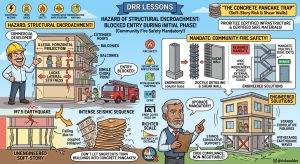
The Death Lanes of Unplanned Sprawl: Lessons from Govindpuri: Santa built a wide balcony that almost touches his neighbor’s house, closing up a narrow city lane. Banta drops a heavy urban planning diagnostic to show why blocking access routes and crowding high-density chawls turns normal domestic accidents into fatal fire traps. Learn the power of community-led Firewise strategies.
The Luxury Hotel Facade and the Short-Circuit
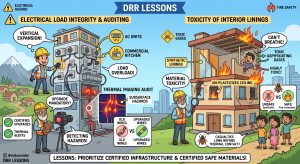
The Deadly Truth Behind Velvet Lobbies: Hotel Fire Gaps Exposed: Santa upgraded his Delhi hotel with massive AC units and luxury synthetic decor but left old, overloaded wiring behind the walls. Banta brings lessons from the recent June 2026 Malviya Nagar hotel inferno to show why fragmented fire audits and electrical neglect are costing lives.
The Udan Hathi and Santa’s Grounded Thinking
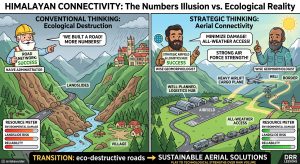
True resilience in mountain ecosystems isn’t about building more roads where the earth cannot support them; it is about choosing sustainable, high-tech connectivity that respects the limits of Himalayan geomorphology.
The Spiral Staircase and the Locked Trapdoor
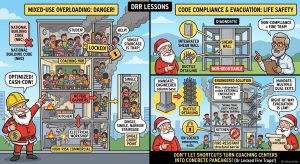
The Locked Traps of Modern Education: Lessons from Lucknow & Surat: Santa optimized his multi-story urban building by packing eighty students over an un-audited commercial market. Banta shatters the cash-cow illusion by exposing how a lack of dual exits and non-compliance with the National Building Code turns coaching centers into terrifying fire traps.
The VIP Permit and the Squeezed Ambulances
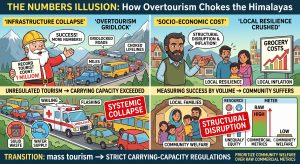
The Numbers Illusion: How Overtourism is Choking the Himalayas: Santa is celebrating record-breaking tourist inflows as economic success, while Banta highlights the gridlocked roads, delayed ambulances, and soaring grocery costs crushing local families in Shimla and Mussoorie. Discover why the Himalayan states must transition from mass tourism to strict, eco-friendly carrying-capacity regulations.
The Failed Design Panic and Banta’s Sacrifice of the Wall
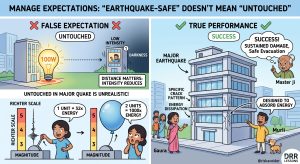
Cracks of Life: Why Damaged Buildings Aren’t Always “Failed” Buildings
After a major earthquake, headlines often display photos of cracked walls and bruised concrete, labeling them as engineering failures. This is a dangerous misconception. When it comes to seismic engineering, an “earthquake-safe” building’s primary mission isn’t to remain untouched—it is to save human lives.
The 39-Second Warning and the Community Shield
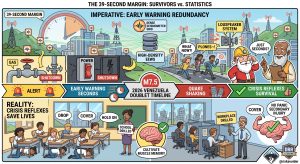
The 39-Second Margin: How Crisis Reflexes Separate Survivors from Statistics: Santa questions the utility of spending public funds on early warning networks that only provide seconds of alert time. Banta utilizes the critical timeline of the 2026 Venezuela doublet to prove how dense seismometer grids and automated “Drop, Cover, Hold On” drills build the vital community muscle memory needed to survive a major Himalayan rupture.
The Sinking Lake Bed and the Amplified Shockwave
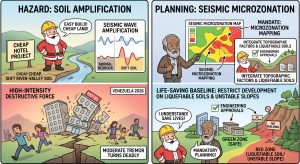
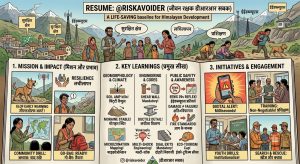
The Seismic Megaphone: How Soft Soil Turns Moderate Tremors Deadly: Santa buys cheap, soft river-valley land for a commercial hotel project, thinking it’s an easy build. Banta drops a profound geomorphological diagnostic from the 2026 Venezuela earthquakes, showing how soft alluvial soils amplify seismic waves and why microzonation mapping is a life-saving baseline for Himalayan development.
The Pancaked Pillar and the Substandard Blueprint
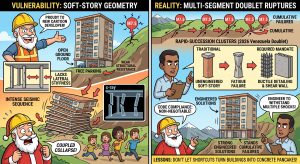
Lessons from the 2026 Venezuela Doublet: Why Free Parking Floors are Structural Deathtraps: Santa builds a lucrative multi-story hill apartment with an open ground floor for parking, ignoring code compliance. Banta delivers a chilling diagnostic based on the devastating June 24, 2026 Venezuela M7.5 doublet tragedy, revealing why “soft-story” shortcuts turn buildings into concrete pancakes during rapid-succession ruptures.