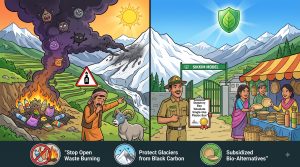
Burning Mountains: The Invisible Toxic Poison of Campsite Garbage: Santa thinks burning a massive pile of tourist plastic bottles and noodle packets is a cheap and effective cleanup strategy. Banta stops the bonfire to reveal the dangerous atmospheric toll of open plastic incineration in the Himalayas, showcasing how Sikkim’s 1998 pioneering plastic ban offers the ultimate blueprint for structural eco-governance.
Santa Banta
The Infinite Gorge and the 11-Ton Avalanche
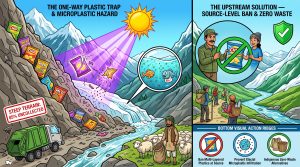
The Microplastic Glacier: The Terrifying Truth Behind Mountain Snack Wrappers: Santa thinks dropping an empty potato chip wrapper into a deep Himalayan valley is harmless convenience. Banta drops a brutal hydrological diagnostic based on The Himalayan Cleanup metrics, revealing how 14,450 tonnes of daily unmanaged waste is fragmenting into microplastics above 5,000 meters, poisoning India’s primary freshwater lifelines.
Santa’s Lazy River Puzzle and Banta’s Underfed Porter Parable
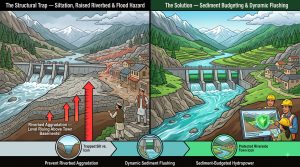
Dams and barrages disrupt natural river dynamics, trapping heavy sediment loads and causing riverbed aggradation that dramatically increases flood risks for upstream and surrounding settlements even during moderate rainfall. Sustainable hydropower planning must mandate comprehensive catchment-wide sediment budget analyses and dynamic flood impact assessments to mitigate dangerous riverbed rising.
The Sugarcane Trap and the Commodity Matrix
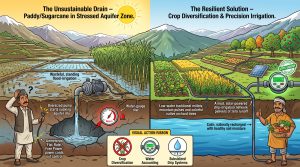
The Sugarcane Trap: Why Free Water is Bankrupting Indian Agriculture: Santa is flooding his fields with free groundwater to cultivate highly water-intensive sugarcane crops. Banta dismantles the short-term cash crop illusion, explaining why agricultural resilience requires strict volumetric water pricing, cropping restrictions in overexploited blocks, and a massive shift toward precision drip irrigation.
The Effluent Pipe and the Diminishing Drop
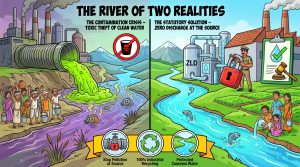
The Purple Rivers: How Industrial Waste is Driving the Next World War: Santa thinks dumping untreated chemical effluents from his factory into the river is smart cost-cutting. Banta drops a terrifying global risk projection showing how freshwater pollution is locking out our remaining drinking reserves, pushing humanity toward catastrophic water-induced wars.
The Ghost of the ‘Dhara’ and the Black Carbon Shroud
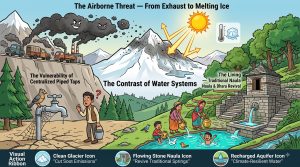
The Dying Springs of the Third Pole: How Black Carbon is Melting the Himalayas: Santa finds his ancestral village spring completely dry, blaming cosmic bad luck. Banta uses atmospheric data to reveal a terrifying climate link: how vehicular pollution and black carbon deposits are melting Himalayan glaciers and killing traditional Naulas and Dharas.
The Silent Leak and the Luxury Waste Machine

The Luxury Leak: The Shocking Waste of Household RO Filters: Santa thinks his premium kitchen RO filter is a badge of education and wealth. Banta exposes the brutal environmental math, showing how domestic purification units dump up to 75% of clean groundwater down the drain, directly flouting judicial bans in safe-water zones.
The Expanding Bathtub on the Roof of the World
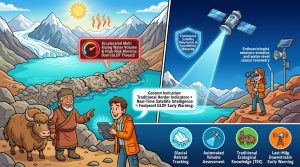
The Overflowing Bathtubs of the Himalayas: Santa sees expanding glacial lakes as a prime real estate opportunity for boating resorts. Banta shatters the illusion, diving into the terrifying mechanics of Glacial Lake Outburst Floods (GLOFs) and outlining the critical three-pronged strategy of volumetric mapping, international data sharing, and indigenous safety drills.
The Crushed Dam and the Sleeping Monster
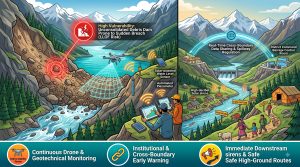
The Deadly Illusion of the Mountain Lake: Santa thinks a landslide blocking a river has gifted his village a scenic swimming pool. Banta exposes the terrifying physics of Landslide Lake Outburst Floods (LLOFs) and outlines the vital cross-boundary data networks required to save downstream infrastructure from sudden, catastrophic breaches.
Santa’s Dam Jobs Dream vs Banta’s Tale of the Silent Watermill
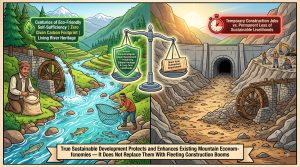
Hydropower projects that alter natural river regimes often dismantle traditional, sustainable livelihoods like operating watermills (gharaats) and artisanal fishing. The allure of temporary construction jobs cannot compensate for the irreversible erasure of self-sufficient, eco-friendly mountain economies. Comprehensive impact assessments must rigorously account for the long-term socio-economic and cultural fallout of dewatering natural riverbeds. Genuine Himalayan development must protect and strengthen existing sustainable micro-economies rather than replacing them with precarious, short-term employment.