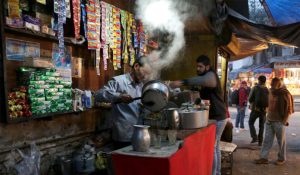
To stop being disaster detective and try becoming community doctor, was Banta’s advise to the brilliant young scientist and he was quick to grasp and launch a new mission.
Traditional knowledge
The River That Held Its Breath
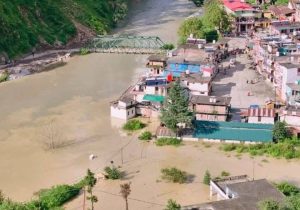
On way to Yamunotri, Santa and Banta witness a massive landslide near Syana Chatti. The real terror began when the mighty Yamuna river below them slowed to a silent, ominous trickle.
The Chisoti Cataclysm: A Clarion Call for a New Era of Himalayan Safety
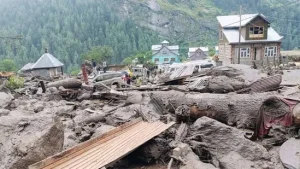
Cataclysms of Dharali and Chisoti are tragic lessons. These are not just about rain; these are about a ticking time bomb in the glaciers, and our failure to act.
The Unlearned Lessons of the Himalayas: From Dhauliganga to Dharali, a Blueprint for Survival
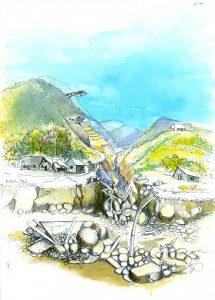
Moving ahead from Dharali, this is a blueprint for survival which paves way for proactive anticipation and mitigation of Himalayan hazards by integrating science, traditional knowledge, and responsible development.
The Land That Remembers

Banta teaches Santa technique of deciphering ancient warnings written into the landscape, revealing that the safe looking places can actually be dangerous.
Himalayan Habitats: Built on Landslides, Threatened by Negligence

Not landslides, but our ignorance and greed are responsible for increasing losses due to this phenomenon that facilitated growth of habitations in the Himalayan region.
Mounting Earthquake Risk in Uttarakhand
Ignorance or indifference, be what we are faced with mounting earthquake risk in Uttarakhand and but for immediate and serious corrective measures we are to face disastrous consequences.
The Crack in the Wall and the Landslide’s Yaaddasht
Minor crack in the wall could be a hint of ground instability and ensuing subsidence. Avoid heavy construction over agricultural land and ensure safe disposal of wastewater to keep your area safe.
Traditional Knowledge: An Untapped Resource for Disaster Resilience

At the face of fast increasing disaster frequency and magnitude and challenges posed by changing climate amalgamation of science and traditional knowledge hold the promise to ensure disaster resilience and promote climate adaptation.
Earthquake safety tradition in the Himalayas
Experimenting with building design and construction precepts the people living in earthquake prone Himalayan region developed a construction algorithm with five distinct principles that ensured safety of structures during earthquake incidences. Ongoing tectonic movements, ensuing subduction of the Indian Plate beneath the Eurasian Plate, and their consequent collision resulted in the evolution of the Himalayan […]