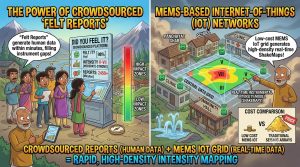
Density Over Luxury: How Smartphone-Grade Sensors Outsmart Earthquakes: Santa wants to spend lakhs on a single high-end imported seismometer for his village. Banta introduces an open-source network of low-cost MEMS sensors and crowdsourced “Did You Feel It?” reporting tools to prove that a community-driven digital network can map disaster damage in under ten minutes.
The ‘Richter’ Illusion and the Samosa Shake Test
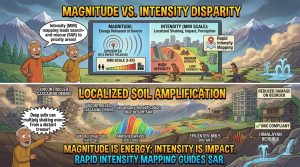
The Richter Scale Fallacy: Why Magnitude Won’t Save You in a Quake: Santa thinks his family is safe from a distant Magnitude 6.2 earthquake, but Banta uses a local sweet shop collapse to expose the dangerous blind spot of ignoring localized Intensity (MMI). Discover why rapid intensity mapping is the ultimate tool for saving lives during the golden hour.
The Shaded Vendor and the Cool Infrastructure Blueprint
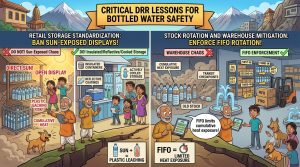
Out of the Sun, Into the Shade: Reforming Highway Water Displays: Santa prioritizes high-visibility sun-exposed display racks for highway water sales, but Banta steps in with an insulated blueprint to revolutionize retail safety. Discover the practical, low-cost modifications—from reflective window films to strict FIFO stock rotation—that roadside eateries must adopt to protect commuters from heat-induced plastic toxins.
The Generous Flood and the Pharaoh’s Feast
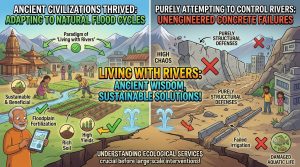
Ancient civilizations thrived by adapting to natural river cycles rather than forcing complete control over them. True flood resilience requires moving beyond concrete defenses to prioritize early warning systems, community preparedness, and ecological harmony.
The Microplastic Invasions and the Invisible Shedding
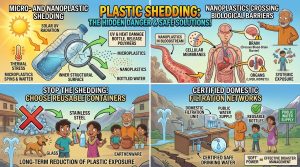
The Invisible Snow Globe: Microplastics Hiding in Clear Water: Santa believes his plastic mineral water is an unbreakable, sterile fortress against contamination. Banta uses a high-intensity filter lens to expose the billions of microplastics and nanoplastics shedding off the bottle walls due to open-air UV degradation, revealing a silent crisis of cellular bioaccumulation.
The “Plastic-y” Taste and the Endocrine Sabotage
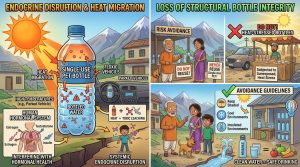
The Dashboard Hazard: How Car Heat Turns Water Toxic: Santa thinks drinking a warm water bottle that sat on his car dashboard for two days is completely harmless. Banta breaks down the science of endocrine disruption, explaining how thermal stress forces phthalates and plasticizers to leach into the water, giving it that classic, dangerous “plastic-y” taste.
Santa’s Panic vs. Banta’s Eyes in the Sky and Ears on the Ground
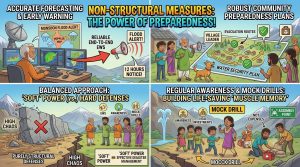
True flood resilience extends far beyond concrete dams to embrace “soft” non-structural defenses. Investing in reliable early warning systems, public awareness, and regular mock drills builds the critical community “muscle memory” needed to save lives and eliminate chaos when disaster strikes.
The Roadside Sunbath and the Antimony Cocktail
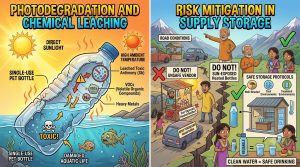
The Boiling Beverage: Why Sun-Baked Bottled Water is a Health Trap: Santa loves buying convenient 1-liter water bottles from roadside highway racks, unaware that the blazing sun is turning the plastic into a chemical leaching engine. Banta drops a heavy public health diagnostic on “Photodegradation” and why drinking hot, sun-exposed PET bottled water introduces toxic antimony and heavy metals into your body.
The Reusable Jug and the Green Bond Blueprint
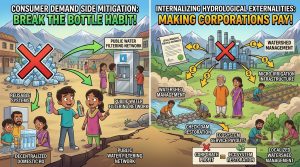
Dismantling the Plastic Water Pyramid: Shifting Corporate and Consumer Habits: Santa sets up thousands of single-use plastic water cups for a party, celebrating convenience. Banta steps in with a copper dispenser and traditional clay cups to expose the dual crisis of groundwater over-extraction and plastic waste pollution, proposing a sustainable model for corporate watershed funding.
The National Water Hierarchy and the Panchayat’s Piezometer

Tearing Up the Corporate Water Permit: Panchayat Power in Action: Santa is ready to stamp a new industrial borewell permit for local revenue until Banta and the village water council bring out a real-time digital piezometer map. Discover why the National Water Policy’s strict hierarchy—prioritizing drinking water over industry—must be legally enforced at the grassroots level to prevent rural drought disasters.