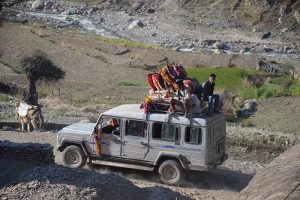
The traditional measure of travel time over physical distance reflected a deep respect for the challenging Himalayan terrain and its constraints while present aggressive pursuit of wider, straighter roads often involves extensive, destabilizing excavation of fragile slopes, leading to an increased risk of landslides and road blockades. Sustainable infrastructure development in mountains therefore requires a more harmonious approach that respects natural contours and minimizes ecological damage.
The “Resilience Surcharge” Samosa

Can a samosa save a village? 🥟🛡️ Santa is upset about a 5-rupee surcharge on his bill, but Banta explains why “pooling our pennies” is the only way to build a national safety net that works for everyone.
Santa’s Hopelessness vs Banta’s Army of Ants
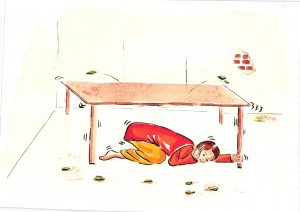
Himalayas are faced with a major threat of long awaited Great Earthquake. It would no doubt be devastating but if we work together – like the army of ants – we can ensure safety despite earth shaking violently.
The Magic “Nagaland” Thermometer
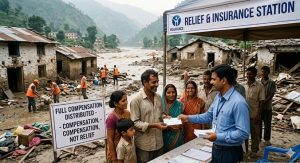
What if your insurance paid out before you even finished cleaning the mud? 🌧️💰 Banta explains the “Nagaland Model” of parametric insurance—where weather sensors trigger payouts, and blockchain beats bureaucracy.
The 2026 Disaster Sentinel: The Tectonic-Cryospheric Pulse
As a M 4.1 tremor shakes Tibet today, the ICIMOD ‘Snow Update 2026’ delivers a 24-year record low: a 27.8% drop in snow persistence. From the ‘Digital Twins’ modeling the next disaster to the 124-year-old warning of Mount Pelée, we explore why 2026 is the year the ‘Water Tower’ truly began to run dry. Discover why the ‘Horizontal Haze’ in your afternoon sky is the most critical early warning for a downstream flood.
The “Sarkari” Lottery vs. The Ironclad Pact
Are you waiting for “Relief” or demanding your “Rights”? Santa thinks the government is his personal insurance agent, but Banta explains why a legal contract is better than a political promise when disaster strikes. Discover the strategic shift from relief to risk-transfer.
The 2026 Disaster Sentinel: The Tectonic-Cryospheric Pulse
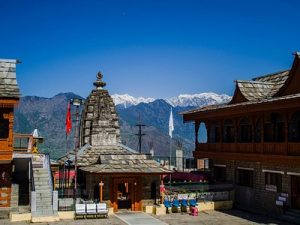
As Japan digitalizes its reserve forces and East Africa battles soil saturation, the Himalayas face a 27.8% drop in snow persistence—the lowest in two decades. From the ‘Geospatial Intelligence’ revolution to the 186-year-old warning of the Natchez tornado, we explore why 2026 is the year the ‘Water Tower’ truly began to change. Discover why today’s ‘Brown Haze’ on the horizon is the most critical early warning for a downstream flood.
The 2026 Disaster Sentinel: The Tectonic-Cryospheric Pulse
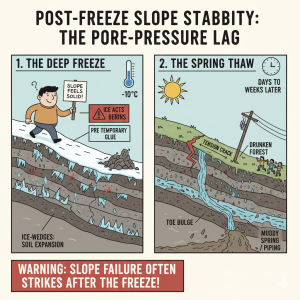
As a M 3.9 tremor shakes the Afghan-Tajik border today, the HKH ‘Snow Update 2026’ delivers a 24-year record low: a 27.8% drop in snow persistence. From the 50-year legacy of the Friuli quake to the ‘Elevation-Dependent’ warming at 4,500 meters, we explore why 2026 is the year the ‘Water Tower’ truly began to change. Discover why today’s ‘Milky Stream’ is your most critical early warning for the spring thaw.
Beyond Relief: The Strategic Imperative of Disaster Insurance
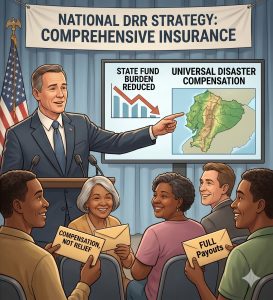
As climate-induced losses overburden public exchequers, the shift from “discretionary relief” to “contractual insurance” is no longer optional. From Nagaland’s blockchain-payouts to the Caribbean’s risk pools, discover how Disaster Insurance is rewriting the rules of global resilience
The 2026 Disaster Sentinel: The Tectonic-Cryospheric Pulse

As a M 3.0 tremor shakes the Kyrgyz-Tajik border today, the HKH ‘Snow Update 2026’ confirms a systemic collapse of seasonal snow reserves, now 27.8% below normal. From the ‘Parametric Insurance’ revolution to the 4,500m ‘Elevation Fuse,’ we explore why 2026 is the year the ‘Water Tower’ truly began to change. Discover why today’s ‘Milky Stream’ is your most critical early warning for the spring thaw.